Scarborough Railway Station: A Historical Mystery Tour

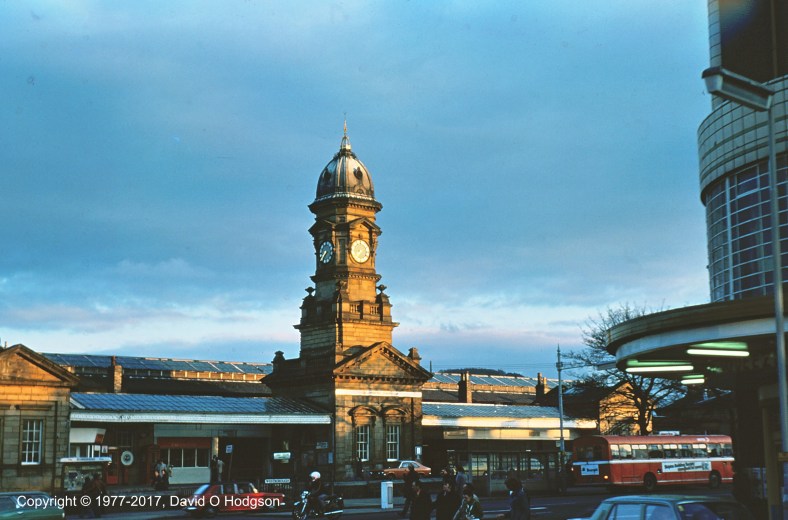
Scarborough Central Railway Station in 1977

Scarborough Central Railway Station in 1977

During my teenage years, for my A-level Art study of architecture, I did some original research on the history of Scarborough [Central] Railway Station (shown above), which led to a surprising conclusion about the building’s original appearance.

My conclusions were questioned at the time, but were verified decades later by someone else’s chance discovery.

It was always a well-known fact that Scarborough’s main railway station was built in 1845 (quite early in the history of railways), at a location that was then outside the town limits. It’s also well-known that, in 1882, a central tower was added to the frontage. Surprisingly, and despite the efforts of various developers over the decades, the station building has survived to this day in essentially its 1882 form, as shown in my 1977 photograph at the top of this article.

During my researches at Scarborough Reference Library, I discovered a copy of a catalog for an exhibition called “Marble Halls”, which had apparently taken place at the Victoria & Albert Museum in London in 1973.

Marble Halls

An 1844-dated illustration in the Marble Halls catalog showed a plan of “Scarborough Station” that, at first glance, looked nothing like the existing structure. The image below is the copy of the catalog illustration that I created for my study.

Copy of Plan of Scarborough Station, 1844

Copy of Plan of Scarborough Station, 1844

I hadn’t expected to see the central tower, of course, but where are the three small pavilions in the building’s frontage? The plan also shows a colonnaded central entrance, of which there’s no trace in the existing building.

My initial impression was that this plan did not represent the station as built, but I was puzzled that the accompanying commentary did not mention any discrepancy between the plan and the structure as-built.

I wrote to some local experts on the subject, who provided me with the limited historical references that were available. None of this provided any clear details regarding alterations to the building, except for the addition of the tower. The general opinion seemed to be that the entire frontage of Scarborough Station had probably been rebuilt in 1882 (rather than just the tower), but there was no evidence to prove that claim. One expert pointed out that the architect’s illustration in “Marble Halls” may have been nothing more than an “architect’s impression”, and that there was no guarantee that the station as-constructed had ever resembled that plan.

Some Detective Work

If in fact the building’s frontage had been substantially altered in 1882, it struck me that perhaps I could find some evidence of that (although it seemed odd that nobody would have previously noticed anything).

I walked around the outside of the building, examining its architectural details. I looked particularly at the locations that would be the junctions between the 1845 structure and what were potentially later alterations. Eventually, at the East end of the joint between the easternmost pavilion and the main trainshed (on the far left in the heading photo), I found a mismatch in the details of the pediment, as shown in my sketch below.

Scarborough Station. Detail of Trainshed Pediment stonecarving

Scarborough Station. Detail of Trainshed Pediment stonework

The mismatched joint shown above would have occurred where the new pavilion was added to the main wall of the original building, if my suspicions about the station’s original appearance were correct.

Given the immense precision of the building’s stone carving, it seemed impossible that such a noticeable mismatch would have occurred (or be allowed to remain) during the original construction. It seemed much more likely that this mismatch occurred because of some miscalculation when new stone was carved later, the intention having been to match the details of the original building.

Conclusion & Confirmation

In my study, I presented my conclusion that the 1844 architectural plan did indeed show the original appearance of Scarborough station, but that the building had been subject to greater subsequent alteration in the 1880s than most people had suspected. Not only was the central tower added, but most of the original frontage had been removed, and replaced with the three small pavilions that still exist.

At the time, I had no evidence to support my assertion, except for the architectural plan and my own illustrations of the architectural details of the actual building. Thus, my conclusion remained unproven, and nothing more than an “interesting speculation”.

In 1995, long after the completion of my Art A-level, and by which time I’d moved away from Scarborough, first to London and then to California, one of my expert correspondents from 1977, J R Lidster, published his own book on Scarborough Railway Station. In that book, he included a drawing of the station frontage from a letterhead that had recently been discovered in the attic of a property in Scarborough.

Sure enough, the letterhead showed a building that closely matched that depicted in the 1844 plan in the book “Marble Halls”, thus finally verifying the conclusion of my investigation.

[Added 12/14/24] Here is the letterhead described above, from J R Lidster’s book:
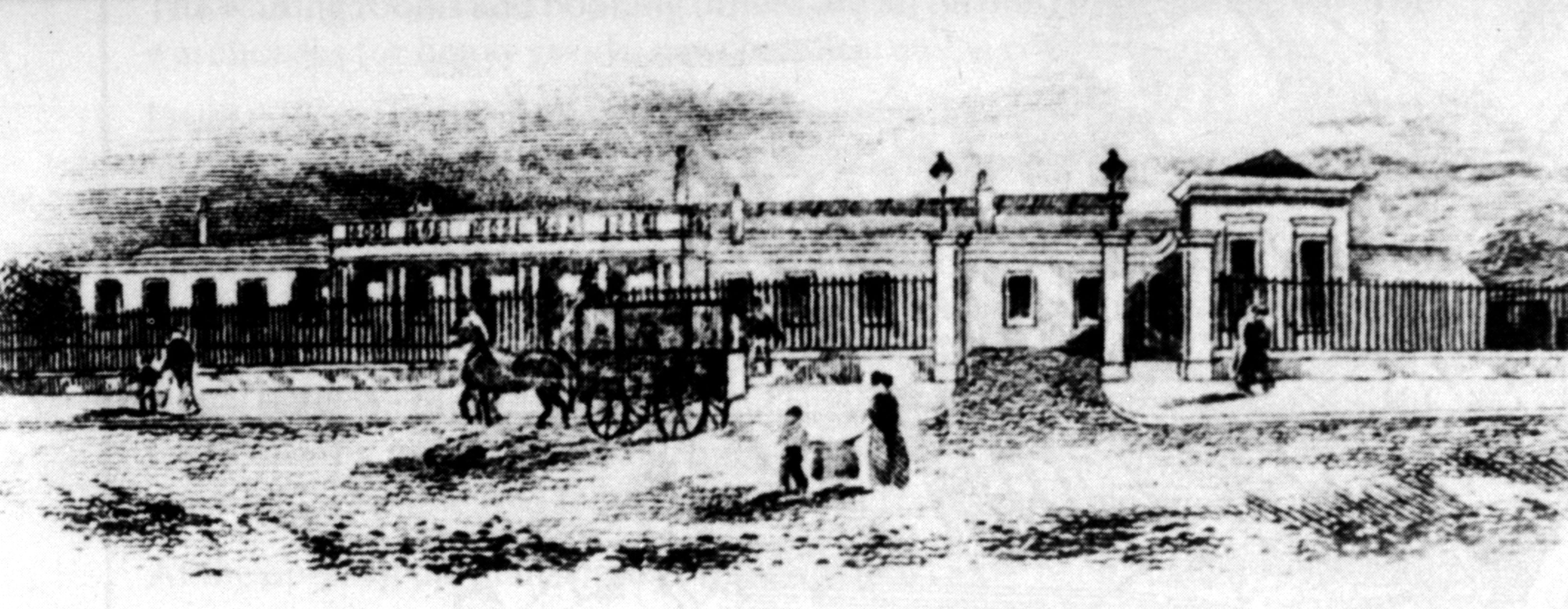
Early View of Scarborough Railway Station. Copyright J R Lidster

A Sense of History

At the age of thirteen, I was forced to select a restricted range of subjects at school for continued study, as preparation for taking “O-level” examinations. One of the subjects that I dropped was history, because my naïve belief at that time was that history was “already written down”, and thus there was nothing new to add. Even at that age, I knew that, whatever I was going to devote my life to, I wanted it to be something innovative.

The experience that I described above, where I was able to provide original insight into a historical problem, showed me that my earlier view of history had been wrong. The events under consideration were, after all, relatively recent history, dating back only about one century, and yet many details were unrecorded, and there were new contributions to be made. I was able to offer new information without even “getting my hands dirty”!

Postscript: More Marble Halls

This incident was my first encounter with the contents of the “Marble Halls” catalog. The book also contains illustrations of other Victorian buildings that featured in my later life. For example, there’s an illustration of the Imperial Institute in London, the buildings of which were subsequently incorporated into Imperial College, from where I would graduate.

The book also includes an image of Highclere Castle, in Hampshire, which was close to my home in Andover in later years. Highclere Castle is now world-famous as the fictitious Downton Abbey.

Our Twenty-sixth Wedding Anniversary

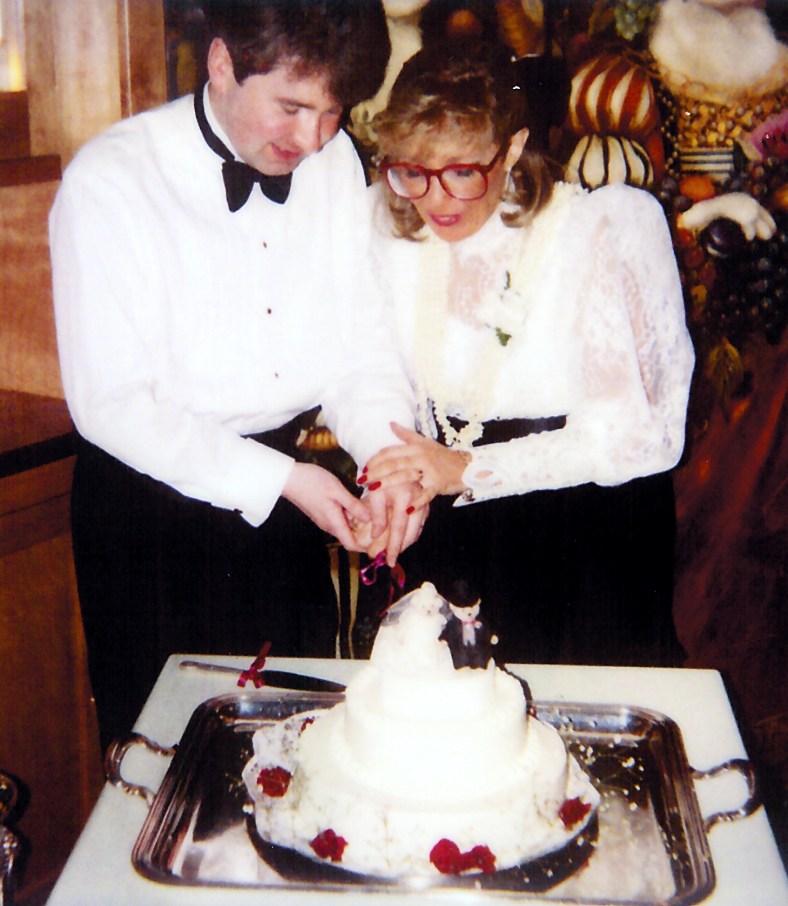
Cutting the Cake, 1991

Cutting the Cake, 1991

Today was our Twenty-sixth Wedding Anniversary. I feel incredibly lucky to have found Mary, who really has stuck with me through “thick and thin”. Mary changed my life, for the better, in ways that I had never even hoped for. The two of us have many great memories to look back on, and hopefully many more enjoyable years to look forward to!

The photo shows us cutting our cake at Star’s, in San Francisco, on January 9th, 1991. We chose the date because we thought it would be easy to remember, and I don’t think that either of us has ever forgotten it!

Thank you for everything, Mary! I love you.

Napa in the New Year

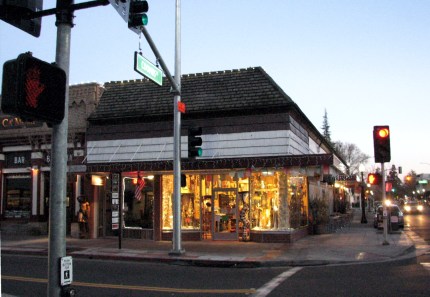
First Street, Napa, looking East

First Street, Napa, looking East

Yesterday, I visited Napa to do some shopping. The city is still recovering from the 2014 earthquake, as is obvious from the building site on the right in the header photo, which used to be a restaurant. Nonetheless, the downtown area still managed to look seasonal.

I bought some items at the Oxbow Market, shown below.

napa_oxbowmkt

Oxbow Market, Napa

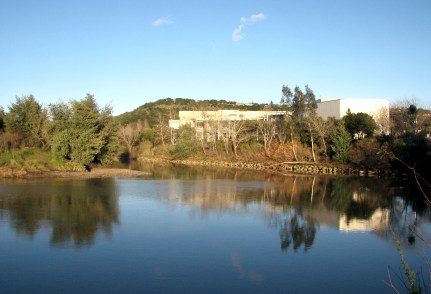
In case anyone is wondering why it’s called the “Oxbow”, by turning immediately to the left of the picture above, you can see the actual oxbow bend in the Napa River, as shown below.

napa_oxbowriver

Oxbow, Napa River

Here’s a Google map of the Oxbow area:

Back on First Street, Mary’s favorite spot is the Beaded Nomad, shown below. This business moved from Napa to Petaluma a few years ago, then back to a different location on First Street, in Napa.

Beaded Nomad, Napa

Beaded Nomad, Napa

Although reconstruction work is underway, there are still many structurally-unsound buildings in the city, which are sitting awaiting either renovation or demolition. On First Street, the Gordon Building is closed and fenced off. Round the back, you can see serious damage, as shown below.

napa_gordonbdg

Back of the Gordon Building, First Street, Napa

Applying Logic to Religious Claims

I’ve been thinking of creating some blog posts regarding my reactions to those who, from time to time, try to “convert” me to one religion or another. Such people never seem to have any original arguments, and instead trot out the same old, long-discredited, nonsense. Thus, rather than being forced to waste my time by offering the same old responses once again, I’ll just be able to refer them to my blog posts on the subject!

In the meantime, this Patheos article makes a good start, although most of it refers specifically to Christianity. Once you start analyzing religious claims logically, you’re soon forced to conclude that none of the competing and mutually-contradictory religions can be valid, which makes consideration of the claims of any one religion moot.

I also realize that many “believers” will never be swayed by logical arguments. They cling to their beliefs for emotional reasons, and will accept any contorted rationalization that allows them to avoid considering awkward facts. My goal, therefore, is not to try to proselytize non-belief, but merely to state my own considered views, in a form that avoids having to restate them every time the issue arises.

Microsoft Office & XML File Formats

Components of a typical Office Software suite

Components of a typical Office Software suite

Over on my professional blog, Teklibri, I just posted an article about Microsoft Office and the XML file formats (such as .docx) associated with it:

Benefits of the Microsoft Office Open XML File Formats

The article discusses some technical details regarding the advantages of the XML formats, and how to handle them. For non-technical users, the takeaways are:

  1. For the average computer user, buying or renting Microsoft Office is a waste of money. Free alternatives, such as Libre Office and OpenOffice, provide all the functionality that you’re likely to need.
  2. Given the choice, you should always store files in the new XML formats (those with a final “x” in the extension), such as docx, in preference to the earlier binary formats.

A Voyage Round My Father’s Artwork

Barn Owl and chicks. Pencil sketch by my father

Barn Owl and chicks. Pencil sketch by my father

A Voyage Round My Father’s Artwork (with apologies to John Mortimer).

Recently, while scanning some items of my own childhood artwork, I realized that one of the books of drawings included a few sketches drawn by my father. The book was produced when I was about 8 years old.

When I was young, I took it for granted that my father could draw well, but there were some aspects of his skill that puzzle me now:

  • Why did he make so little use of that skill? (He had been an electrician, a wireless operator, and a teacher, but never an artist of any kind.)
  • What happened to all the other artwork that he must have produced? As far as I know, the only way to acquire skill in drawing is to practice it, but I don’t recall seeing any artwork produced by him during his early life. The only remaining examples that I have are these few in my own drawing books.
  • Did my father only draw subjects that were other drawings or photographs? Didn’t he ever draw “from life”? The examples I still have are all copies of drawings or paintings from other books. I also recall his doing some oil paintings later on, but those were copied from his own color transparencies.

Unfortunately, my father is long gone, so I doubt that I’ll ever learn the answers to those questions.

The pencil sketch above shows a barn owl feeding a mouse to its chicks. I know exactly the source of that sketch, because I still have the original book containing the illustration, a children’s book called “More Birds and their Eggs”. The relevant page is shown below:

collinsmorebirds_barnowldetail

Barn Owl and Chicks from More Birds and their Eggs

My father also added a couple of sketches to the cover of my drawing book, of which one is shown below. This sketch was done with a ballpoint pen rather than a pencil. I’m not sure of the source of these drawings, but they were probably based on illustrations in the “Observer’s Book of Common Fungi”, which was our source for such information at that time.

fungi_coh

Pen sketch of fungi, by my father

I was clearly inspired by my father’s efforts, and produced sketches myself (in the same book of drawings) that were copies of other illustrations in the “More Birds and their Eggs” book. The example below shows a male Merlin:

My pen sketch of a male Merlin, copied from More Birds and their Eggs

My pen sketch of a male Merlin, copied from More Birds and their Eggs

As the example shows, my own technique at that time was to draw everything directly with a ballpoint pen. I allowed myself no opportunity for error correction: if it was wrong, then that was just too bad. It didn’t occur to me to draw an initial sketch in pencil, then correct that before inking in the final drawing, and I wasn’t taught that approach until much later, when I formally studied art at school.

As I said above, my father is long gone, so it’s unlikely that the questions I have about his artwork will ever be answered. It does seem a pity that he didn’t make more use of a skill that was presumably hard-won, so I must try not to repeat that mistake!

Happy New Year 2017

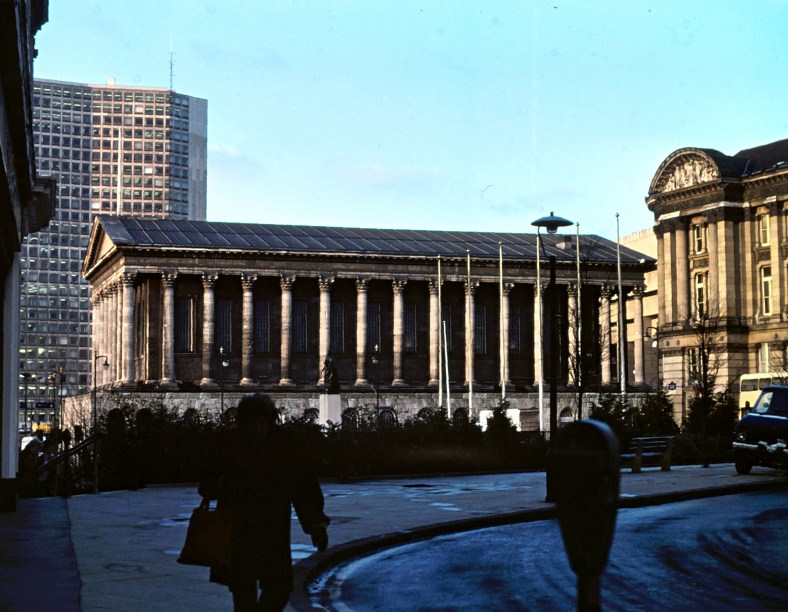
Birmingham Town Hall, January 1981

Birmingham Town Hall, January 1981

Happy New to everyone for 2017!

In January, 1981, I visited Birmingham, UK, for an interview at Aston University. The photo above shows Birmingham Town Hall on a frosty and slightly snowy morning. The Town Hall is obviously a neo-classical design, and is based on the temple of Castor & Pollux in Rome.

Aston had in fact already made me an unconditional offer of acceptance, but I asked to attend for an interview anyway, to see what the campus was like. As it turned out, of course, I went to Imperial College, London, rather than Aston. Nonetheless, Aston was the first university to give me a “vote of confidence” at a time when many were shaking their heads about my prospects.

Lunch in Tiburon

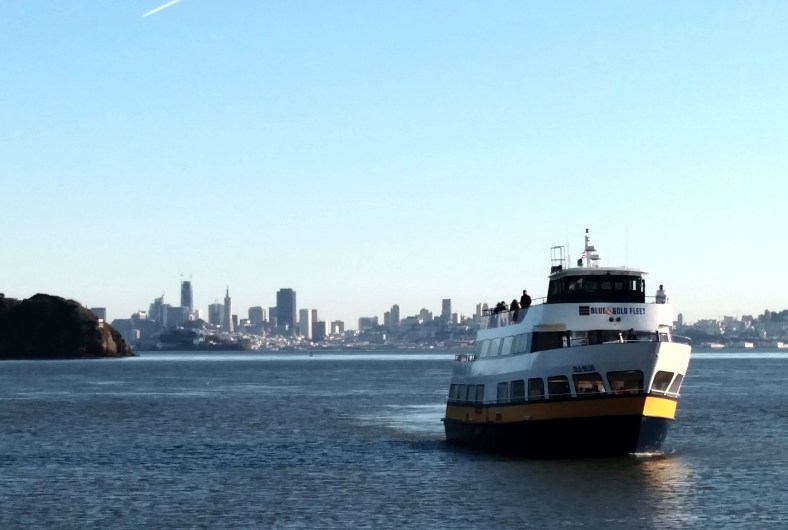
Angel Island - Tiburon Ferry with San Francisco in background

Angel Island – Tiburon Ferry with San Francisco in background

Yesterday, Mary and I enjoyed lunch at Sam’s Restaurant in Tiburon, with Japanese friends. Our friends live in Tokyo, but were staying in San Francisco for a few days.

They took the ferry from San Francisco to Tiburon to meet us, as shown above. The ferry stops on the way at Angel Island. The photo shows Angel Island and San Francisco behind the ferry, which is about to dock.

Below is the area of the Tiburon foreshore immediately east of the ferry dock. The building at the waterfront is the Railroad & Ferry Museum (unfortunately not open at this time of year). The entire visible foreshore area used to be a railroad yard and ferry transfer dock. The mountains beyond are on Angel Island.

tiburon_dock

Tiburon foreshore, with site of railroad ferry dock

The photo below shows the Christmas tree by the main highway. This area is now the route of State Highway 131, but was also originally part of the railroad yard.

tiburon_xmastree

Christmas tree in Tiburon

The link below takes you to a web site that contains some amazing color photos from the 1950s and 1960s, showing the railroad in operation in these locations. Tiburon looked very different in those days!

https://sites.google.com/site/pics19703/tiburon-nwp-pics

A Seasonal “Throwback”

robin_sharp300_7x5v2cI chose a seasonal theme for today’s “Throwback Thursday” image. This was our Christmas card artwork for 2012.

I took the photograph when I was exploring the remains of the never-completed Brockley Hill Tube Station, in London, in October 2012. The bird was sitting in a bush in what’s now known as the “Arches Field”.

It had never occurred to me before then that robins are popular subjects for Christmas cards only in Britain. When I was a kid, my parents received many cards featuring robins every year, and I even have the remains of one such card (dating from the 1960s) today, because I later “repurposed” it for use in one of my own drawing books.

The American Robin is a different bird species, of course, but you’ll rarely see an American card featuring any kind of robin (cardinals are actually more popular as subjects, although we don’t have those in California).

The British penchant for associating robins with Christmas  had been noticed by the New Scientist magazine, which published an article about it 56 years ago today: Robins for Christmas.

Season’s Greetings to everyone!

Healdsburg Faces Its Ultimate Terror (A Roundabout)

Partly-constructed roundabout in Healdsburg

Partly-constructed roundabout in Healdsburg

On Saturday, Mary volunteered to help out with the six-month anniversary party for the Healdsburg branch shelter of the Sonoma Humane Society. I went along there during the afternoon to visit her.

On the way there, I had to negotiate a new road feature in Healdsburg that seems to be causing utter confusion: the new roundabout (traffic circle) at the south end of the downtown district.

The photo above shows traffic negotiating the roundabout. Admittedly, they’ve managed to make things as confusing as possible: there are no road marking for the roundabout, there’s a distracting mass of bollards and traffic cones all around it, there are no directional or exit signs, and there are no marked crosswalks. Not surprisingly, many motorists are completely confused, and vehicles are stopping in the middle of the roundabout.

Surprisingly, roundabouts are still quite rare in California, even though they were originally an American invention. As a result, few California motorists have ever encountered them, and they certainly don’t feature in the State driving test.

Hopefully, the arrangements in Healdsburg will be better when the roadworks are completed and the traffic islands are constructed. The photo below shows the Parish Cafe, which is next to the roundabout, wasn’t demolished, and is open for business.

Parish Cafe, Healdsburg

Parish Cafe, Healdsburg

Even when it’s finished, this roundabout will have a special feature that should continue to cause confusion. The railroad line from Santa Rosa to Cloverdale passes directly through the roundabout, and, according to the city plan (http://healdsburgaveimprovements.com/), will continue to do so after everything is complete. There will actually be crossing gates within the roundabout, to stop traffic when a train appears!

At present, however, the SMART line doesn’t extend further north than Sonoma County Airport, so the old tracks that passed through the site of the roundabout have simply been lifted. The existing tracks are derelict anyway, and will need to be replaced before SMART trains can run. The photo below shows the track heading towards the roundabout.

Railroad, Healdsburg, looking north towards the new roundabout

Railroad, Healdsburg, looking north towards the new roundabout