Planning Your Career: Aim Too High or Aim Too Low?

Sunset through Freezing Fog, Coventry, 1979

Sunset through Freezing Fog, Coventry, 1979

The photo above—which could be titled “In the Bleak Midwinter”—shows the sun setting through freezing fog in University Valley, Coventry, in January 1979. The location was approximately here, although it’s now unrecognizable.

At the time, I was feeling very bleak myself, because I really wasn’t sure why I’d embarked on an Engineering Science degree course at Warwick University, with a view to becoming, of all things, a Civil Engineer. As I’ve described in a previous post, that experience didn’t go well, but, in retrospect, it actually turned out to be for the best, since a short time later I moved to a more prestigious university and obtained a better degree, in a subject that was more appropriate for my skills and interests.

It’s interesting to examine the flawed thought process that led me to make that discouraging “false start” at Warwick, and whether it would even have been possible for me to have made career decisions more wisely in those days.

What to Do with Your Life

Years ago, I heard someone say something like this (in a PBS radio item, I think):

When I was growing up, I spent a lot of time worrying about what I was going to do with my life. As I grew older, I came to realize that I should be worrying more about what life was going to do to me!

That may be all too true, but it does nothing to answer the question that occupies the time of many young people (including me, at that age), about what career to choose, and, in general, what path to take in life.

When I was growing up, it was by no means clear what career I should aim for. I seemed to have no access to knowledgeable advice, and the only thing that everyone seemed to be agreed on was that I should not follow in the footsteps of my father! (My father had become a teacher.)

My Father with Me in our Back Garden, 1963

My Father with Me in our Back Garden, 1963

What do You Want to be when You Grow Up? Are You Joking?

It has become a cliché that most children are asked at some point what they’d like to be “when they grow up”, and I was no exception. My earliest recollections of my ideas on that topic suggest that I wanted to be a train driver. However, my mother claimed that the answer I gave to that question was that I wanted to follow in my grandfather’s footsteps, and be “retired”!

In retrospect, it is now obvious that, had I tried to answer that question seriously, and had I somehow been able to give an accurate answer, nobody would have believed me.

Suppose that, in 1977 when I had to make decisions about what to do after I left school, I had made the following statement about my future:

Well, I think I’ll aim to get a degree in Electronics from one of the world’s top universities, then that should enable me to get a job with the BBC, so I can become a video engineer. Once I’ve mastered that, I’ll move to California to work on advanced video system design. Maybe I should also invent a few new video systems and techniques, to earn me some patents in the USA and Japan.

I can just imagine the kind of response that I’d have received to such a statement! There would have been much rolling of eyes, shaking of heads, and almost certainly some laughter or derision. I’d have been accused of not treating the question seriously.

But the paragraph above describes exactly what I actually did do during the ensuing quarter-century!

To realize just how impossible those predictions would have seemed, bear in mind that, during my schooldays, I’d never used any kind of computer more complex than a digital calculator (as described in a previous post), and nobody in my family had any history of working in engineering or technology. (My father had owned an electrical installation business prior to World War II, but that was really the construction industry.)

In retrospect, it’s obvious that, although my career choice at that age was an important decision, it was really much less important than I was led to believe at the time.

It Seems Easy for Some

In contrast to my indecisiveness, my best friend at school never seemed to have any doubts about what path in life he wanted to follow. He had created his own marionette act while at primary school, which he performed around the Scarborough area, and, when we were at school together, he was always certain that his future lay in show business. I was envious of his clarity of purpose and determination to achieve it.

He went on to win ATV’s New Faces show, on national television, and dropped out of school to pursue his dream, eventually becoming one of Britain’s most successful theatrical agents and managers.

Build Your Own Dream

I had to learn the hard way just how true is the following statement.

If you don’t build your dream, someone will hire you to help build theirs.

As a young man, I would certainly have found the idea of “building my own dream” impossibly daunting, but nonetheless, time expended trying to define “my dream” would have been well-spent.

This kind of advice is sometimes taken to mean that you should start your own business, but that’s not necessarily the case. You may be able to work for someone else, and yet also gain skills that will lead you towards your dream role.

Too Narrow an Education

One major problem that negatively impacted my career decisions was the insistence on over-specialization, at too early an age, that was a feature of the British educational system. The requirement to concentrate on a limited range of subjects at school, from the age of 13, effectively closed off many careers to me.

I’ll have more to say about this problem in a future post, but I want to mention it here because it has probably had such a negative effect on the lives of many.

The Luxury of Options

I realize that people of my generation and younger can perhaps consider ourselves lucky that we even have the luxury of being able to choose our goals in life. For many people—perhaps the majority—throughout history, those options were simply not available, and their paths through life were largely restricted and predetermined at birth.

For my parents, and many of their generation, their attempts to plan their lives were repeatedly interrupted by major events beyond their control, such as two World Wars in my father’s case.

Even those who managed to avoid taking overt personal risks sometimes found themselves impacted by the misfortunes of others. My mother’s first husband died of tuberculosis (contracted in a Japanese POW camp), which then almost killed my mother (her life was saved only by the development of new “wonder drugs” at the end of the 1940s).

By comparison with my parents’ battles, my own worries and concerns have always seemed trivial, but nonetheless I did have to make important decisions about my future at a young age.

Summary: how to Choose a Career

The best advice I can give to anyone trying to make a career decision now is as follows. In offering these tips, I’m well aware that it’s much easier to give this type of advice than it is to follow it!

  • Don’t fret the details. Don’t waste time trying to predict or plan exactly what you will do. As I showed above, even if your predictions were to be 100% accurate, there’s a good chance that nobody, including you, will believe them! Some people try to plan in immense detail, and are then disappointed when things don’t work out exactly that way.
  • Build Your Own Dream, by aiming to do what you enjoy doing. I realize that this is common “pop psychology” advice. It sounds trite and is usually much easier said than done! However, it has a valid basis. One way or another, you will spend a significant portion of your life doing whatever you choose to do as a career. Choosing to do something you don’t like is therefore a terrible form of self-punishment. You only get one go at life, so you will never get back all that time that you spent being miserable.
  • Don’t worry too much about relative pay or current career prospects. These conditions tend to change with time, so the job situation when you actually enter a field is likely to have changed relative to when you made your career plans. Many jobs that existed when I was trying to make my career decisions simply no longer exist at all, and vice versa. There are also more subtle pressures. For example, I chose Electronic Engineering over Computer Science for my degree, partly because, at that time, I could obtain an apprenticeship in the former but not the latter. In retrospect, though, Computer Science would have been a better fit for my skills and interests.
  • Always aim “too high”; that is, aim for the highest level that you can achieve. For example, if you can get a Ph.D., and if it’s relevant to what you want to do, be sure to do so.
  • Don’t fear failure. Again, this is easier said than done! My parents seemed to have a fatalistic view that, if you tried something but failed at it, you were somehow marked for life as an “irrevocable failure”. In fact, many successful people have experienced some failures along the way, but still their achievements outweigh their failures. They don’t “write themselves off”, nor permanently wallow in self-pity, because of a failure.
  • Treat career advice with caution. I recall many instances when someone said to me, “If I were you, I’d…”, then proceeded to offer some well-meant advice. The problem, in all cases, was that the person offering the advice was not me, and typically had completely different skills, aptitudes and interests from me. For example, an art teacher was never going to advise me to become an engineer, and a science teacher was never going to advise me to become an artist, but what I now do involves both skillsets, so I was right to insist on developing both.
  • Reject advice from “No-Talent Naysayers”. Not all career advice is well-intentioned. Unfortunately, there are many in the world who have no particular talents, and who try to compensate for their own failings by belittling the abilities of others. Such people will invariably tell you that, whatever ambitions you have, you’re sure to fail. I grew up with the British class system, where the typical claim would be that, “People like us don’t achieve things like that”. The best response to such nonsense is not only to recognize it when you hear it, but also to feel sorry for the inadequacy of the person saying it.

California Movin’: Thirty Years Ago

Golden Gate Bridge from Treasure Island

Golden Gate Bridge from Treasure Island

I arrived at San Francisco Airport for the second time exactly thirty years ago today, on Monday, 16th November, 1987, but on that occasion I did not have a return air travel ticket, and I was planning to make a home in California, for a while, at least.

This is the third in the series that covers the events of that time, when, while living and working in Southern England, I was offered a job in California, decided to accept it, and moved here on what turned out to be a permanent basis. The first post in the series was It was Thirty Years Ago Today, and the second was California Confusin’.

Living in Foster City

When I arrived, my employer had obtained temporary accommodation for me at the Residence Inn in San Mateo, which was very pleasant, but too expensive to be a permanent home. My boss recommended that, for long-term accommodation, I should look in nearby Foster City, which is a modern waterfront community with many apartment complexes.

I did look there, and eventually signed up for a one-bedroom apartment in Beach Cove Apartments, a large complex on Catamaran Street. Although these units were generally regarded as barely adequate by locals, by comparison with my accommodations in Britain they seemed palatial and well-equipped. For the first time ever, I had my own phone line, and—wow!—an automatic dishwasher!

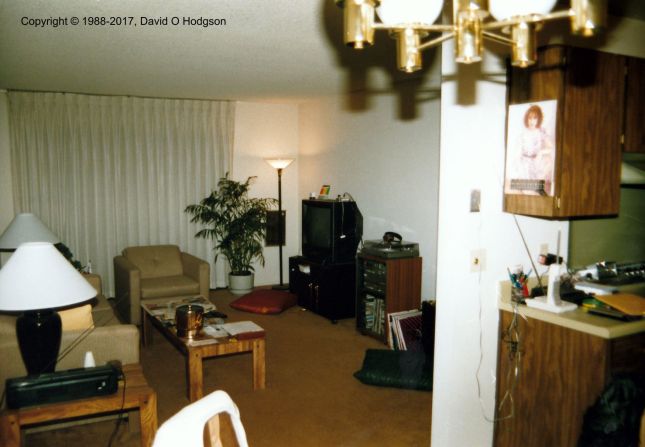
The photo below shows part of my apartment in Foster City. The only item visible in the picture that I brought with me from the UK is the hi-fi system, which I’d bought in London while a student there. Everything else was bought or rented in California. Just visible, on the right, is my new answering machine, which was to cause a completely unexpected change in the direction of my life, as described below.

My Apartment in Foster City, 1988

My Apartment in Foster City, 1988

Driving

California officially only permits visitors to drive on an out-of-state license (so spelled!) for 10 days. After that, you’re required to apply for a California license. Thus, I began the process of applying, which required both a written and practical test. Although my prior experience of driving in Britain actually worked against me (because it made me seem too confident for the California examiner), I did eventually pass both, and had my first California license by December 1987.

What Credit History?

One significant problem that my employer had failed to warn me about was that, despite having a job and a Social Security number, I would be completely unable to obtain credit in the US on arrival. In Britain, I had already bought several cars on credit, had two credit cards, and had credit accounts with several stores, and I was oblivious to the fact that my UK credit rating would be totally meaningless in the US. My credit history outside the US simply didn’t appear on the records, so it effectively didn’t exist.

Buying a car turned out to be a significant problem, because of my lack of accessible credit history. Eventually, I was somehow able to persuade one dealer to grant me credit via General Motors Acceptance Corporation (probably only because it was a secured loan).

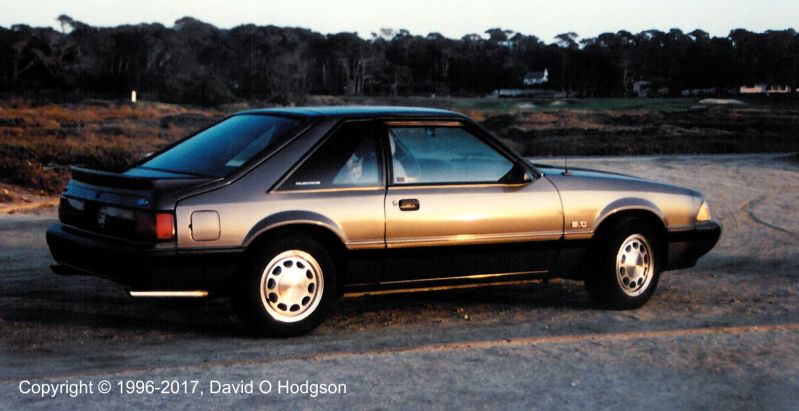
Once I had obtained the car loan, and began making payments, I was able to begin building a US credit history. Nonetheless, for the first year or so, I had to depend entirely on my British credit cards, sending my payments to the UK in US dollars. It seemed “so unfair”, but in fact the time passed quickly. After only 18 months, I’d built up sufficient credit history that I was able to buy a brand-new Ford Mustang, as shown below.

My 1989 Ford Mustang, in Monterey

My 1989 Ford Mustang, in Monterey

Northern California, Where the Girls are Warm…

When deciding whether to move to California, the idea of finding romance there was definitely the last thing on my mind! As I mentioned in the previous article, I did not even have a girlfriend in Britain, and had essentially given up on dating during my undergraduate years.

I must have heard the Steve Miller Band’s song Rock’n Me on the radio in Britain many times since its release in 1976, but I had always completely ignored its lyrics! Part of the lyrics say:

I went from Phoenix, Arizona all the way to Tacoma

Philadelphia, Atlanta, L.A.

Northern California where the girls are warm

So I could be with my sweet baby, yeah

I had emigrated to California strictly for professional reasons, to get a better job. Nonetheless, something completely unexpected happened after I moved to California, which eventually led me to begin dating again. Strangely enough, it happened because I bought an answering machine!

In my British accommodations, I had never had my own phone line, and of course there were no cellphones in those days. When I rented the apartment in Foster City, it came with a dedicated phone line. Given the 8-hour time difference between California and the UK, I was concerned that people from Britain would try to call me in the middle of the night. I decided to invest in an answering machine, so that at least they could leave me a message.

After I had installed the answering machine and recorded my greeting on it, something odd began to happen. I came home from work several times to find messages from anonymous women, explaining that they had just called to hear my “cute accent”! That was something that, for obvious reasons, had never been regarded as in any way special in Britain, but now it made me begin to think that perhaps there was something about me that might be deemed “attractive”!

As I mentioned in an earlier post, I’d obtained seriously distorted preconceptions about California from American media. As such, I assumed that California women would be impressed only by bronzed “surfer dudes”, and would have no interest in pasty-faced Brits such as me!

My Sweet Baby: Mary!

My Sweet Baby: Mary!

I Won’t be Home for Christmas

Ever since I moved away from my parents’ home in Scarborough, it seemed to have been assumed by everyone (including me) that I would return there to spend each Christmas with the family (or what was left of it). While I was a student, those visits were very short, because I was working in Selfridges or other London stores over the Christmas period, so I had to get to Yorkshire and back during the brief period that the stores were actually closed.

My feelings about those visits were very ambivalent. On the one hand, there was little point in staying in London or Andover when my few friends there were also absent (visiting their families). That would have made for a very lonely holiday. On the other hand, I had no friends or activities left in Scarborough, so spending the time there was also quite lonely.

Of course, it would have been very unrealistic to expect my family to leave Scarborough to visit me at Christmas, because I was living in small bedsits or houseshares, which could not accommodate guests. Nonetheless, by 1987, I was becoming anxious to find a solution to the problem, whereby I could find a reason to stay in my own part of the world during the holiday period.

Union Square, San Francisco, At Christmas

Union Square, San Francisco, at Christmas

Moving to California solved this problem once and for all. It simply was no longer practical for me to return to Scarborough at Christmas, so I had to spend it in California. Although that was a little lonely for my first Christmas there, my employer was accustomed to hiring engineers from Britain, and so went out of their way to ensure that we were to some extent included in the seasonal activities of other families.

Working Three-Day Weeks?

I’d also given no thought to the fact that the week after I arrived in California was Thanksgiving, which of course is not celebrated in Britain. As such, my employer treated us to Thanksgiving Lunch at work, then we had two days of the week off.

During the lunch, my employer’s CEO leaned over and mentioned to me:

We don’t do this every week, you know…

A Good Start

As I began to settle in to my new apartment and new job, I felt that I had made a good choice, and I saw little evidence of the problems and disappointments that some had predicted.

In every aspect, my new life was no worse than my previous existence in Britain, and, in many ways, it was much better.

Monochrome Film Photography


St. Mary's Church, Castlegate, York, in 1977I took the photo above, showing the church of St. Mary’s, Castlegate, York, during 1977. It was taken with Ilford FP4 film.

At that time, most of my photographs were taken with monochrome 35mm film, which I developed and printed myself. Most of them were taken for record purposes, without any serious attempt to produce high-quality or artistic results. Nonetheless, the photo above turned out to be one of the best, in terms of composition and tonal balance.

Thinking back now on those days, in this age of ubiquitous digital photography, the concerns and challenges of film photography seem like part of an alien world. Everything seemed more complex, and it was also quite an expensive pursuit. There was no instant feedback; you had to wait for a photograph to be developed before you could assess the quality, which led to much waste, increasing the effective cost of the photographs that ended up being usable.

The Accidental Photographer

During the 1960s my father became a keen amateur photographer. He owned several cameras, plus a complete suite of darkroom equipment, including two enlargers. He was a member of the Scarborough Camera Club, and regularly exhibited his work at their shows. He used a variety of film formats, from 35mm monochrome, through to much larger negative formats in color or monochrome. He developed and printed monochrome film images himself, and although he experimented with developing and printing color images, he found that too complex and expensive to be worthwhile.

By the mid-1970s, my father’s health had deteriorated to the point that he no longer took an active interest in photography, so I found myself “inheriting” all his equipment. At the same time, I was developing an interest in local history, and was soon to begin my Advanced-Level Art study of architecture, so I was able to make perfect use of his equipment. Nonetheless, I had to make tradeoffs regarding cost and quality.

Predicting Digital Photography

In 1983, during my final year as an undergraduate electronic engineering student at Imperial College, London, we were required to prepare a group report on a relevant topic. My group chose to write a report on possible future developments in telecommunications.

One of the future technologies that we predicted was the development of digital cameras. Our prediction wasn’t really too much of a stretch, because digital framestores already existed, and low-resolution framestores were already used in computer monitors.

It took some time for digital image technology to eclipse film, but for all practical purposes we have now reached that point. Perhaps surprisingly, given my professional contributions to digital video technology, even when digital cameras first became available, I continued to use 35mm film (albeit sometimes output to Kodak Photo CD format), on the grounds that digital images were not of comparable quality.

Eventually, however, the digital technology caught up, and the image quality now available even from some phone cameras now surpasses that possible with 35mm film. (Using 35mm film involved so many variables that the ideally-achievable quality was almost never achieved in reality.)

Return to Castlegate

Some 22 years later, in 1999, my wife and I stayed in the Stakis Hotel (now the Hilton) in York, which was constructed later on the site of the brick building in the left foreground of the 1977 photo above.

The present-day Google Streetview version of the same York location can be seen here.

“Such a Vision of the Street”

In his beautiful poem Preludes, written more than a century ago, T S Eliot masterfully evoked the dingy ambience of a rainy urban street.

I was also inspired by night-time photographs of urban settings by other photographers, and I realized that my monochrome film was fast enough to be used at night, if the camera was on a tripod.

One rainy evening, I took my father’s heavy wooden tripod with me to the Odeon roundabout in Scarborough, next to the railway station, and set it up to take some experimental shots. Not all of the photos came out well, but some were quite effective.

The photo below shows the entrance to the Odeon Cinema (now the Stephen Joseph Theatre), when passengers had just alighted from a United 101 service bus. The reflection of light from the wet road surface was particularly effective in this shot.

Scarborough Odeon at night, 1977

Scarborough Odeon at night, 1977

You can see that the Odeon was showing the movie The Pink Panther Strikes Again, which, on another night, I did actually go to see at that cinema.

In those photographs, I was trying to capture the atmosphere of that rainy evening, as eloquently described in Eliot’s poem:

The conscience of a blackened street

Impatient to assume the world.

Goodbye to All That

When I went away to university at the end of 1978, I couldn’t take my father’s processing equipment with me. I continued to take photographs for many more years using Kodachrome transparency film, but that transition marked the end of my brief “career” as a film photographer who processed his own images.

California Confusin’

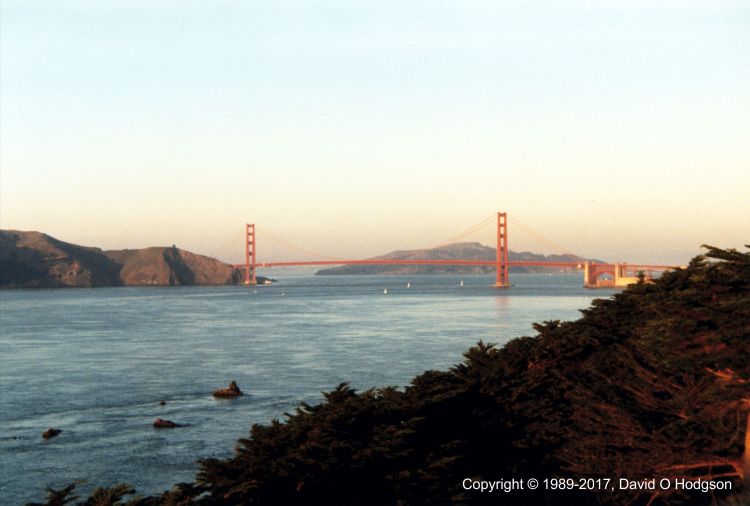
Golden Gate Bridge at Sunset

Golden Gate Bridge at Sunset

The photo above shows one of California’s most iconic views; the Golden Gate Bridge at sunset. I had a reasonably accurate preconception of this location before moving here, but I also had many other conceptions of California that were much less accurate.

In my earlier post describing the events of thirty years ago, by which I came to California, initially temporarily and then permanently, I described how I made a (literally) flying visit to my prospective new employer for interview, then returned to my job in Britain, and was eventually offered the position in California. I finally emigrated in November, 1987.

Reminiscences Interrupted

I’d planned to continue the series with this post, but was of course interrupted by the terrible wildfires that started here on October 9th. In view of that, I felt it more important to post items about my immediate experiences than to reminisce about the events of thirty years ago.

My reasons for choosing to move to California did not include the expectation of a “quiet life”, and indeed it has not been so! (If I had sought that, then staying in my birth town of Scarborough would probably have been the best option!) The fires were not even my “first disaster” in California, since I lived through the Loma Prieta Earthquake in 1989.

A Distorted View

Like most people who’ve never visited the US, and California in particular, I had formed most of my ideas about the place from American movies, TV shows and music. This provided a highly distorted view of American life, and led to considerable confusion and several misconceptions on my part.

The song California Dreamin’ was played regularly on the radio in those days, relaying the message that California was, if nothing else, warm. Of course, the song fails to distinguish Northern California from Southern California, and I was completely ignorant of any distinction between the two.

My parents’ views of the US were informed mostly by my father’s experience during World War II. His only contact with Americans had been a few servicemen that he met while on military service during the war. As a wireless officer in the Royal Air Force, he had flown a variety of British and American aircraft types, the American types being those supplied under Lend-Lease. I formed the conclusion that he admired, but was somewhat jealous of, the perceived wealth and modernity of Americans. (I recall that he had many negative things to say about some British aircraft types—particularly the Bristol Blenheim—but I never heard him say anything negative about any American aircraft type.)

Time to Live the Dream?

In October 1987, having received the offer of a job in Northern California, I quickly had to make the momentous decision as to whether to accept it, which of course would involve moving myself and all my possessions some 5,500 miles to a different continent.

It had been easy enough to dream about some day getting away from the miseries and frustrations of life in Britain, and jetting away to a great job in some far-off country, but now I was actually faced with the prospect of having to do it!

In the back of my mind, I had been assuming that my new employer wouldn’t be expecting me to start working for them before the beginning of 1988, so it was somewhat shocking when they told me that they’d like me to move and start working for them before Christmas.

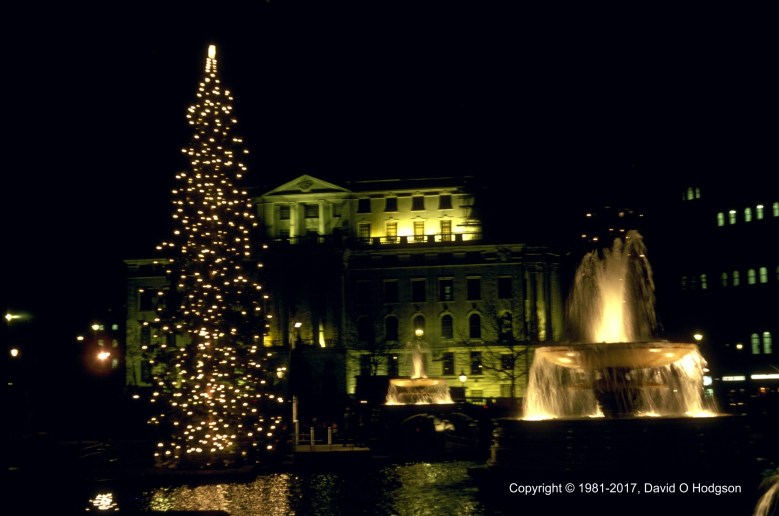
Trafalgar Square, London, at Christmas

Trafalgar Square, London, at Christmas

As it turned out, 1986 was to be my last Christmas in Britain. The photo above shows Trafalgar Square in London, decorated for the holidays, while I was a student there during the early 1980s.

You’ll Live to Regret It!

I naturally couldn’t talk to my work colleagues about my situation, but I did discuss it with my mother and some non-work friends. Some people cautioned me that such a major move could be a huge mistake, which I’d live to regret. It was bound to be very expensive and disruptive (they said), and I’d find myself pining for the comforts of life in Britain soon after I left.

My response to that argument was that, if I tried it and failed, then I could always come back to Britain, and live the rest of my life wiser for my experience. On the other hand, if I passed up the opportunity, there was a real chance that I’d spend the rest of my life regretting what might have been. I could foresee that, every time something bad happened to me in Britain thereafter, I’d have been thinking: “If only I’d taken that job in the US”.

As it turned out, coming to California changed my life for the better in ways that I couldn’t even have imagined when I was making that decision, but I’ll save those details for a future post.

Footloose & Fancy-Free

It is true that, if you’re thinking of starting a new life in a foreign continent, then doing so when you’re young and relatively unencumbered is likely to be easier than making a similar move later on in life.

In my case, I was single—I didn’t even have a girlfriend—and the other surviving members of my small family already lived about 200 miles away from me. Thus there was nobody who was going to miss having me around on a day-to-day basis. I also didn’t have to worry about all the complications of moving a wife and children along with me.

I was living in furnished rented accommodation, so I didn’t have all the hassle of having to sell or rent out a home. I also didn’t have a lot of furniture to have to sell or move with me. The only large item of furniture that I owned was a bookcase, which held much of my large book collection. I discovered that all those items could be shipped to California fairly cheaply by sea.

Living in the Badlands

As I said above, I had obtained all my impressions of California from American TV shows, movies and music. As such, I was quite convinced that the whole of California was a desert, presumably irrigated artificially from somewhere further North.

While I was a student in London, French winemakers were releasing the first quality wines from their California vineyards, such as Mumm Napa. In my mind’s eye, I imagined that the Napa Valley must be an arid desert, with a few straggly vines baking in the unrelenting sun! (In reality it’s more akin to the South of France, but then in those days I’d never visited France either!)

Château of Domaine Carneros, Napa

Château of Domaine Carneros, Napa

Decision Made

There were various other differences to consider, such as the electricity supply, and learning to drive on the other side of the road, but none of those seemed to be insoluble problems.

I gave it all a great deal of thought, based on the information available to me (there being no World Wide Web in those days), and decided that there weren’t really any insurmountable obstacles that would prevent me from going.

As I mentioned above, I felt that, if it didn’t work out well, I could just come back to Britain, and at least I’d have the “experience” to look back on. On the other hand, if I didn’t try, I’d always regret it.

So, I told my prospective employer I was accepting their offer. The first task was to obtain a visa that would allow me to live and work in the country, for which I would once again have to visit the US Embassy in London. Once I’d got that, my new employer would arrange temporary accommodation for me in California, and I’d be ready to make my arrangements to move there.

I contacted Pickfords, to have the contents of my small apartment picked up and packed into a container for shipment to San Francisco. It would take about 3 months for the container to make the journey, so I had to be sure not to let them pack away anything that I would need urgently on arrival.

In the next installment of this series of blog posts, I’ll discuss the surprises that awaited me after I moved to California.

Devastation in Larkfield


Chelsea Drive, Larkfield

Chelsea Drive, Larkfield

The photo above shows Chelsea Drive, Larkfield, just north of Santa Rosa, as it appeared yesterday. Google Streetview shows how this street looked before the fire.

As I mentioned in a previous post, between 2011-13, we lived in a house in Larkfield. That house just escaped the devastation of the Tubbs Fire, but elsewhere nearby entire neighborhoods have been destroyed. Chelsea Drive, shown above, is a few hundred yards south of the street in which we lived.

During the time that we lived there, our local grocery store was Molsberry Market. There are still a few items that I can get only there, so, yesterday, I visited the area for the first time since the disaster.

Fortunately, Molsberry Market itself, and the shopping center in which it’s situated, seem to have escaped unscathed. Yesterday, the sign below was posted on the store’s front door.

Thankyou Poster at Molsberry Market

Thankyou Poster at Molsberry Market

A Thankyou event for First Responders was taking place at the store, and presumably the poster was produced by local schoolchildren. On the bottom right of the poster, it says, “Thanks for Saving Molsberrys”.

Ramsgate Court

The Eastern end of the street immediately north of where we lived, Ramsgate Court, was completely destroyed. The image below shows the view looking East. Our favorite restaurant, Cricklewood, stood on the opposite side of Old Redwood Highway, behind the stop sign in the photo.

Ramsgate Court, Larkfield

Ramsgate Court, Larkfield

Here again is the Google Streetview version.

This tragic scene reminded me of some of those old photos we see of World War II battlefields. Although many of the tree trunks survived, I’m not sure how many of the trees are still alive. In some areas, many are already being felled.

Northtown Animal Hospital

From Larkfield, the burned area stretches south all the way down Old Redwood Highway as far as Fountaingrove.

The veterinary hospital that looked after our cats, when we lived in that area, was Northtown Animal Hospital. The sign in front of the building still seems to be in perfect condition…

Northtown Animal Hospital Sign

Northtown Animal Hospital Sign

…but sadly the building itself did not survive, as shown below.

Northtown Animal Hospital Building

Northtown Animal Hospital Building

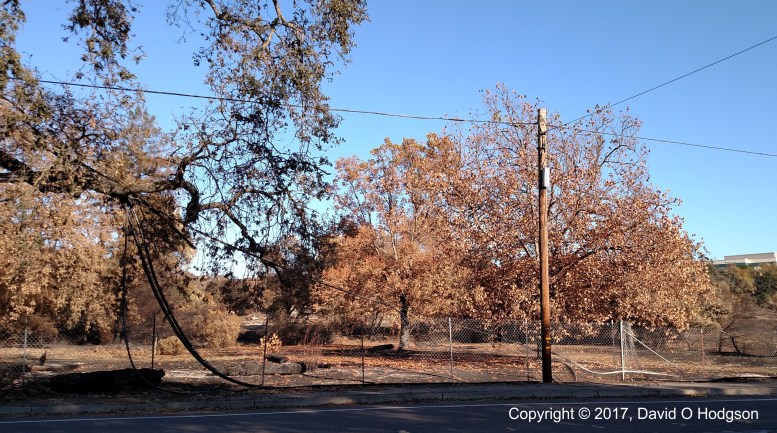
The scene below shows the burned area on the opposite side of Old Redwood Highway from the Northtown Hospital. The cables hanging from the trees are power lines that were downed during the fire. (Fortunately, in our housing development, all cables are “undergrounded”, so we don’t have aerial cables like these.)

Burned Area near Northtown Animal Hospital

Burned Area near Northtown Animal Hospital

There’s no question that it will take a long time to rebuild many of these neighborhoods, and that work is just beginning. Those of us who were lucky enough to escape the devastation can only do what we can to help in the rebuilding process.

It was Thirty Years Ago Today

Unusual view of Downtown San Francisco, from the Legion of Honor

Unusual view of Downtown San Francisco, from the Legion of Honor

It was almost exactly thirty years ago today—on Friday 9th October, 1987—that I first set foot in California.

On that occasion, I had come to the US only as a temporary visitor, to attend a job interview. It was a truly “temporary” visit, lasting only 4 days.

Until then, I had been anything but an experienced international traveler. I’d never been to any part of the USA before, and in fact I’d only been out of Britain three times during my life (and one of those trips was to Guernsey).

Broadening My Horizons

Ever since my undergraduate days, the idea of “working abroad” had been floating in the background as a vague possibility.

In 1986, I even went to Munich for a day, for a job interview with Siemens, but, even though they seemed keen to hire me, I did not pursue that possibility further.

Certainly, the idea that I might one day find myself living and working within sight of the Pacific Ocean never entered my head. It wasn’t until after I’d already moved here that I remembered that we had spent an entire term studying the state as part of our high school Geography course! I had basically ignored the course because it seemed to have no possible relevance to my life.

The Lure of the Dollar

As an Imperial College undergraduate, I began to hear stories of graduates who were obtaining what seemed like spectacular jobs in the USA, straight out of college. The starting salaries for these US jobs were apparently many times those that were offered to even the best British graduates. The figures seemed even more impressive because the dollar and pound were close to parity at that time. Nonetheless, the jobs I was told about were all on the US East Coast; in New York or Maryland.

My goal in getting an EE degree had been specifically to obtain a job with the BBC, which I did on graduating, so initially I felt that the die was cast and I’d already achieved my ambition.

However, my subsequent experience with the BBC and other British engineering employers was a huge disappointment. It seemed that not only were graduate salaries low, but conditions were poor and employers were either inefficient or unstable. I began to think once again of those tantalizing tales I’d been told about the wonderful jobs that were supposedly available in other countries!

The Window Opens

In 1987, I was working as a video systems hardware design engineer for a small company in Berkshire. One of my employer’s competitors was an American company, but had a European operation based in Reading. Word got around that I was looking for new employment, and the competitor contacted me to ask whether I’d be interested in working for them in Reading.

I declined to consider working for them in Reading, at which point they asked whether I might instead be interested in a job in California. Ah, now it’s getting interesting

Following several international phone calls, I managed to arrange an interview appointment at the company’s offices in Northern California. I had to obtain a B-1/B-2 visitor visa just to enter the USA, which meant that I also had to make a trip to the US Embassy in London before departing the UK.

San Francisco or Suffolk?

The plan was that I would arrive in San Francisco on a Friday evening, then have the weekend to do some sightseeing and recover from jet lag. My formal interview would be on Monday, then on Tuesday I’d fly back to Heathrow.

I would obviously have to take some vacation time from my job, but I felt that my current employer would not believe that I was going to California for a holiday just for the weekend! Therefore, I decided to tell them that I was going to visit the US air base at RAF Lakenheath, Suffolk. My mother had an American friend who was a teacher on the air base, and I’d visited her there previously, so it wouldn’t seem out-of-the-ordinary.

It was important to bear in mind that there was no guarantee that the company in California would actually offer me a job. I needed a plausible cover for my actions, so as not to jeopardize my existing position.

Offered the Job

To cut a long story short, I was offered the job in California within a few weeks following my interview. Somewhat to my surprise, my new employer was eager for me to start work there before Christmas, so I began the process of arranging to move myself and all my worldly possessions some 5500 miles.

Nonetheless, I would only be working in the US on a temporary, three-year E-2 visa, so there was always the possibility that I would choose to return to Britain (or might have to do so when the visa expired).

Way Out West. The Pacific Ocean from Pillar Point

Way Out West. Sunset over the Pacific Ocean from near Pillar Point

Return to a Hurricane!

I arrived back in the UK on Tuesday, 13th October, and went back to work the following morning as though nothing unusual had happened. Later that same week, however, the Great Storm of 1987 occurred.

On the night of October 15th, I didn’t hear the weather forecast, so the first I knew of the severity of the storm was when I set off on my 40-mile commute from Andover the following morning, and began noticing that tree branches were down everywhere, even blocking some roads.

[Update: On 15th October, the London Evening Standard published this article about the storm.]

Devastation in Brighton

In those days I was the Treasurer of the Southern Centre of the Royal Television Society, and, prior to my jaunt to California, I had volunteered to help out at the Society’s booth at that year’s International Broadcasting Convention (IBC), which was always held in Brighton. I traveled to Brighton the week after the storm, to see that many of the city’s trees had fallen, and a massive cleanup operation was underway.

It made me think that perhaps the country I’d been born in was itself becoming unrecognizable, so my life was going to change anyway, whether or not I emigrated.

National Techies’ Day

Broadcasting an SMPTE Meeting

Broadcasting an SMPTE Meeting

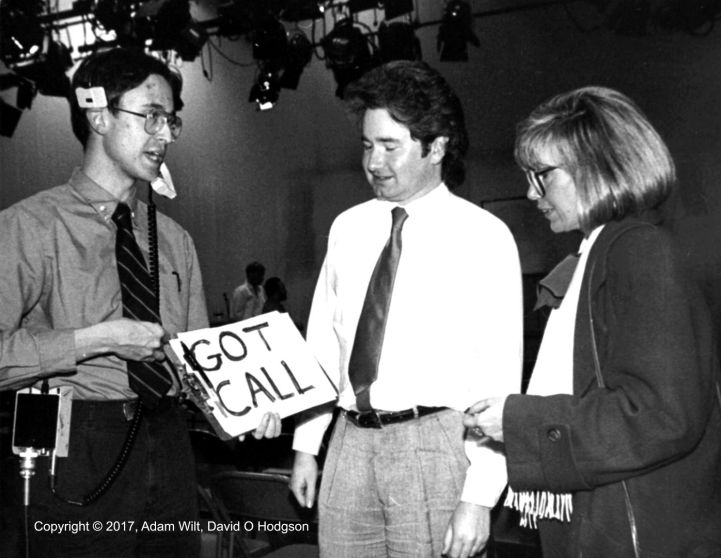
Today (October 3rd) is apparently National Techies’ Day, and, since I’ve contributed in various technical fields for a few decades, I’ll include myself as one of the techies, shown above doing something appropriately “techie”!

The photo was taken during the early 1990s at a meeting of the Society of Motion Picture & Television Engineers (SMPTE). It shows (from left to right): Adam Wilt, me, and my wife Mary.

As I recall, that particular monthly meeting featured a panel of video experts, and was being video broadcast from a studio via a local TV station. During part of the meeting, viewers were encouraged to phone in and ask questions of the panel. Adam and I had volunteered to help run the broadcast.

Adam had assumed the role of Floor Manager, and was responsible for organizing the broadcast crew. My role was to answer the phone and “screen” callers, to try to ensure that only bona fide calls were passed on to the panel. In the photo, I think that Adam is explaining to me how he was going to hold up a sign for the panel moderator to see, to let him know that a call was incoming.

I seem to recall that my screening efforts weren’t entirely successful; at least one “drunk” managed to get past me and talk to the panel! Nonetheless, we had great fun running these meetings, and we certainly got the opportunity to visit some locations that would otherwise have been off-limits to us.

One of our most fascinating meetings was held in Hangar One at NASA’s Moffett Field, and we were given a complete tour of the hangar. That hangar was built during the 1930s to house the huge US Navy airship USS Macon. Sadly, though, I have no photos of that occasion.

Autumn Then & Now


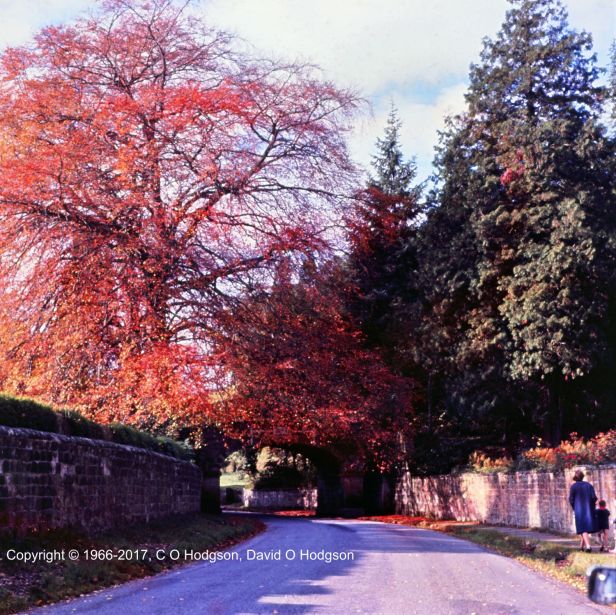
Autumn in Hackness, Yorkshire, 1966

Autumn in Hackness, Yorkshire, 1966

My father took the color transparency above, in Hackness, Yorkshire, during one Autumn in the mid-1960s. It’s a good example of an annual event that we always looked forward to: the “Turning of the Leaves” on deciduous trees. In the photograph, you can see my mother and my brother strolling through “Autumn’s golden gown” on the right.

Growing up in England, the onset of each Autumn brought a variety of both welcome and unwelcome events.

The school year always started in September, and, given that I always hated school, that was definitely not a joyous event. On the other hand, when I was at Primary School, our teachers would often organize some kind of Harvest Festival celebration, which I did enjoy. Given that the North Riding of Yorkshire had a heavily agriculture-dependent economy, harvest time was far from being just a symbolic event.

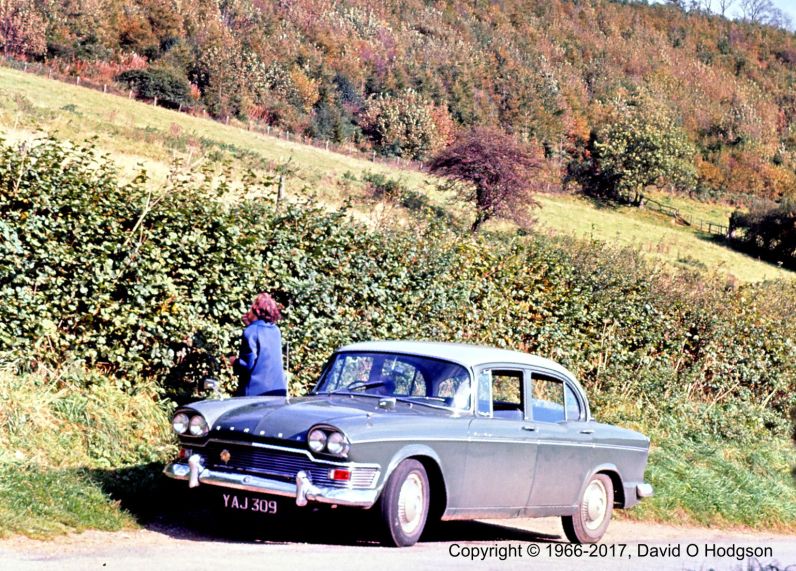
While out in the countryside admiring the foliage colors, we also quite often stopped to pick wild blackberries (brambles) from roadside hedges, where berries were in abundant free supply. It was also sometimes possible to find and pick bilberries in similar locations. I participated in that, but I must admit that I enjoyed the results much more than the actual task! The traffic levels on country roads in those days were generally light, so it was usually no problem to pull the car over to the side of the road wherever we spotted some fruit, as shown below, where my father had parked our Humber Super Snipe to let my mother sample some likely-looking brambles.

Picking Blackberries in Hackness, 1966

Picking Blackberries in Hackness, 1966

Other autumnal events that I welcomed with glee included Guy Fawkes Night (aka Bonfire Night) each 5th November. At that time, Guy Fawkes was the only regular event in Britain at which fireworks were let off (the tradition of fireworks at New Year didn’t start until much later). Fireworks were sold to the general public because, given the damp climate and the time of year, there was little fire danger.

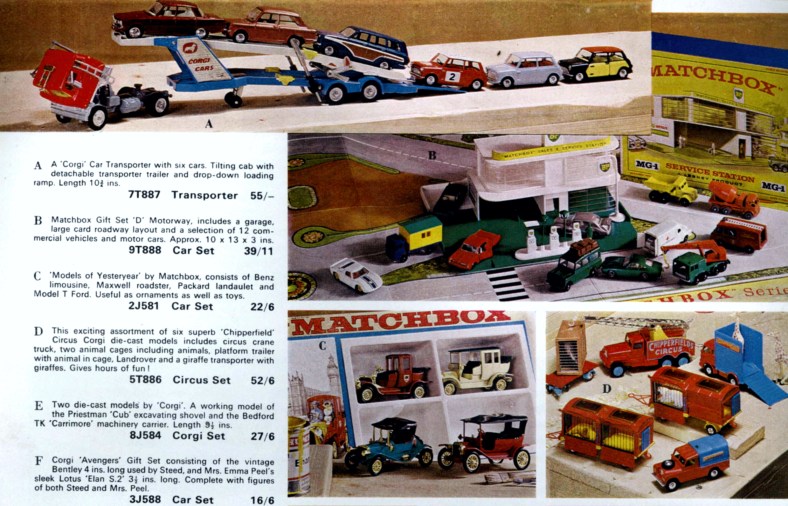
I also looked forward to the arrival of the Winter Catalogues. In those days there were few large stores in or near Scarborough, so my mother did much of her shopping via mail-order “catalogues”, such as Kays, Grattans or John Moores. There were two editions of each catalogue each year: for Summer and Winter. I eagerly anticipated the arrival of the Winter editions in September or October, because those editions included larger selections of toys, and I had Christmas and a birthday coming up for which to make my choices (or at least to dream about them!).

Excerpt from Grattan Catalogue, 1966

Excerpt from Grattan Catalogue, 1966

The image above is part of a page from the Winter 1966-67 Grattan catalogue. The pre-decimal prices shown are explained in my previous post: Old Money.

Fall in California Wine Country

The seasons in California are less pronounced than in England, but we do have noticeable autumnal changes.

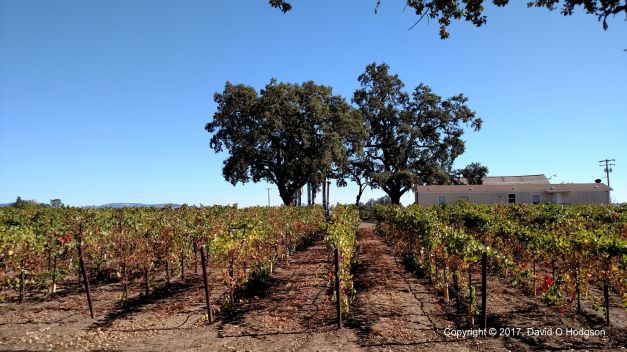
A Laughlin Road Vineyard, Sonoma County

A Laughlin Road Vineyard, Sonoma County

I took the photograph above last weekend of a vineyard at Laughlin Road, Santa Rosa, just near Sonoma County Airport.

Unlike similar species in Britain, California native oaks are “live”, meaning that they do not shed their leaves during the winter (as shown in the photo). Nonetheless, the leaves of the (non-native) vines do change color, and you can just see that process beginning in the photo above.

Once the leaves have changed color, they tend to stay on the trees longer in California than in Britain (probably because California is less windy). The photograph below was taken in Moraga a few years ago, in mid-December. (The photograph is marred only by the bus stop sign in the foreground!)

Autumn Leaves in Moraga

Autumn Leaves in Moraga

I plan to write further posts about Autumn in California, as the season progresses.

Fetters Springs Railroad Depot

The former Fetters Springs Railroad Depot as it appears today

The former Fetters Springs Railroad Depot as it appears today

Last weekend I made one of my fairly regular visits to Napa. On the way along Highway 12, I stopped off at Fetters Hot Springs to view the remains of Fetters Springs Depot. The former railroad depot, which was constructed in 1913 but is now a private house, is the small building with the large overhanging eaves in the photo above. The railroad tracks that served the depot originally ran across in the foreground of the photo.

There are no longer any railroads in Sonoma Valley, but, a century ago, there were two competing railroad lines, both running approximately North-South along the valley floor. The two railroads crossed each other several times along their routes, and were eventually consolidated into one, which makes tracking their courses today particularly complex.

The two railroads were:

  1. Sonoma Valley Railroad (which eventually became part of the North Western Pacific, NWP)
  2. Santa Rosa & Carquinez Railroad (which eventually became part of the Southern Pacific, SP)

Fetters Springs was a stop on the NWP line, as shown in the map below.

Railroads near Sonoma

Railroads near Sonoma

From the 1880s up to the 1960s, several hot spring spa resorts along Highway 12 were popular destinations. The first of those was Boyes Springs, which is now the location of the Sonoma Mission Inn & Spa. Incidentally, the founder of that resort, Captain Henry Boyes, was originally from Hull, England. The development of the Springs area is detailed in the book: Springs, The: Resort Towns of Sonoma Valley.

Until the Golden Gate Bridge was built, the most convenient way to get to the resorts from San Francisco and most of the rest of the Bay Area was via ferry and train, but railroad ridership was already declining by the early 1930s. Passenger trains north of Sonoma were discontinued in 1934, and then, in 1942, all the remaining tracks north of Sonoma were ripped up for wartime reuse in Oakland.

Most of the railroad buildings were of wood, so, even if they didn’t burn down, they were easy to demolish or just let rot away. The depot at Fetters Springs, however, had a tile roof and was sheathed in terrazzo, so it survived and was even worth renovating as a house.

In 1975, the Fetters Springs resort hotel itself burned down, and the ground on which it stood is only now being redeveloped, as shown below.

Site of Fetters Springs Resort

Site of Fetters Springs Resort

The Fetters Springs Apartments (visible in the background above) have been built on part of the site.

You Can Call Me Al(phonse)

H G Wells Society Lecture on Hypnosis, 1982

H G Wells Society Lecture on Hypnosis, 1982

The image above is somewhat adapted from an ink-and-brush poster that I designed for a 1982 lecture on Hypnosis, presented by Imperial College’s H G Wells Society.

Like many artists, I have drawn much inspiration from the work of others. Some have said that no art exists in a cultural vacuum; all art is in some way derived from that of previous works. For this poster, I was strongly inspired by a poster created by the great Czech Art Nouveau illustrator, Alphonse Mucha.

At that time, while trying to generate ideas for the design of the Hypnosis lecture poster, I’d just bought the book Alphonse Mucha: the Graphic Works (cover shown below) from the nearby Victoria & Albert Museum.

Mucha Graphic Works Book Cover

Mucha Graphic Works Book Cover

One work that was reproduced in the book, and which particularly appealed to me, was a poster produced by Mucha for a 1921 exhibition of his own work at the Brooklyn Museum in New York.

I borrowed ideas not only from Mucha, but also from other artists; in fact, the line technique that I used for the hair was inspired by the work of the British illustrator, Robin Jacques.

The Poster

Frankly, my poster design was a bit of a muddle (to put it mildly), because, although it was a striking design that achieved its purpose of attracting attendees to the lecture, I’d completely lost sight of the Art Nouveau style of Mucha’s composition.

For that reason, I decided that I didn’t want to reproduce the original poster here, so the illustration above is an adaptation of my original painting, with some of the most incongruous aspects covered over or redrawn!

My design is monochrome-only, for reasons that I explained in a recent post on my professional blog. The Student Union’s printing equipment was not capable of printing in full color, so, for speed and simplicity, all my poster designs were monochrome.

The Lecture

The lecture on hypnosis that my poster advertised was presented by Martin S Taylor, who soon thereafter went on to become the Editor of the Imperial College Student newspaper, Felix (which traces its ancestry back to the founding of the Science Schools Journal by H G Wells).

I recall Martin’s lecture (and accompanying demonstration) as being utterly fascinating, as indeed were most of the H G Wells Society’s presentations at that time.

Martin’s successor as Felix editor was Pallab Ghosh, whom I’ve already mentioned in a previous post.

Martin was an IC student at the time of the lecture, but apparently he went on to make something of a career of hypnosis, as described on his own web site: http://www.hypnotism.co.uk/