Santa Rosa’s Surviving Round Barn

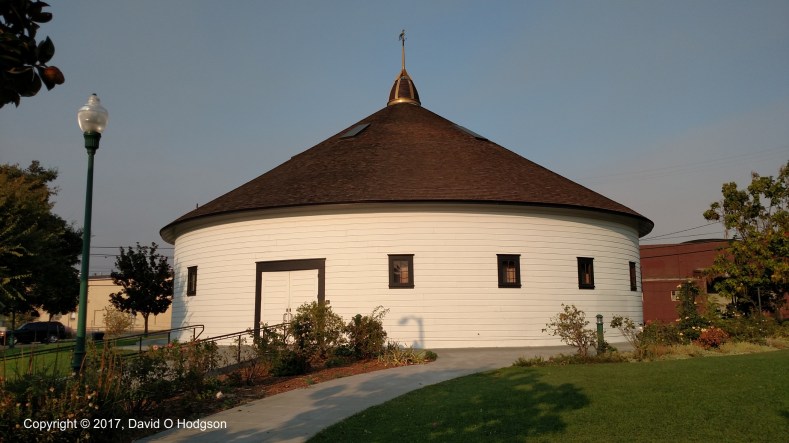
De Turk Round Barn, Santa Rosa

De Turk Round Barn, Santa Rosa

Amid all the tragic news from Wine Country during the past few days, I’m happy to report that the De Turk Round Barn in Santa Rosa, shown above, was not affected by the Tubbs Fire this week.

The Round Barn that did burn down this week was the Fountaingrove Round Barn. However, that barn was actually polygonal or multangular, rather than truly round. As you can see in my photo above, the De Turk barn is clad with curved planking, whereas the Fountaingrove barn had walls of flat planking.

The De Turk barn was built in 1891 by Isaac De Turk, as a stable for his racehorses (hence the horse weather vane visible in the photo above). It was recently restored by the City of Santa Rosa, and can be rented by the public for special events.

The red brick building visible in the distance on the right in my photo was the De Turk Winery, which is currently awaiting refurbishment as an apartment complex.

Here’s a link to the location of the De Turk Barn on Google Streetview, and here’s a link to the location of the destroyed Fountaingrove Barn.

Interactive Fire Damage Map

In my previous post, I mentioned that fire had consumed Cricklewood restaurant, close to the house that we lived in from 2011-13, but I didn’t know whether the house itself had survived. According to the latest interactive map of the Santa Rosa fire damage, the house does appear to have survived, although it was right on the edge of the burned area.

This was the house when we lived there, during the Fall of 2012:

Fall in Larkfield, 2012

Fall in Larkfield, 2012

Wildfires Will Always Happen

There have already been some claims in the media that the fires were caused by Pacific Gas & Electric company’s (PG&E’s) power lines coming into contact with trees during Sunday night’s high winds.

Whether or not those claims turn out to have any foundation at all, playing this “blame game” will never solve the problem of wildfires. In a dry climate like that of the California Wine Country, there have always been wildfires and there always will be. Such fires can be started naturally by lightning strikes, or by somebody dropping a cigarette, or by a vehicle driving along with something scraping the road surface, creating sparks. There are many ways that such fires can start, and it will never be possible to eliminate all the possible causes.

What is needed instead are better building techniques, so that buildings are more effectively fireproofed. (For example, in the latest fires, flat-roofed buildings seem to have been particularly prone to burning. This is probably because flammable material can accumulate on the roofs for many years, just waiting for a falling ember to set it off.)

I can only hope that this disaster will lead to new ideas and laws for better building practices in future.

Fetters Springs Railroad Depot

The former Fetters Springs Railroad Depot as it appears today

The former Fetters Springs Railroad Depot as it appears today

Last weekend I made one of my fairly regular visits to Napa. On the way along Highway 12, I stopped off at Fetters Hot Springs to view the remains of Fetters Springs Depot. The former railroad depot, which was constructed in 1913 but is now a private house, is the small building with the large overhanging eaves in the photo above. The railroad tracks that served the depot originally ran across in the foreground of the photo.

There are no longer any railroads in Sonoma Valley, but, a century ago, there were two competing railroad lines, both running approximately North-South along the valley floor. The two railroads crossed each other several times along their routes, and were eventually consolidated into one, which makes tracking their courses today particularly complex.

The two railroads were:

  1. Sonoma Valley Railroad (which eventually became part of the North Western Pacific, NWP)
  2. Santa Rosa & Carquinez Railroad (which eventually became part of the Southern Pacific, SP)

Fetters Springs was a stop on the NWP line, as shown in the map below.

Railroads near Sonoma

Railroads near Sonoma

From the 1880s up to the 1960s, several hot spring spa resorts along Highway 12 were popular destinations. The first of those was Boyes Springs, which is now the location of the Sonoma Mission Inn & Spa. Incidentally, the founder of that resort, Captain Henry Boyes, was originally from Hull, England. The development of the Springs area is detailed in the book: Springs, The: Resort Towns of Sonoma Valley.

Until the Golden Gate Bridge was built, the most convenient way to get to the resorts from San Francisco and most of the rest of the Bay Area was via ferry and train, but railroad ridership was already declining by the early 1930s. Passenger trains north of Sonoma were discontinued in 1934, and then, in 1942, all the remaining tracks north of Sonoma were ripped up for wartime reuse in Oakland.

Most of the railroad buildings were of wood, so, even if they didn’t burn down, they were easy to demolish or just let rot away. The depot at Fetters Springs, however, had a tile roof and was sheathed in terrazzo, so it survived and was even worth renovating as a house.

In 1975, the Fetters Springs resort hotel itself burned down, and the ground on which it stood is only now being redeveloped, as shown below.

Site of Fetters Springs Resort

Site of Fetters Springs Resort

The Fetters Springs Apartments (visible in the background above) have been built on part of the site.

Napa Reconstruction Continues

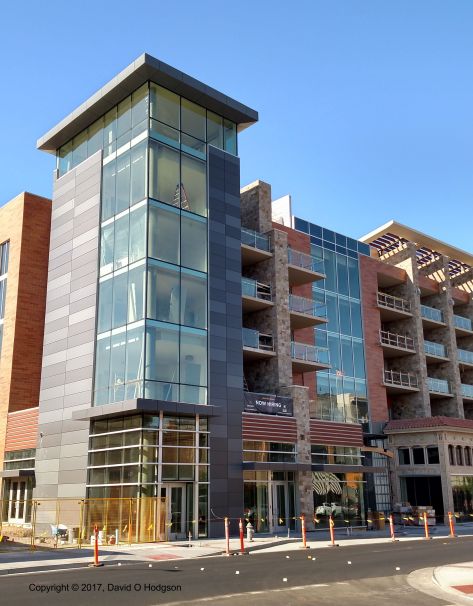
First Street Development, Napa, nearing Completion

First Street Development, Napa, nearing Completion

Amid recent reports of many natural disasters around the world, it’s easy to forget one local disaster that occurred in 2014; the South Napa Earthquake. The photo above shows the current state of reconstruction, on the North side of First Street.

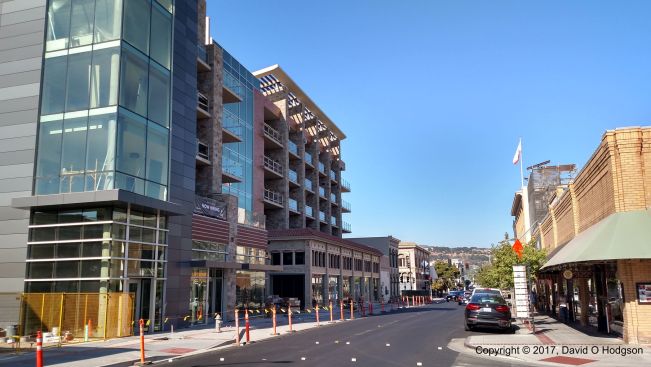
I visited Napa again a couple of weeks ago, and was pleased to see that recovery seems to be continuing in the city. Many downtown properties were made unusable by the quake, and have had to be torn down and rebuilt.

The photo below shows another view east down First Street, towards the river. You can see how the brick and tile frontages of some of the previous shops have neatly been incorporated into the new hotel and shop development.

First Street, Napa, looking East

First Street, Napa, looking East

During my previous visit, in January of this year, I photographed the same shop frontages, but before the new Archer Hotel had risen behind them, as shown below. The more modern shop frontages on the left have now been torn down.

First Street Shop Frontages, January 2017

First Street Shop Frontages, January 2017

Goodman Library Building

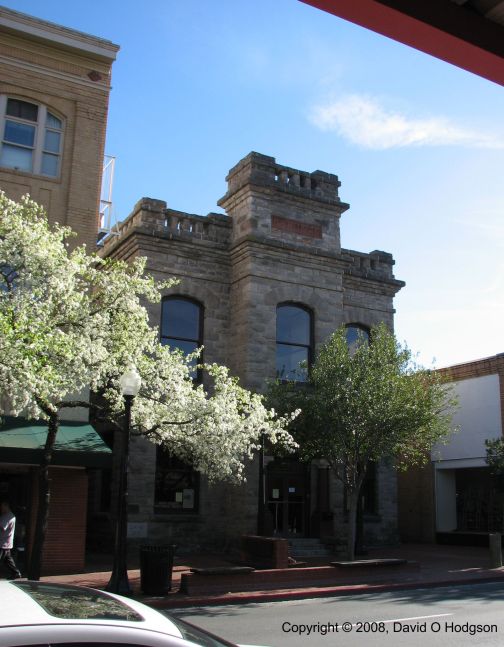
On the South side of First Street, the stone-built Goodman Library Building (which housed the local history society) was very badly damaged by the earthquake, but is now being renovated.

The photo below shows the Goodman Building before the earthquake, in Spring 2008.

Goodman Library Building, Napa, in 2008

Goodman Library Building, Napa, in 2008

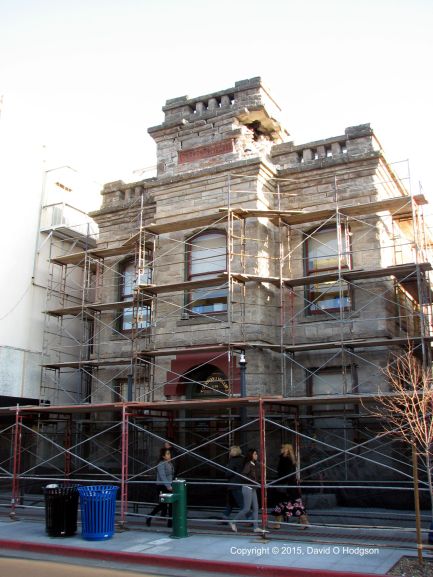
The following photo shows some of the damage to the building, with the street being protected by scaffolding, in 2015.

Goodman Library Building, 2015

Goodman Library Building, 2015

Reconstruction work has now begun.

Things to Come

Ironically, the redevelopment of the rather dreary 1980s-era shopping center on the North side of First Street was already planned before the earthquake. The rebuilding necessitated by the earthquake encouraged a more ambitious redesign.

Hopefully, when the new development is complete, it will have the intended effect of reinvigorating downtown Napa.

Ganton Railway Station: Flashback 40 Years

GantonSignalBox770823cright

Ganton Signal Box and Railway Crossing, North Yorkshire, August 1977

I mentioned in a previous post that during 1977-78, as part of the research for my A-level Art study, I surveyed local road and rail architecture. One site that I visited was that of Ganton Railway Station, on the line from Scarborough to York.

The photo above was taken on 23rd August 1977 (almost exactly 40 years ago), which was obviously a beautiful day. Ganton signal box basks in the sunlit calm, awaiting the next train, with the signalman’s Mini car parked alongside. The signal box was a standard North Eastern Railway Southern Division design of about 1870, but an interesting and unusual feature of it was the large oriel window on the left side. The extra window was provided so that the signalman could have a view up and down the road before closing the crossing gates.

The road that crosses the railway here never saw much traffic, because it leads only to Ganton Golf Course and a few farms. Nonetheless, the crossing was fully guarded and the signal box, which also controlled a block section of the railway line, was manned during operational hours.

Ganton Station had already closed long before my visit, and even at that date the station building itself had been demolished and replaced by a private house (the garden of which is visible on the right in the photo above). The station actually closed to passengers very long ago, in October 1930, along with all the other intermediate stations on the same line.

It was all part of a forward-thinking experiment by the LNER, to streamline operations on the York-Scarborough line by closing all intermediate stations and replacing the stopping services with buses. Much later, during the 1950s and 1960s, such closures and bus replacements became common, but it was quite a new concept in 1930.

All the stations remained open for freight (and occasional excursion trains) until the mid-1960s, when they finally closed completely, and the platforms were demolished.

Even though the railway line remains open, much of the railway architecture along its length has been demolished over the intervening years, leaving an empty and derelict landscape.

GantonSignalBoxSite2007

Site of Ganton Signal Box, 2007

I returned to the site of Ganton Station one dull afternoon in 2007, while back in Scarborough temporarily, seeing my family there. As shown above, what is left is ugly and depressing. The hedges around the private house (on the right) have grown up, but the signal box and all other railway buildings are gone. The crossing is now fully automatic, and there is very little evidence that there was ever a station at the site.

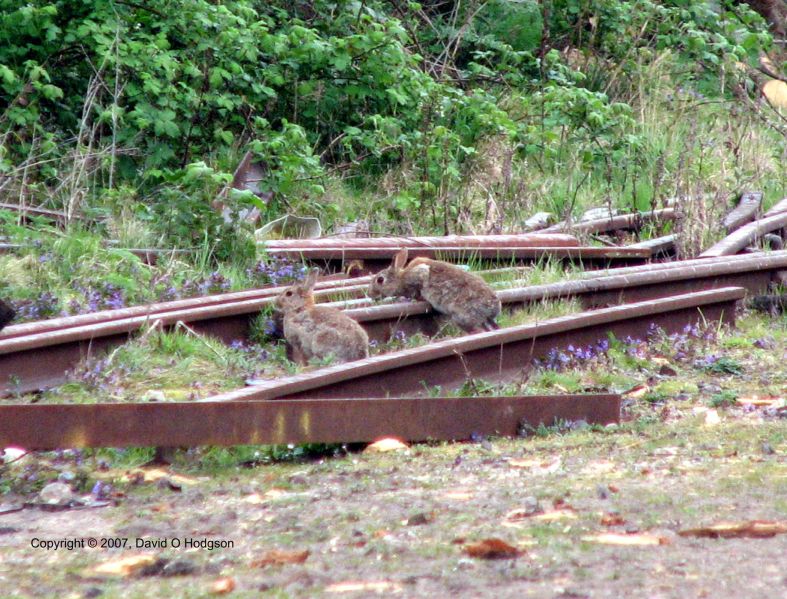
The lack of human presence at the site may be welcomed by the local wildlife, however. During my 2007 visit, a couple of wild rabbits were exploring in abandoned rails in the former coal yard by the side of the track, as shown below.

GantonSignalBoxRabbits2007

Rabbits at the site of Ganton Coal Yard, 2007

Yorkshire Day

Mulberry Hall, Stonegate, York, 2010

Mulberry Hall, Stonegate, York, 2010

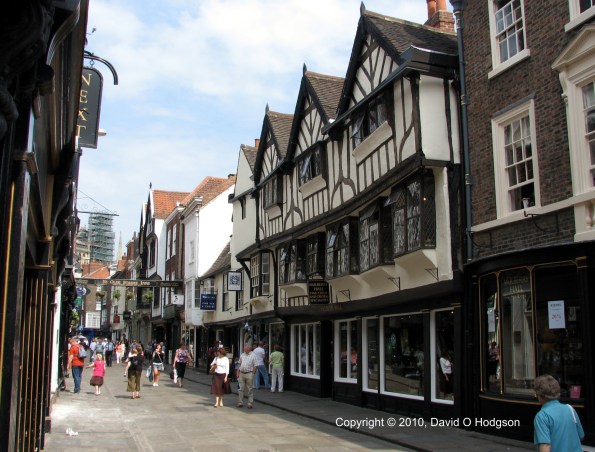
Tomorrow (August 1st) is Yorkshire Day. The photo above shows Mulberry Hall, which is a medieval building on Stonegate in the center of York.

In the background of the photo you can just see part of York Minster, covered in scaffolding at the time of my 2010 visit.

Mulberry Hall was built in 1434, as attested by the date above its front door, although the building has been extended and refurbished several times since then.

For many decades, the building contained a china and glassware shop (which was also called Mulberry Hall). My wife and I always made of point of visiting that shop when we visited York, and we also had gifts sent from there to friends and family in Britain. Sadly, the business closed in 2016, but the building remains, and hopefully will one day again house a prestigious merchant.

York: Two Thousand Years of Adaptation

I was born in Yorkshire, and, during the period 1979-81, I lived in Scarborough but visited York (by train) nearly every Saturday. I can’t think of any other city where there’s so much to do and see, packed into such a compact space. (There are larger cities with many attractions, but they’re more difficult to walk around.) That’s partly because York is a relatively small city that has fulfilled so many roles for the past 2000 years. The earliest recorded settlement was a Roman fort, which eventually became a town. In medieval times the city became a wool trading center and the northern archbishopric of the Church of England. During the nineteenth century, the coming of railways transformed York into a major rail hub and manufacturing center. While still retaining remnants of all those former roles, the city is now a world-class tourist attraction.

If you’re in the area, York is definitely worth visiting, but you’d probably have to spend many months there to see and do everything that is available!

Ye Olde Misspelling

In my photo above, further down Stonegate, you can see a sign over the street advertising Ye Olde Starre Inne. The Starre Inne is almost as old as Mulberry Hall, dating back to 1644, but what’s interesting about the sign is that includes a corrupted Old English letter. The word “Ye” in this context actually means “the”, and is pronounced “the” (although even many Britons are unaware of that).

As I mentioned in a post on my professional blog, prior to the Norman Invasion in 1066, English used two special letters to represent the language’s “th” sound. One of the letters was called thorn (þ), and that letter was sometimes misinterpreted (and mispronounced) as a “y”. Hence, “þe” is often misspelled as “ye”, as in the sign over Stonegate. I doubt that the Inn’s owners will want to change it, however, because you can imagine the difficulties associated with telling customers that they must type “Þe Olde Starre Inne” in their Google searches!

Kirkham Priory Postscript

My Pencil Drawing of Kirkham Priory, 1974-75

My Pencil Drawing of Kirkham Priory Gatehouse, 1974-75

The image above is a pencil drawing that I executed at school in 1974-75, when I was about fourteen. It shows the gatehouse of Kirkham Priory, which was the topic of my previous post.

The gatehouse of the Priory is probably the most famous and recognizable portion of the remains, and has been drawn, painted and photographed many times over the centuries. My own effort wasn’t entirely original, being heavily based on a lithograph produced by William Richardson in 1848.

As I mentioned in the previous post, Kirkham was and is a major tourist attraction, and the same portion of the ruins even featured in railway posters during the twentieth century.

Edit 7/23/17: I obtained the press photograph below via eBay some time ago. The print is dated October 24th, 1927.  It shows the remains of Kirkham Priory just before the Office of Works began excavations.

Kirkham Priory before Excavation, 1927

Kirkham Priory before Excavation, 1927 (Copyright the Times)

The caption on the back of the photo says:

A view of part of the ruins of Kirkham Abbey, in the valley of the Derwent, Yorkshire, which have recently been handed over to the Office of Works by Sir Edward Allen Brotherton. The Abbey was founded by Walter L’Espee [sic], the founder of another Yorkshire abbey, that of Rievaulx, in the North Riding. The work of preservation, which the Office of Works is carrying out, will probably take two years to complete.

Picnic at Kirkham Priory

Picnic at Kirkham Priory, August 1964

Picnic at Kirkham Priory, August 1964

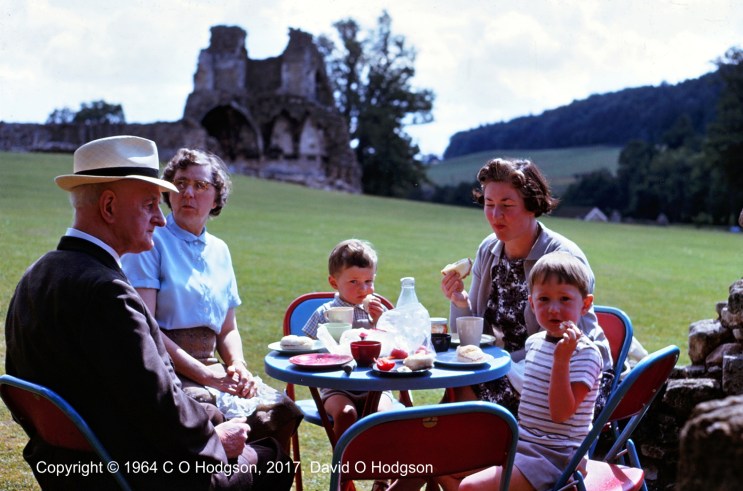
The photo above, from August 1964, shows our family picnic at Kirkham Priory, Yorkshire, during one pleasant weekend afternoon. I’m on the far right, with my mother behind me.

I mentioned in a previous post that the area in which I grew up is scattered with the ruins of many huge medieval (or older) buildings. Some are castles and other fortifications, but there are also a large number of ruined abbeys and other religious buildings. These were all forcibly closed down and partially demolished during Henry VIII’s Dissolution of the Monasteries in 1538-40. The lands seized by the King during that process were then given or sold to personal favorites, so these sites were in private hands for many centuries thereafter.

In the early years of the twentieth century, concerns increased regarding the continuing collapse of the remains of these buildings, which were coming to be regarded as national heritage sites. The Office of Works was pressured to take the properties into public ownership, and it induced the owners to sell, primarily by demanding that they maintain the ruins, and threatening them with huge repair bills if further deterioration occurred!

The Setting of Kirkham Priory

Although Kirkham Priory is by no means the largest or most impressive of the ruins, it enjoys a particularly pretty setting, by the banks of the River Derwent, which was navigable until about 1940. On the opposite bank of the river is the York-Scarborough railway line, and, during the 1920s, the enterprising Station Master of Kirkham Abbey started running a tea room and renting out boats to tourists, further popularizing the spot.

Family Outings

The man on the far left in the photo above is my grandfather, Allen E Martin, and my grandmother is to his right. I described in a previous post how my grandfather spent most of his career working for Leeds City Corporation, then in the 1950s he retired and moved to Scarborough to live with my parents. At that time, my father was the only member of the family who could drive, so he would often take all of us out for a “run”.

We picnicked at Kirkham Priory quite frequently, but the occasion shown in the photo was memorable because of the thoughtfulness of the attendant at the ruins that day. We were going to sit down on a blanket on the ground, but the grass was wet (not unusually in Britain). The attendant saw what we were trying to do, and brought out from a shed the table and chairs shown, especially for our use.

Last Train to British Museum

British Museum Station, London, 1982

British Museum Station, London, 1982

The photograph above, of what seems to be a fairly unremarkable structure, shows the surface building of the London Underground tube station called British Museum. When I took the photo in 1982, I’d already missed the last train to that station… by about 50 years.

At that time, there were threats to close various London tube stations, either because they were little used, or because they were thought to require substantial maintenance work that could not be justified economically. I’d missed British Museum’s closure, though, by virtue of not having being born at the time.

As it turned out, some of the stations that were still open in the 1980s were indeed closed later, but others remain open to this day.

In my photo above, you can see the glazed terracotta faience covering the ground floor exterior walls of the building, which was a characteristic of Central London Railway stations. Originally, the station building consisted only of that one storey, but later an office building was added above it.

British Museum Station was on the Central London Railway (later the Central Line), and was opened along with the line in 1902. The line crossed the Great Northern, Piccadilly & Brompton Railway (later the Piccadilly Line) near Holborn, but there was no underground connection between the two stations, which was very inconvenient for passengers.

It soon became obvious that a common station was desirable, and authorization to build a new station, on the Central Line, was granted before the First World War, but work was delayed by the war. Eventually the new station was completed, and connected to the existing Piccadilly Line station. British Museum station was then permanently closed in 1933.

While riding the Central Line during the 1980s, I remember being able to see the remains of British Museum station through the gloom, as my train approached Holborn. The station’s platforms had been removed, but the white glazed tiles of the station walls were still barely visible, underneath decades of grime.

I’m glad that I took that photo of the surface building in 1982, because, in 1989, everything that remained on the surface was demolished, and there’s now no evidence whatsoever that there was a station there, as is apparent in the current Google Streetview of this location.

Department S

Department S Logo

Department S Logo

Strangely, I had a hint of the existence of the long-closed station long before I had even visited London, because it was mentioned (albeit not shown) in a 1968 episode of the ITC thriller series Department S.

In the episode titled “Last Train to Redbridge”, agent Stewart Sullivan is quizzing Jason King about a mysterious location, to which King was abducted and taken in a drugged state. Piecing together his incomplete memories, King makes sense of the details.

Jason King: An Underground Railway Station…

Stewart Sullivan: Old, disused. That would tie in with the murders. Are there any stations like that?

Jason King: Let’s see. On the Central London Line: two. British Museum, which was closed when they opened Holborn, and when they opened St. Pauls, they closed … Post Office

The dialog is partially factual. The description of British Museum and Holborn is accurate, but there is no closed station called Post Office, because the original Post Office station still exists, having been renamed St. Pauls in 1937.

There is also a station called Redbridge on the Central Line, although it’s not a terminus, so trains don’t generally show it as their final destination. Presumably the title image of the Department S episode shows the actual Redbridge Station nameboard.

Department S: Episode Title

Department S: Episode Title

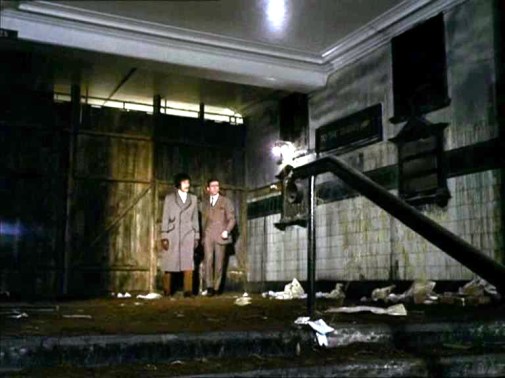
The Department S scenes showing the fictitious Post Office station seem to have been filmed in a real Underground station, as in the scene below. The surroundings just seem too detailed to be a studio set.

Department S: "Post Office" Station

Department S: “Post Office” Station

The station used seems to have been Aldwych, which was still open at that time (albeit only during “peak” hours), but closed later on. I also visited Aldwych in 1982.

Aldwych Station

I mentioned above the Great Northern, Piccadilly & Brompton Railway, which eventually became the Piccadilly Line. This line was formed from the merger of two earlier schemes, one of which was the Great Northern and Strand Railway.

The southern terminus of the GN&SR was a station called “Strand”, which, due to the merger of the two schemes, was eventually built on a branch from the “main line”.

Aldwych Station, 1982

Aldwych Station, 1982

This tatty-looking area is the end of the track at Aldwych Station, as it looked in 1982. The tiling of the walls here was never completed, during the entire life of the station. Given that all trains terminated here, then reversed direction, only the westerly platform was in use, and the track to the other platform had been lifted as long ago as 1917.

During my 1982 visit, I noticed that, on one of the glazed tile walls of the station, the original name was still partially visible, as shown in the rather blurry photo below.

Aldwych Station: Original Name

Aldwych Station: Original Name

Aldwych was closed to the public in 1994, when the sole lift (elevator) at the station required renewal. The site is now used only for private filming purposes. London Transport even keeps a complete tube train on the branch, for use in filming.

Poem: The Ruin

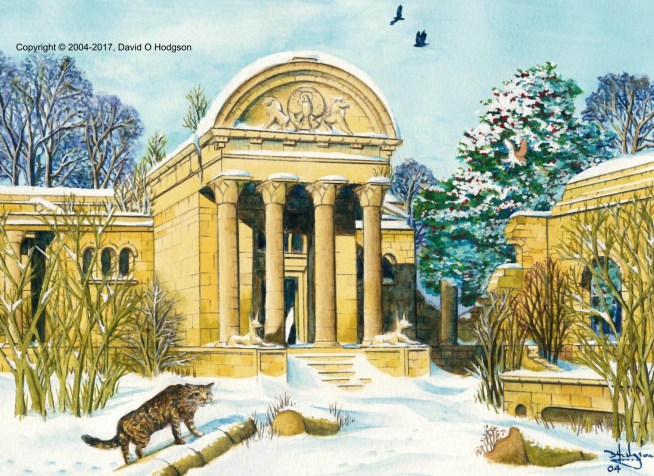
Fictitious Temple in Silchester, c.500 CE

Fictitious Temple in Silchester, c.500 CE

In previous posts, I’ve published some of my own efforts at poetry. This time, I’m publishing a poem by someone else, called “The Ruin”. However, I’m not worried about copyright infringement issues, because not only is the work very long out of copyright, but in fact nobody knows who wrote it!

My watercolor painting above, showing the ruins of a fictitious Roman temple in what’s now England, was partially inspired by the poem. However, the poem I’m discussing here is thought to refer to the city of Bath, while, for various reasons, my ruin was supposed to be in Silchester.

Before discussing the history of the poem, and some thoughts on Roman ruins in Britain, here is the poem itself in the original Old English. (In a previous post on my professional blog, I discussed some of the letters used in Old English, and which appear here.)

Of course, English has changed so much during the past thousand years that no speaker of Modern English can read this without treating it as a foreign language. Nonetheless, the original poem has a beautiful flow and structure, which can be appreciated even if you don’t understand what it actually says.

Unfortunately, the surviving manuscript of the poem is damaged, such that some of the text is either unreadable or missing. In the rendering below, the ellipses show where text is illegible. The punctuation is modern.

The Ruin (Old English)

Wrætlic is þes wealstan, wyrde gebræcon;

burgstede burston, brosnað enta geweorc.

Hrofas sind gehrorene, hreorge torras,

hrungeat berofen, hrim on lime,


scearde scurbeorge scorene, gedrorene,

ældo undereotone. Eorðgrap hafað

waldend wyrhtan forweorone, geleorene,

heardgripe hrusan, oþ hund cnea

werþeoda gewitan. Oft þæs wag gebad


ræghar ond readfah rice æfter oþrum,

ofstonden under stormum; steap geap gedreas.

Wonað giet se …num geheapen,

fel on …

grimme gegrunden …


scan heo…

…g orþonc ærsceaft

…g lamrindum beag

mod mo… …yne swiftne gebrægd

hwætred in hringas, hygerof gebond


weallwalan wirum wundrum togædre.

Beorht wæron burgræced, burnsele monige,

heah horngestreon, heresweg micel,

meodoheall monig mondreama full,

oþþæt þæt onwende wyrd seo swiþe.


Crungon walo wide, cwoman woldagas,

swylt eall fornom secgrofra wera;

wurdon hyra wigsteal westen staþolas,

brosnade burgsteall. Betend crungon

hergas to hrusan. Forþon þas hofu dreorgiað,


ond þæs teaforgeapa tigelum sceadeð

hrostbeages hrof. Hryre wong gecrong

gebrocen to beorgum, þær iu beorn monig

glædmod ond goldbeorht gleoma gefrætwed,

wlonc ond wingal wighyrstum scan;


seah on sinc, on sylfor, on searogimmas,

on ead, on æht, on eorcanstan,

on þas beorhtan burg bradan rices.

Stanhofu stodan, stream hate wearp

widan wylme; weal eall befeng


beorhtan bosme, þær þa baþu wæron,

hat on hreþre. þæt wæs hyðelic.

Leton þonne geotan …

ofer harne stan hate streamas

un…


…þþæt hringmere hate

…þær þa baþu wæron.

þonne is …

…re; þæt is cynelic þing,

huse… burg…

The Waters of Sul

As I mentioned above, it is frequently suggested that the poem describes the remains of the City of Aquae Sulis (“the Waters of Sul”) — the modern City of Bathbut that’s simply an educated guess. The manuscript provides no helpful footnotes nor explanatory detail, so the actual subject of the poem will probably never be known for sure.

Aquae Sulis probably succumbed to a similar fate to that of other conurbations, falling into disrepair some time soon after the empire’s legions were withdrawn from Britannia in 410 CE. After the Roman engineers departed, their Anglo-Saxon replacements were either unable or unwilling to maintain the complex stone buildings, and so either left them to disintegrate, or else removed the materials for other uses. Very little is known regarding the process of this decay, during the period called (for that very reason) the “Dark Ages”, so the existence of this poem offers a rare insight into the conditions of that time.

The Exeter Book

The book containing the only surviving manuscript of the poem is so-called, not because it was written in or about the City of Exeter, but because it forms part of the collection of Exeter Cathedral. The book consists of a sequence of unrelated literary works, including everything from epic poetry to risqué riddles. Its contents appear to have been copied out, by a single scribe, in about 975 CE, although most, if not all, the works contained in the book seem to have been created at earlier dates.

It is known that the book was owned by Bishop Leofric of Exeter until 1070, when he donated it to the cathedral’s library. However, there’s no evidence that the book was held in particularly high regard. Indeed, there is evidence that its front cover was used, at various times, as a cutting board and a beer mat! Some folios are missing, and the fourteen surviving pages nearest to the back have been burned.

The folio containing the poem itself is damaged, which has rendered portions of the middle and end of the poem illegible. Nonetheless, the remaining text provides an extraordinary description of the awe in which the Anglo-Saxon community must have held the crumbling remains of the Roman cities around them.

The Structure of the Poem

The poem exhibits characteristics typical of Old English verse, which distinguish such works from later poetry.

Perhaps the most obvious feature is the caesura in the center of each line (marked by commas or periods above), which imposes a syntactical structure leading to the enjambment of many of the lines.

Another typical feature is the lack of the use of rhyme, which is ironic when one considers that, due to its inflected nature, it was much easier to find rhyming pairs in Old English than in its modern equivalent.

Conversely, very heavy use was made of alliteration (e.g., “weallwalan wīrum” for “iron bonds”), although it is almost impossible to retain this feature in any modern translation.

It’s a real stroke of luck that this remarkable example of historic literary description has survived for us to read, although it makes you wonder how much similarly wonderful literature must have been lost.

Modern English Translation

Although there are no copyright concerns regarding the original Old English version of the poem, most modern translations of it are, of course, subject to copyright restrictions. However, the Wikipedia article about the poem offers one translation:

https://en.wikipedia.org/wiki/The_Ruin

Stumbling on Silchester

At the time that I first learned about this poem, I was living in Andover, UK, and commuted to my job in Wokingham, about 40 miles away. I took several circuitous rural routes between the two locations, depending on traffic and weather conditions. One such route took me past what is now a tiny hamlet called Silchester.

Unlike Bath, Silchester was never repopulated as a city after the post-Roman abandonment. At Silchester, the only remains above ground are portions of the huge city walls, which now surround an empty field. I plan to say more about Silchester in future posts.

Dinky Cars & Modern Architecture

Playing with Dinky and Corgi Cars, 1963

Playing with Dinky and Corgi Cars, 1963

The photo above shows me (on the left), at about the age of 3, playing with model cars in my grandparents’ living room. My mother’s parents lived with us in the same house, so this kind of scene was an everyday occurrence.

The others in the photo are my grandmother (my mother’s mother) and my younger brother.

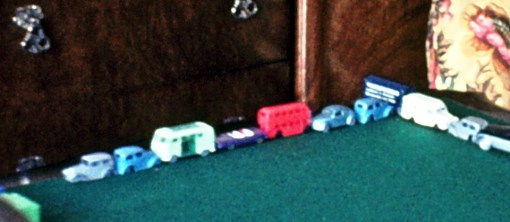
If you look very closely in the photo, you can see some small grey and blue cars lined up, as shown in the rather fuzzy close-up below.

A lineup of Ancient Dinkys

A lineup of Ancient Dinkys

Those cars are in fact Dinky Toys (the Dinky 35a “Saloon Car”), although they’re much smaller than the models that most people think of as being typical Dinkys. That model, produced in the British “OO” railway scale, was produced from 1936-40, and then again from 1946-48. The models I’m playing with were produced post-war. Examples of this model, in good condition, typically sell on eBay now for $50 or more each!

The reason that I came to be playing with Dinky toys that were much older than me was because they actually belonged to my grandfather, who literally had a bag full of them.

Draughting Years

In a post on my professional blog, I mentioned that my grandfather, Allen E Martin, worked for most of his career as a draughtsman for the City of Leeds. The October 1960 photo below shows him (on the right) in our back garden, with my grandmother holding me.

My Grandparents with me, October 1960

My Grandparents with me, October 1960

As part of his work, he produced technical drawings for architectural projects, and the department sometimes created models of proposed new buildings. They used toy cars to decorate these models, and my grandfather apparently took his “bag of Dinkys” home with him when he retired in the 1950s.

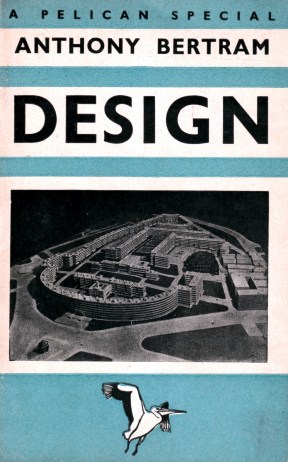
Perhaps the most prominent architectural project in Leeds during the 1930s was the Quarry Hill development. This was so famous, and so well-regarded, that it featured on the cover of the 1938 Penguin book Design, as shown in a scan from my copy below.

Design, by Anthony Bertram, Penguin 1938

Design, by Anthony Bertram, Penguin 1938

My grandfather died in 1967, so I never got to ask him exactly what role he played in the Quarry Hill project, but it would certainly have been a major part of his department’s work at that time.

Unfortunately, despite the best intentions of its builders, and despite being a vast improvement on the slum dwellings that it replaced, Quarry Hill was not a success in the long term, and was eventually demolished in 1978. Some of its problems stemmed from the fact that the development was a very advanced design by the standards of the time. Had the complex survived for a few more decades, it may well have undergone a major refurbishment similar to that at St Pancras Station, and would still be with us as a major landmark.

[Update 9/21/17: see this article for details of the latest redevelopment plans for the Quarry Hill area of Leeds.]

The City of Leeds Arms

Incidentally, the arms of the City of Leeds feature rather unusual supporters, as shown below.

Leeds City Arms

Leeds City Arms

In a future post I’ll discuss the significance of those owls, and how, even though I never lived in Leeds, they seem to have become a recurring theme in my life.