London Terror Attack: Don’t Surrender our Freedoms

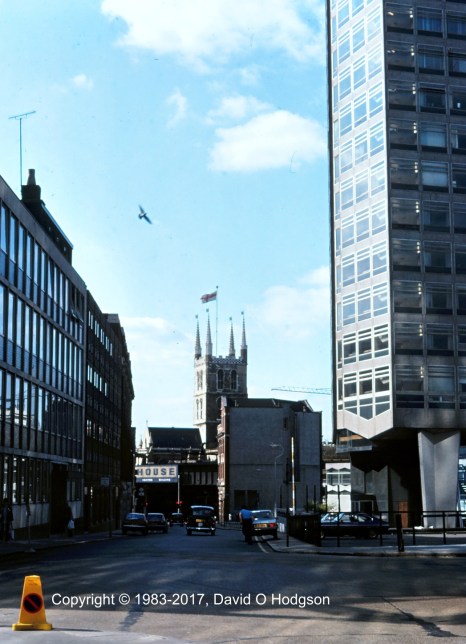
London Bridge Station & Southwark Cathedral, 1983

London Bridge Station & Southwark Cathedral, 1983

I was very saddened to hear the news yesterday of the latest pointless terror attack in London. Naturally, my best wishes and thoughts go out to all those affected by the incident.

This latest incident reminded me of the ever-present terrorist threat that existed when I lived in London during the 1980s. In those days, almost all the threats (real or hoax) came from the IRA, and there were several actual bombings in London while I was there.

As a result of living in London for a few years, I was forced to think about the delicate balance of opportunities and dangers presented by living in a free society.

Bag Searches

In response to the IRA bombings, every building in London that admitted the public adopted a policy of searching the bags of visitors entering the premises. This naturally included the museums near Imperial College on Exhibition Road, such as the Victoria & Albert Museum. Nonetheless, it seemed clear to me that there was really nothing that could be done to prevent all such threats, and that it was inevitable that some attacks would succeed.

I became quite accustomed to the bag searches when going into a building, but, on one occasion, the guard searching my bag admitted that these efforts wouldn’t really deter a serious threat. He said to me, “This is really just to reassure the public. You could put a bomb in a cigarette packet and walk in with it in your pocket, and we’d never spot it.” Sad but true.

While I was a student, I also worked as a Sales Assistant at Selfridges Store in Oxford Street, London. In that job, bomb threats were a daily nuisance, although, while I was there, all of them fortunately turned out to be hoaxes.

The point I want to make here is that, during all the years that I lived in London, I was never personally involved in an actual attack of any kind. The press coverage naturally given to such events makes it seem that they are more widespread than they really are. The attacks of the IRA were a real danger and a constant worry during those years, but they failed in their aims, and they never prevented Londoners from going about their lives.

Unfortunately, it suits the purposes of some politicians to exploit this kind of event to whip up fears and con the public into signing away their own freedoms. We’ve just seen a particularly transparent attempt to do that, with the irrelevant and unhelpful tweeting of Tweedle Don, trying to link the London atrocity in the UK to his unconstitutional travel ban in the US.

Don’t be Intimidated into Surrendering our Freedom!

Given the possibilities for committing terrorist attacks in large conurbations such as London, it’s actually a relief that so few actually succeed. I realize that this is no consolation for those whose lives are affected by these atrocities, but, for the remainder of the population, it’s important not to blow these events out of proportion.

The only way to guarantee that such attacks could not happen would be to implement a surveillance police state, which would entail giving up many of our existing freedoms. However, most of us value our freedom, and wouldn’t want to live in such a state. The price of living in a free society is the risk that a few such horrific events will occur.

Of course, that realization makes it no less shocking when these things do happen.

Days of Coal and Flowers


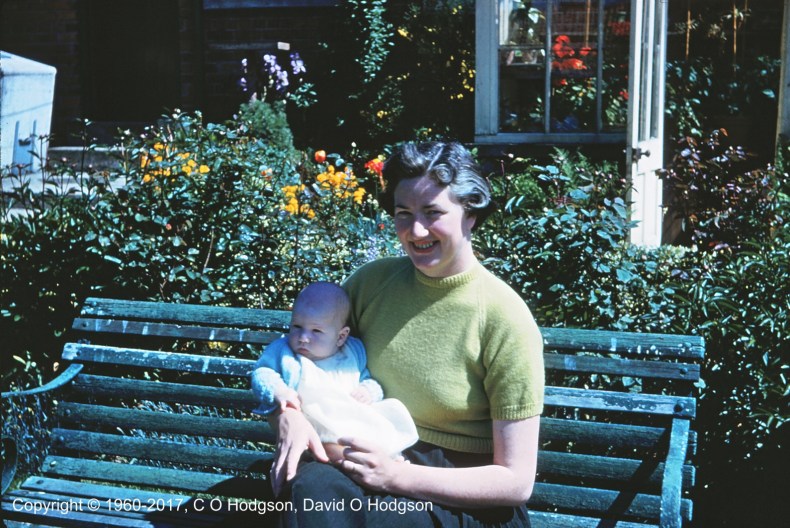
My Mother and Me, June 1960

My Mother with me, June 1960

Today is June 1st, so the photograph above seems like an appropriate flashback selection. This is probably one of the earliest surviving photographs of me, in the arms of my mother, in June 1960.

My mother is sitting on an ancient bench in the back garden of our house in Scalby Road, Scarborough. Behind her is part of our large and verdant garden, on which my father lavished tremendous amounts of time and effort. In the greenhouse that’s visible in the picture, he grew geraniums and tomatoes.

My memories of that garden led me to want something similar of my own when I grew up, and I pushed for that, until I actually got one, and realized just how much work it is! Nowadays, although I still appreciate gardens, I must admit that Mary does much more work in the garden than I do!

All Our Bunkers

Also visible at the far left of the picture above is our coke bunker. In those days, we had both coal fires and coke furnaces in the house, so we had regular deliveries of both. There were large coal bunkers in a yard at the side of the house, but my parents added this extra bunker for coke at the back.

The problem was that it was important not to mix up coal and coke, because one would not burn properly in fires designed for the other. Having the coke bunker in a completely separate location reduced the risk that the delivery person would make a mistake.

During the 1960s, Airfix made a scale model kit of a bungalow that included a coal bunker of this design, among other period features such as a VHF television antenna! The same model is still available now, from Dapol.

With the arrival of North Sea Gas later in the 1960s, my parents took the opportunity to replace all our coal fires with gas, which made life much simpler and cleaner for us. Nonetheless, we still had a coke-burning furnace in the kitchen, which also supplied all our hot water. I can remember my father cleaning out the ashes onto a newspaper every night, then bringing in a scuttle of coke, ready to relight the furnace the following morning.

The Calm before the Storm

The photo above depicts an idyllic moment, perhaps giving the false impression that all was perfect in our lives. In reality, storm clouds were already gathering for our family.

My father had his first stroke within two years of my birth, which meant that he was never again able to maintain the garden to his own high standards.

Concerns about the family’s future income led us to move out of that house in 1970, when my parents bought a guest house on the other side of town (the exterior of which is shown in this article).

The photo below, taken thirteen years later in June 1973, in the much more modest back garden of the guest house, shows (from left to right) my mother, our West Highland terrier Meg, my brother, and me.

Tea in the Garden, West Street, Scarborough, June 1973

Tea in the Garden, West Street, Scarborough, June 1973

Santa Rosa: Shadow of a Courthouse

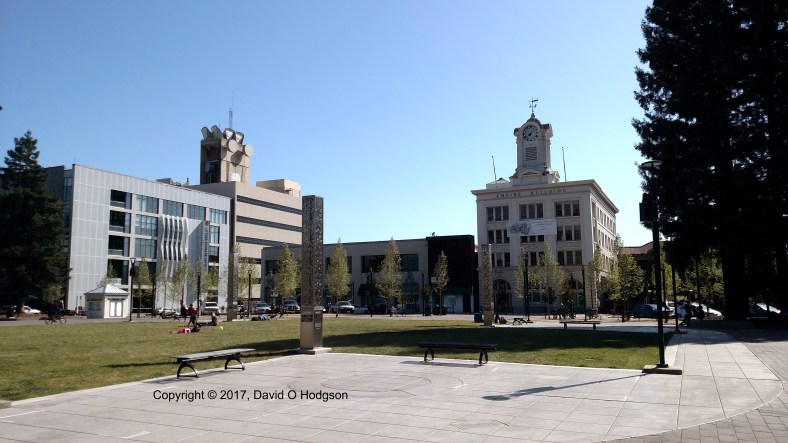
The Reunified Old Courthouse Square, Santa Rosa

The Reunified Old Courthouse Square, Santa Rosa

Yesterday, I was in downtown Santa Rosa, and visited Old Courthouse Square, for the first time since the completion of its “reunification”. Despite controversy over the cost of the project, the result seems to have been successful, as shown above. The new space seems much more open and welcoming than the previous divided “parks”, and more effectively isolates pedestrians and other park users from the traffic. Santa Rosa has had an unfortunate history of short-sighted town planning decisions, so let’s hope that this turns out to be one of the better ones.

This part of Santa Rosa is perhaps most famous for having featured prominently in Alfred Hitchcock’s 1943 movie Shadow of a Doubt. Thanks to its restricted wartime budget, the movie made extensive use of real locations in Santa Rosa instead of studio sets. The result is a unique glimpse into day-to-day life in the city all that time ago.

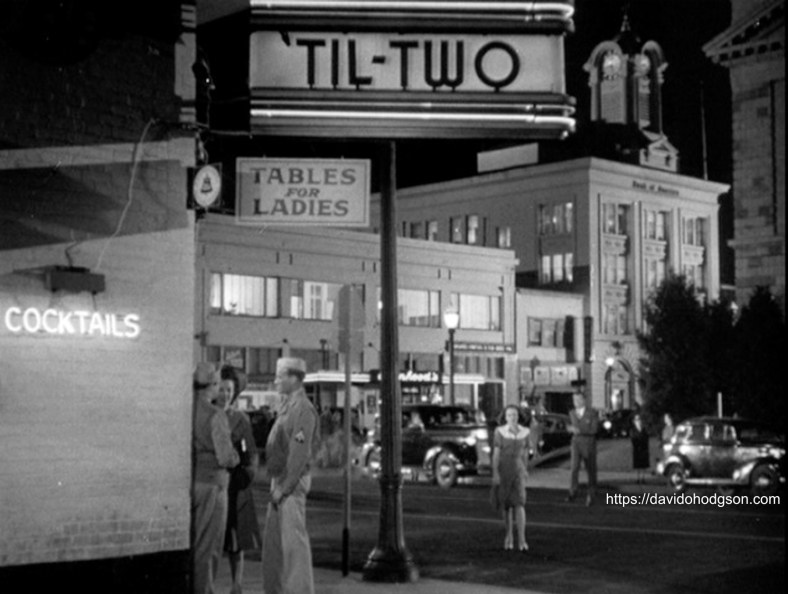
The still below from the movie shows the exterior of the Til Two Bar, which would have been on the far left in my photo above.

Shadow of a Doubt: The Til-Two Bar

Shadow of a Doubt: The Til-Two Bar

In the background of the movie still, you can see the Empire Building (then known as the Bank of America Building), which exists today and is prominent in my photo.

The central courthouse building that appeared in the movie was demolished during the 1960s, but in my heading photo above, the cruciform area of grass marks the plan of its predecessor, the original City courthouse, which collapsed in the 1906 earthquake. After the replacement courthouse was demolished, the square was split by a road driven through to connect Sonoma Avenue to Mendocino Avenue, but which turned out not to have been a wise decision.

My next photo, below, shows a close-up of one of the monuments that have just been placed around the grassed area in the square. They look great at the moment, but I wonder how well they will withstand the weather and the vandals?

Luther Burbank Monument, Old Courthouse Square, Santa Rosa

Luther Burbank Monument, Old Courthouse Square, Santa Rosa

From the north side of the square, looking down Mendocino Avenue, the Rosenberg Building is still prominent, as shown below. This used to be the location of Santa Rosa’s Woolworths store, and is still a retail location now.

OldCourthouseSq3-20170527

The Rosenberg Building, Mendocino Avenue, Santa Rosa

Finally, wandering a bit farther down Fourth Street, the former Rosenberg’s Department Store is occupied by Barnes & Noble, as shown below. Santa Rosa made another bad town planning decision when they approved the building’s demolition in 1994, but, fortunately, instead of demolishing it, the bookseller did an amazing job of restoring this Streamline Moderne (Art Deco) building.

OldCourthouseSq4-20170527

Rosenberg’s Department Store, now Barnes & Noble, Santa Rosa

P.S. June 7th: this new article in the Bohemian provides more details of the square.

Fishbourne Palace: Roman Mosaics & Matrices

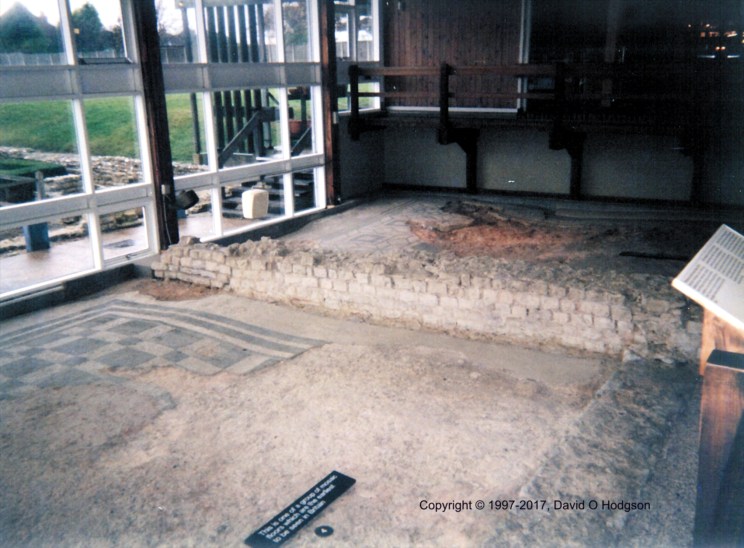
Fishbourne Palace Floors, Sussex, UK

Fishbourne Palace Mosaic Floors, Sussex, UK

Since ceasing to live in the UK in 1987, I have returned many times for visits. On one occasion in 1997, I visited the amazing Roman remains at Fishbourne Palace, near Chichester. This is the largest known Roman residence north of the Alps.

There’s nothing left of this vast palace above ground, and in fact, until work began on a planned housing estate in 1960, nobody knew that it was there at all. Under the surface, however, excavations revealed large numbers of mosaic floors in various states of preservation. The photo above shows some of the mosaics and remaining foundations, which are now housed within a museum that was built over them. Outside the museum, part of the palace’s Roman garden has been recreated.

Cupid on a Dolphin Mosaic, Fishbourne Palace

Cupid on a Dolphin Mosaic, Fishbourne Palace

The photo above shows the famous “Cupid on a Dolphin” mosaic at Fishbourne Palace. By an incredible stroke of luck, the mosaic is perfectly preserved, except for some subsidence of the ground underneath, as is visible above.

Much later, in 2012, I visited another Roman site, Verulamium, near the modern city of St. Albans. This site also features impressive mosaics, and even some surviving decorated plaster walls.

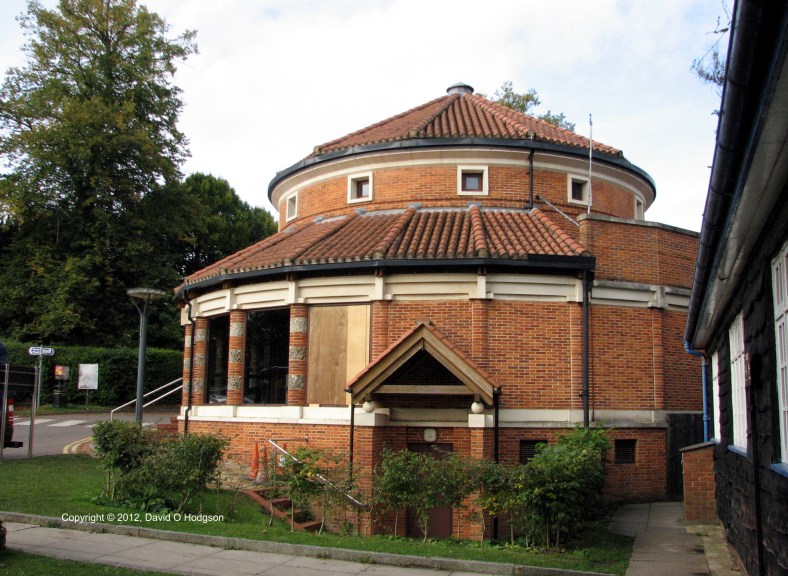
For various reasons, Britain has relatively few surviving Roman structures above ground, but the Verulamium Museum, shown below, is an impressive modern building based on Roman designs.

Verulamium Museum

Verulamium Museum

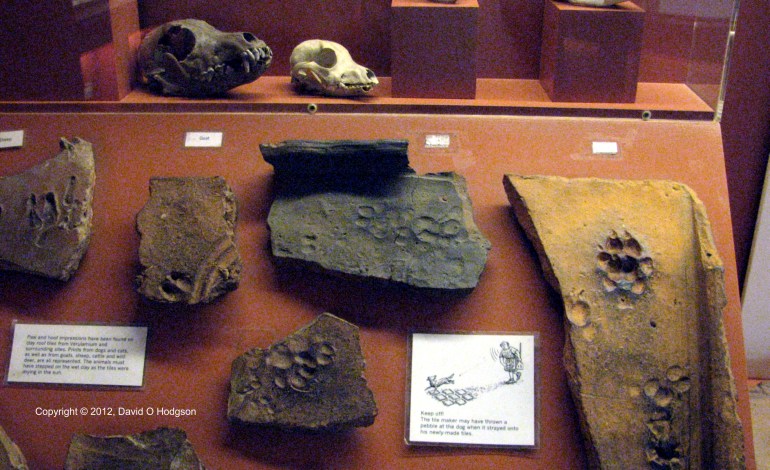
Inside the Verulamium Museum are a wide variety of artefacts discovered during the excavation of the city, including several building tiles that contain paw prints from cats and other animals that walked across them around 2000 years ago.

Animal Paw Prints on Roman Tiles, Verulamium

Animal Paw Prints on Roman Tiles, Verulamium

A cat paw print was also found on a Roman roof tile in Gloucestershire a couple of years ago, as described here.

During my visit to Verulamium, I bought a small but interesting book called Geometric Patterns from Roman Mosaics.

I’ve referred to this little book from time to time since then, whenever I’ve needed some explanation of the construction of Roman mosaics. It only struck me recently, however, that (as described in the book) most Roman mosaics are laid out in a rectangular matrix.

Over on my professional blog, I’ve written several articles about Bitmap Graphics, which are themselves based on rectangular matrices.

It really is an astonishing connection between ancient art and modern technology!

Tragedy in Manchester

Piccadilly Square, Manchester, Summer 1981

Piccadilly Gardens, Manchester, Summer 1981

I heard the tragic news about the bombing in Manchester this evening. Unfortunately, it was far from being the first terror attack in Manchester.

I lived in Manchester during the Summers of 1981-83, during my apprenticeship at Ferranti. At the time, I had mixed feelings, both about the place and the apprenticeship, but now I look back on it as an interesting if challenging part of my life.

Fortunately, there were no terrorist attacks in Manchester while I lived there, but there were other forms of severe violence. For example, in July 1981, there were major riots in parts of the city, and I almost found myself dragged into a follow-up disturbance one Saturday in Piccadilly Gardens.

During 1996, long after I’d left Manchester and Britain, there was an IRA bomb attack at the Arndale Centre, which housed a bus station that I’d used regularly when traveling between my digs in Middleton and the City Centre.

My thoughts and best wishes go out to those affected by the bombing in Manchester today.

And There’s Always the Rain…

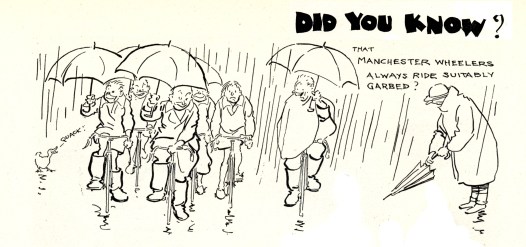
On a much lighter note, Britain is a damp country, but Manchester has a reputation (apparently undeserved) for the being the wettest place in Britain, and there are many tales about that. Here’s a 1938 cartoon by the talented line artist and cycling enthusiast, Frank Patterson.

Frank Patterson: Manchester Wheelers

Frank Patterson: Manchester Wheelers


Sketching the Great Comedian

The Great Comedian, 1986

The Great Comedian, 1986

Back in the days when I used public transport to get to work, I found myself with a substantial amount of “down time”, spent waiting for transport or traveling on transport. I wanted to do something useful with that time, so, one summer, I decided to try to teach myself Classical Greek.

I had learned French (which was mandatory) and German (optional) at high school, but Greek wasn’t even offered at my school. I was inspired to try to learn the language by having read some of the surviving works of classical authors (in English). Unfortunately, many people seem to assume that all those works are heavy tomes of philosophy, or else harrowing tragedies, because that is frequently the false impression given in pop culture. In fact the range of surviving work is much greater.

They Really Are Old Jokes

I was most impressed by the surviving comedies of Aristophanes, who wrote his plays at around the time of the fall of Athens. Naturally, the theme of many of his plays involves the Peloponnesian War, and possible ways to bring it to an honorable end. Nonetheless, many aspects of his plays seem astonishingly modern, and even include the first recorded instances of what would now elicit groans as “old jokes”.

Isn’t it a Whimsical Francis?

Living in Britain in those days, the plays of Aristophanes naturally reminded me of the recent bawdy television comedy series, Up Pompeii, starring Frankie Howerd.

The basic premise of Up Pompeii, that of a cheeky Roman slave who managed the intrigues of his masters, had been inspired by an earlier stage play (which was later made into a movie), A Funny Thing Happened on the Way to the Forum. That play in its turn was derived from the Roman plays of Plautus.

My knowledge of Classical Greek never quite rose to the level of being able to read Aristophanes in the original, but it did inspire me to draw a sketch that was intended for eventual reworking as a painting. The sketch was titled “The Great Comedian”, and was supposed to depict an author whose appearance was inspired by (but deliberately not the same as) Frankie Howerd. I’m also aware that my drawing does not accurately depict an Ancient Greek man, since, for example, all adult males wore beards. A man who did not have a beard would have been thought of as very effeminate.

Learning Sketches

When trying to draw someone with a particular appearance, I find it helpful to do some initial sketches to “get a feel” for the anatomical structure of the person. This is a motor skill, and as such is an intuitive process, which I cannot explain in process terms, any more than you can explain the steps to learning how to catch a ball.

For “The Great Comedian”, I drew some sketches of Frankie Howerd. The drawing below shows him performing in the stage version of “A Funny Thing Happened on the Way to the Forum”.

Frankie Howerd in a Funny Thing Happened on the Way to the Forum

Frankie Howerd in a Funny Thing Happened on the Way to the Forum

On Show at the IEE

The pencil sketch of the Great Comedian, and his female partner, was as far as my project ever got. Nonetheless, my drawings were exhibited at an Art Show at a very unusual location: the Institution of Electrical Engineers (IEE), Savoy Place, London, in 1986. I was a member of the IEE at the time, but, having viewed the exhibits at the show, I was left with the feeling that they expected that the exhibits would be created by the spouses of their engineers. The notion that an engineer might himself be capable of producing competent artwork seemed never to have been considered a possibility.

Legacy of Greek

A hundred years ago or more, most British schoolboys were forced to learn Latin and Ancient Greek. (Most British girls at that time simply didn’t get any education beyond the age of twelve!) The “classics”, as they were called, were later pushed aside for subjects that were considered more modern and with more practical applications.

Personally, I felt that, even though I never became fluent in Classical Greek, learning it was a worthwhile endeavor. I learned the Greek alphabet, and came to appreciate not only the complexities of that ancient language, but also the amount that it has contributed to modern Western culture.

No Religion Please

I mentioned in a previous post that I’d had a “bellyful” of religious fairy tales from a Church of England school during my childhood, so the fact that the New Testament is written in a demotic form of Greek called koine was not a motivation for me to learn the language. Nonetheless, my knowledge of the language came in unexpectedly handy later on, when a Christian proselytizer falsely tried to claim that something in the Bible had been “mistranslated”. To his dismay, I was able to bring out a copy of the book in the original Greek, and demonstrate to him that he was either ignorant or lying!

Short Sunderland at the Tower of London

Short Sunderland at the Tower of London, 1983

Short Sunderland at the Tower of London, 1983

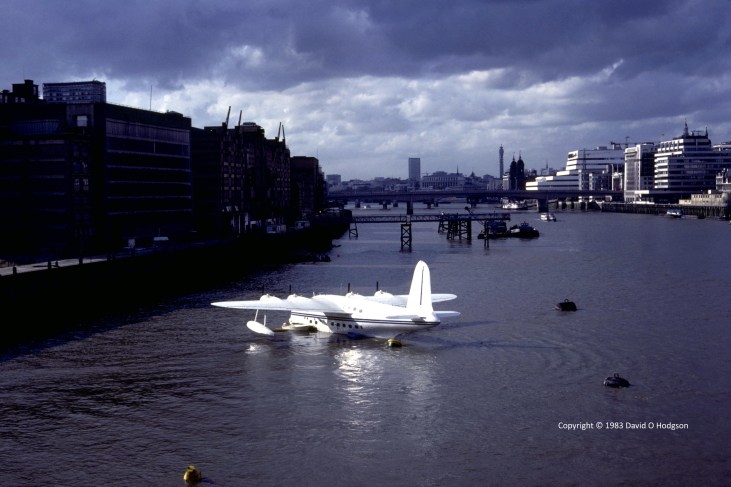
One Sunday afternoon in 1983, I was strolling over Tower Bridge in London, when I happened to look down at the Thames. There, moored in the Pool of London, was a vintage Short Sunderland flying boat. The photo above shows the scene from the South Bank (after I’d walked around from Tower Bridge), with the Tower of London in the background.

I learned later that this aircraft, registered G-BJHS, was the last flying Sunderland. It originally carried the military serial ML814, and served with the Canadian and New Zealand air forces before being civilianized. It now resides at Fantasy of Flight in Florida, but hasn’t flown since 1996.

Incidentally, the “Imperial Airways” markings on the aircraft, visible above, were fictitious and were probably applied for movie work. Imperial Airways was in fact defunct before the Sunderland entered service.

The photo below shows the first view I saw of the aircraft, from Tower Bridge. The same Google Streetview today is almost unrecognizable; the only common features seem to be the River Thames and the Tower of London!

Short Sunderland from Tower  Bridge, London, 1983

Short Sunderland from Tower Bridge, London, 1983

In the background you can clearly see the British Telecom Tower, and, in front of it, the blackened twin towers of Cannon Street Station. The top of the dome of St. Paul’s Cathedral is just visible behind the office blocks on the far right.

This aircraft was already quite the globetrekker that I some day hoped to be, but, back in 1983, my immediate travel ambitions stretched no further than London. The idea that I would soon leave all this behind, and would look back on living in London as a mere stepping-stone to greater things, would probably have been incomprehensible to me.

Architectural Redevelopment: Vandalism or Progress?

St. Pancras International Station, London, 2010

St. Pancras International Station, London, 2010

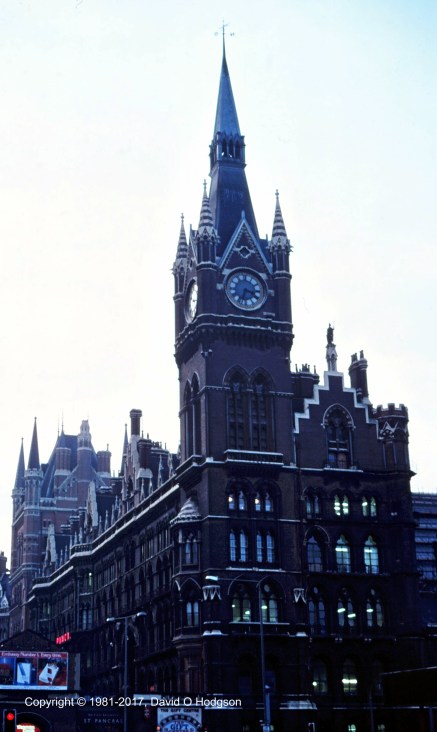
In 2010, I visited a spectacularly transformed St. Pancras Station in London, for the first time since I had lived in the city. In the photograph (below) taken during a 1981 visit, St. Pancras was a dowdy, run-down relic, the only possible future for which seemed to be closure and demolition.

St. Pancras Station, 1981

St. Pancras Station, 1981

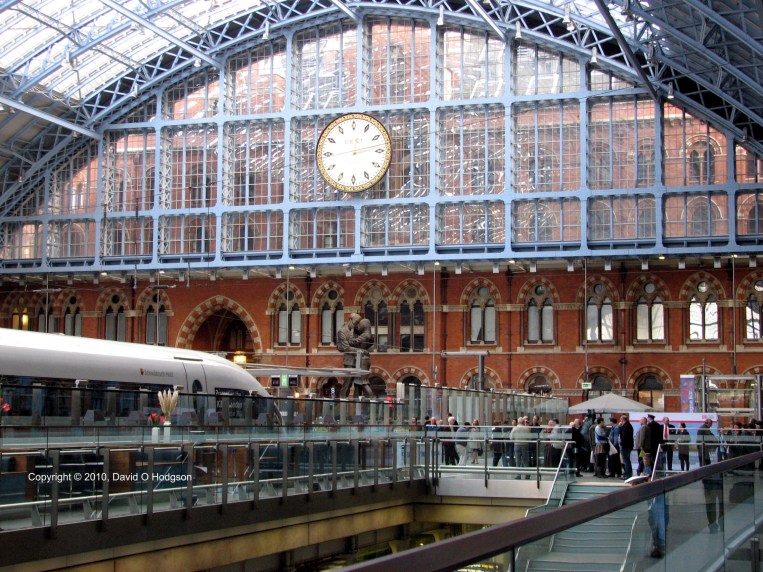
But, thankfully, it was not to be, partly due to the efforts of one man, and instead, the huge Victorian edifice was not only saved, but was transformed into the impressive, functional St. Pancras International Station. The photograph below shows the beautiful and airy interior of the trainshed of St. Pancras International, on a day when a German ICE train was visiting to promote future usage of the station by DB.

Interior of St. Pancras International Station, 2010

Interior of St. Pancras International Station, 2010

Although the redevelopment of St. Pancras is one of the most internationally famous triumphs of architectural rehabilitation, there have been many other examples of success and failure.

Yesterday, someone posted on the Facebook page of my alma mater, Imperial College, a photograph of the Imperial Institute, which was a predecessor building in South Kensington, the site of which is now occupied by Imperial College. That reminded me of the many heated battles that have occurred during my lifetime over architecture, and the demolition or redevelopment of buildings. In the past, the usual result was demolition, but, during the past twenty years or so, more enlightened thinking has prevailed, resulting in such wonderful renovations as St. Pancras.

During the 1960s (long before I became a university student), the Imperial Institute building was the focus of a heated dispute between those who wanted to demolish the Victorian edifice completely, and those who wanted to preserve it.

The redevelopers of the Imperial College campus wanted to sweep away all the Victorian architecture and replace it with what they considered to be modern and functional structures.

However, an organization called the Victorian Society, led by the poet Sir John Betjeman, fought for the preservation of Victorian architecture, and became particularly involved in the Imperial College plans. Although they were not able to save everything, the Victorian Society won a partial victory in that case, and managed to force the developers to retain the central tower of the Imperial Institute, which, as a freestanding building, was renamed the Queens Tower, as shown in my 1981 photograph below.

Queens Tower, Imperial College, in snow, 1981

Queens Tower, Imperial College, in snow, 1981

Now, whenever anyone needs a general photograph of “Imperial College”, you can be fairly certain that they’ll choose a view that includes the Queen’s Tower. The sad reality is that most of Imperial College’s modern architecture has very little character, and the Queen’s Tower has become a de facto icon of the college. (Incidentally, the tower is not the only pre-1960s architecture remaining on the Imperial College campus. For example, the original City & Guilds College building still survives on Prince Consort Road. However, that structure is relatively undistinguished and squat, as you can see in this current Google Streetview.)

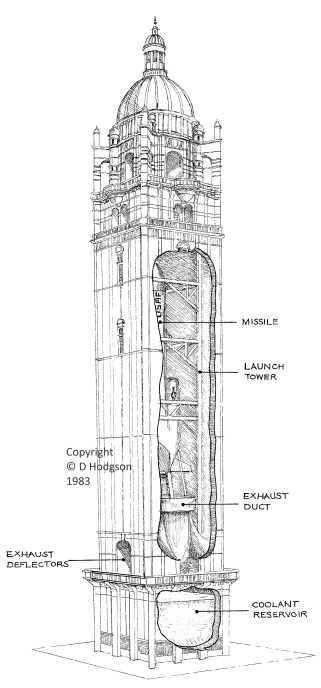
I must admit that, while a student at Imperial College, I myself was responsible for heaping further derision on the Queens Tower. As part of a spoof Felix article about the stationing of US troops within Imperial College, I contributed the illustration below, showing how the Queen’s Tower was to be converted into a launch platform for cruise missiles! (“Felix” was and still is the Imperial College student newspaper, tracing its roots back to the days when H G Wells was a student at the college.)

Queens Tower Missile Installation, 1983

Queens Tower Missile Installation, 1983

Betjeman and the Victorian Society were also instrumental in frustrating plans for the demolition of St. Pancras Station, which preserved the building for its eventual renovation. Appropriately, Betjeman’s contribution has been commemorated with a statue of him on the platform at St. Pancras, as shown below.

Statue of Sir John Betjeman at St. Pancras International Station

Statue of Sir John Betjeman at St. Pancras International Station

Personally, I don’t regard “high Victorian” architecture as being the epitome of good taste, but surely it is preferable to characterless, badly-constructed concrete boxes that replaced so much of it.

In a previous post, I showed how the architecture of Scarborough Central Station was redeveloped from the simple neoclassical design of 1845, to the ornate high-Victorian “wedding cake” that still survives today.

Mount Fuji: The Right Place at the Right Moment

Sunset on Mount Fuji, Japan, November 2007

Sunset on Mount Fuji, Japan, November 2007

I took this photograph of the sun setting on Mount Fuji as we were flying towards Osaka, in November 2007.

Looking back on my life, there have been several occasions where something happened to me that was simply the result of being “in the right place at the right time”. These occurrences were not the result of any great skill or prescience on my part. This photograph was one such instance.

As a Flight Attendant, my wife Mary typically worked flights to Japan, and occasionally I was able to accompany her on those flights. For me, it was a short vacation to a fascinating place.

Mary elected to work a flight to Osaka over the Thanksgiving holiday in 2007, and I went with her. We spent an enjoyable few days there and avoided all the travel hassles in the USA.

As we were approaching Osaka to land, the sun was setting. I happened to look out of the airplane window, and saw the view in the photograph above. It was hazy, but the low rays of the sun were just breaking through and catching the top of the volcano. I’ve never seen Mount Fuji like that again!

Toji Temple, Kyoto, 2007

Toji Temple, Kyoto, 2007

During our stay in Osaka on that occasion, we made a special journey to the grounds of Toji Temple, Kyoto, to visit a flea market. Mary wanted to buy a bead from Japanese beadmaker Akiko Isono, who had a regular stall at the market, and that was exactly what she did.