Santa Rosa: Shadow of a Courthouse

The Reunified Old Courthouse Square, Santa Rosa

The Reunified Old Courthouse Square, Santa Rosa

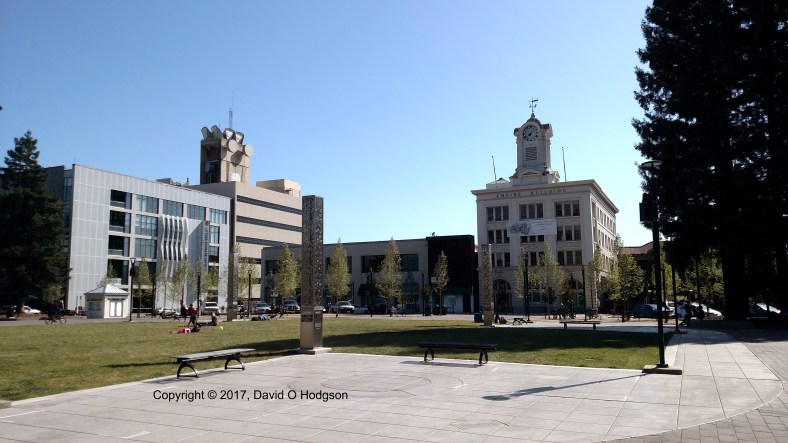
Yesterday, I was in downtown Santa Rosa, and visited Old Courthouse Square, for the first time since the completion of its “reunification”. Despite controversy over the cost of the project, the result seems to have been successful, as shown above. The new space seems much more open and welcoming than the previous divided “parks”, and more effectively isolates pedestrians and other park users from the traffic. Santa Rosa has had an unfortunate history of short-sighted town planning decisions, so let’s hope that this turns out to be one of the better ones.

This part of Santa Rosa is perhaps most famous for having featured prominently in Alfred Hitchcock’s 1943 movie Shadow of a Doubt. Thanks to its restricted wartime budget, the movie made extensive use of real locations in Santa Rosa instead of studio sets. The result is a unique glimpse into day-to-day life in the city all that time ago.

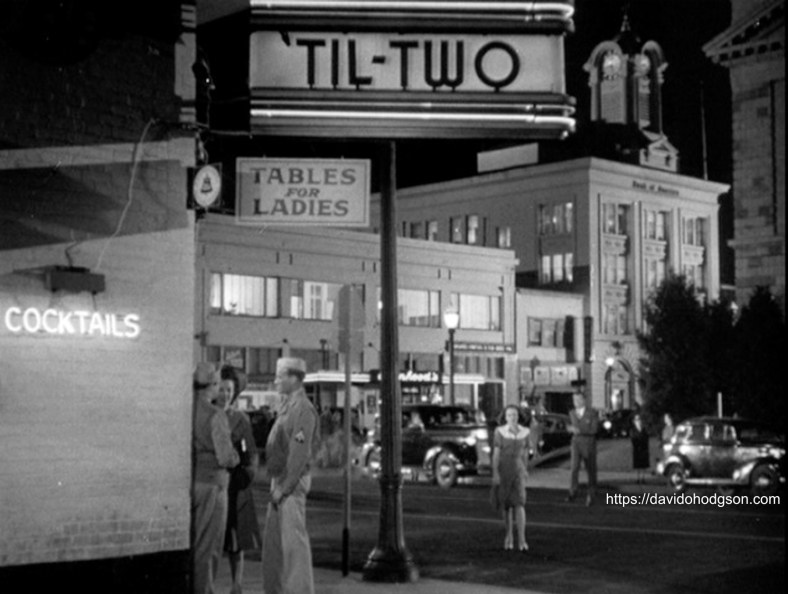
The still below from the movie shows the exterior of the Til Two Bar, which would have been on the far left in my photo above.

Shadow of a Doubt: The Til-Two Bar

Shadow of a Doubt: The Til-Two Bar

In the background of the movie still, you can see the Empire Building (then known as the Bank of America Building), which exists today and is prominent in my photo.

The central courthouse building that appeared in the movie was demolished during the 1960s, but in my heading photo above, the cruciform area of grass marks the plan of its predecessor, the original City courthouse, which collapsed in the 1906 earthquake. After the replacement courthouse was demolished, the square was split by a road driven through to connect Sonoma Avenue to Mendocino Avenue, but which turned out not to have been a wise decision.

My next photo, below, shows a close-up of one of the monuments that have just been placed around the grassed area in the square. They look great at the moment, but I wonder how well they will withstand the weather and the vandals?

Luther Burbank Monument, Old Courthouse Square, Santa Rosa

Luther Burbank Monument, Old Courthouse Square, Santa Rosa

From the north side of the square, looking down Mendocino Avenue, the Rosenberg Building is still prominent, as shown below. This used to be the location of Santa Rosa’s Woolworths store, and is still a retail location now.

OldCourthouseSq3-20170527

The Rosenberg Building, Mendocino Avenue, Santa Rosa

Finally, wandering a bit farther down Fourth Street, the former Rosenberg’s Department Store is occupied by Barnes & Noble, as shown below. Santa Rosa made another bad town planning decision when they approved the building’s demolition in 1994, but, fortunately, instead of demolishing it, the bookseller did an amazing job of restoring this Streamline Moderne (Art Deco) building.

OldCourthouseSq4-20170527

Rosenberg’s Department Store, now Barnes & Noble, Santa Rosa

P.S. June 7th: this new article in the Bohemian provides more details of the square.

Architectural Redevelopment: Vandalism or Progress?

St. Pancras International Station, London, 2010

St. Pancras International Station, London, 2010

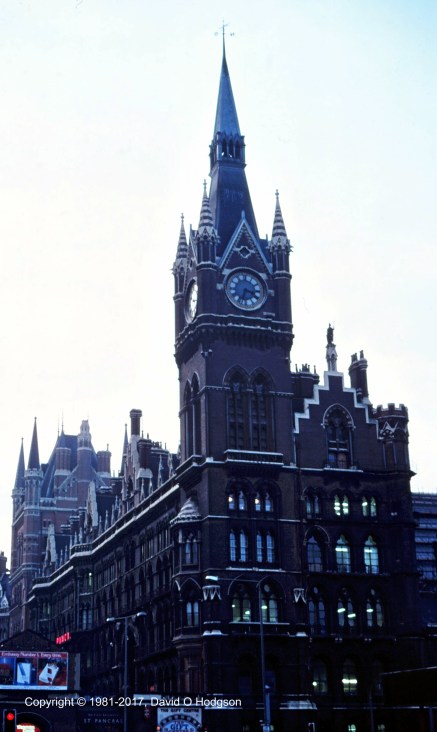
In 2010, I visited a spectacularly transformed St. Pancras Station in London, for the first time since I had lived in the city. In the photograph (below) taken during a 1981 visit, St. Pancras was a dowdy, run-down relic, the only possible future for which seemed to be closure and demolition.

St. Pancras Station, 1981

St. Pancras Station, 1981

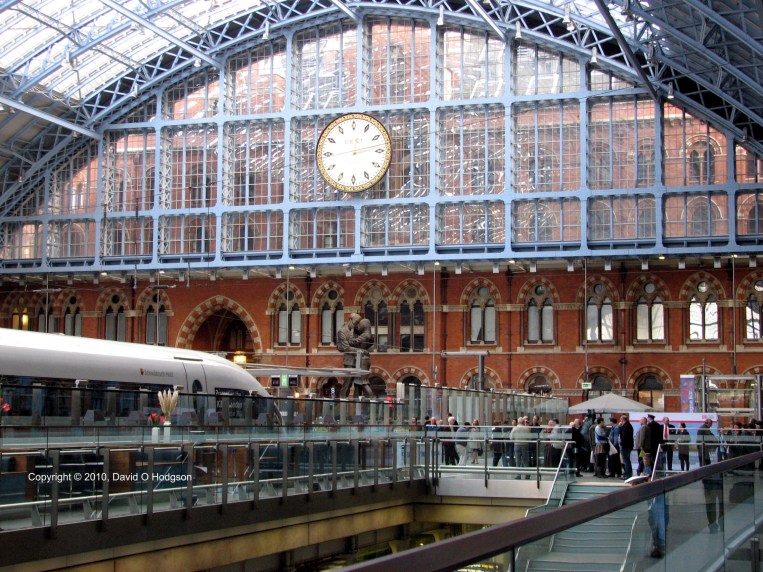
But, thankfully, it was not to be, partly due to the efforts of one man, and instead, the huge Victorian edifice was not only saved, but was transformed into the impressive, functional St. Pancras International Station. The photograph below shows the beautiful and airy interior of the trainshed of St. Pancras International, on a day when a German ICE train was visiting to promote future usage of the station by DB.

Interior of St. Pancras International Station, 2010

Interior of St. Pancras International Station, 2010

Although the redevelopment of St. Pancras is one of the most internationally famous triumphs of architectural rehabilitation, there have been many other examples of success and failure.

Yesterday, someone posted on the Facebook page of my alma mater, Imperial College, a photograph of the Imperial Institute, which was a predecessor building in South Kensington, the site of which is now occupied by Imperial College. That reminded me of the many heated battles that have occurred during my lifetime over architecture, and the demolition or redevelopment of buildings. In the past, the usual result was demolition, but, during the past twenty years or so, more enlightened thinking has prevailed, resulting in such wonderful renovations as St. Pancras.

During the 1960s (long before I became a university student), the Imperial Institute building was the focus of a heated dispute between those who wanted to demolish the Victorian edifice completely, and those who wanted to preserve it.

The redevelopers of the Imperial College campus wanted to sweep away all the Victorian architecture and replace it with what they considered to be modern and functional structures.

However, an organization called the Victorian Society, led by the poet Sir John Betjeman, fought for the preservation of Victorian architecture, and became particularly involved in the Imperial College plans. Although they were not able to save everything, the Victorian Society won a partial victory in that case, and managed to force the developers to retain the central tower of the Imperial Institute, which, as a freestanding building, was renamed the Queens Tower, as shown in my 1981 photograph below.

Queens Tower, Imperial College, in snow, 1981

Queens Tower, Imperial College, in snow, 1981

Now, whenever anyone needs a general photograph of “Imperial College”, you can be fairly certain that they’ll choose a view that includes the Queen’s Tower. The sad reality is that most of Imperial College’s modern architecture has very little character, and the Queen’s Tower has become a de facto icon of the college. (Incidentally, the tower is not the only pre-1960s architecture remaining on the Imperial College campus. For example, the original City & Guilds College building still survives on Prince Consort Road. However, that structure is relatively undistinguished and squat, as you can see in this current Google Streetview.)

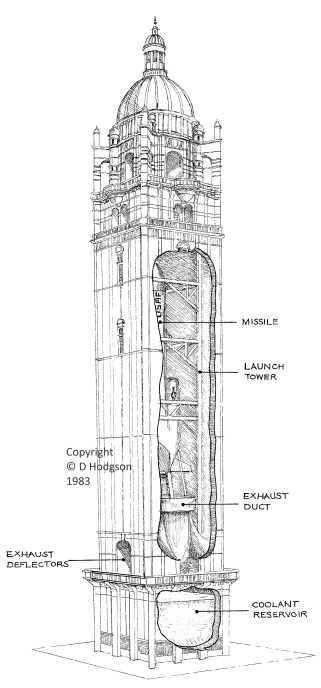
I must admit that, while a student at Imperial College, I myself was responsible for heaping further derision on the Queens Tower. As part of a spoof Felix article about the stationing of US troops within Imperial College, I contributed the illustration below, showing how the Queen’s Tower was to be converted into a launch platform for cruise missiles! (“Felix” was and still is the Imperial College student newspaper, tracing its roots back to the days when H G Wells was a student at the college.)

Queens Tower Missile Installation, 1983

Queens Tower Missile Installation, 1983

Betjeman and the Victorian Society were also instrumental in frustrating plans for the demolition of St. Pancras Station, which preserved the building for its eventual renovation. Appropriately, Betjeman’s contribution has been commemorated with a statue of him on the platform at St. Pancras, as shown below.

Statue of Sir John Betjeman at St. Pancras International Station

Statue of Sir John Betjeman at St. Pancras International Station

Personally, I don’t regard “high Victorian” architecture as being the epitome of good taste, but surely it is preferable to characterless, badly-constructed concrete boxes that replaced so much of it.

In a previous post, I showed how the architecture of Scarborough Central Station was redeveloped from the simple neoclassical design of 1845, to the ornate high-Victorian “wedding cake” that still survives today.

Of Lost Maps & Lost Towns

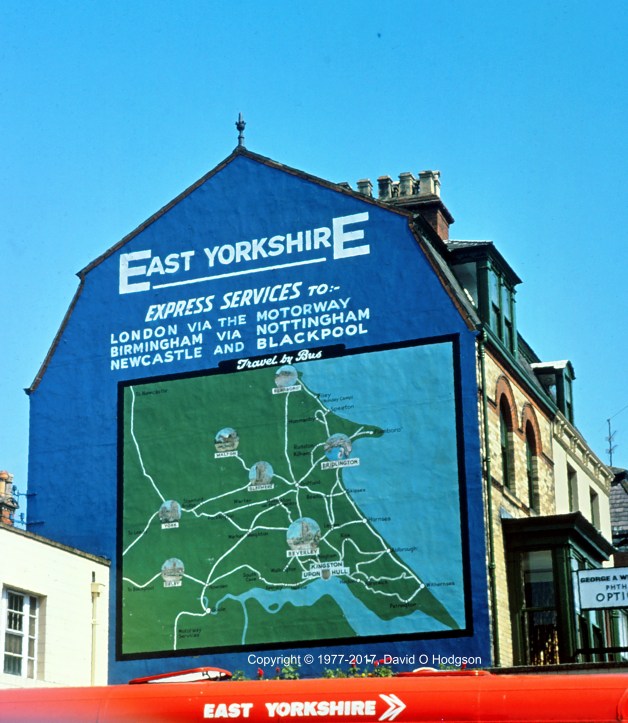
East Yorkshire Wall Map, Bridlington, 1977

East Yorkshire Wall Map, Bridlington, 1977

The Map shown above in my 1977 photograph was for many years displayed on a wall that overlooked the Promenade Bus Station in Bridlington. I was recently scanning some old photographs, and that led me to wonder what had become of the map, and indeed the bus station below it.

At the time of my birth, Bridlington was in the county of the East Riding of Yorkshire, then, in 1974, that became part of the unloved county of Humberside. In 1996, Humberside was abolished, and Bridlington found itself once again in the East Riding of Yorkshire.

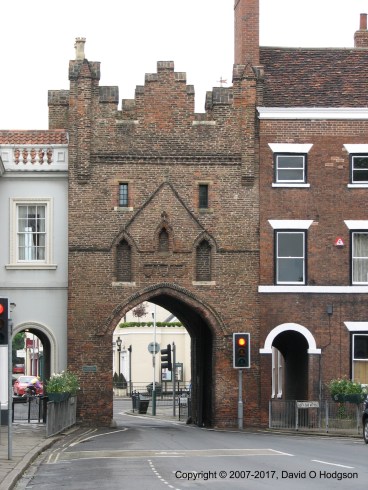
The local bus company in Bridlington was, and still is, East Yorkshire Motor Services (EYMS), which created and maintained the map. EYMS is perhaps most famous for the unique “Gothic” roofs of its double-deck buses, which were specially shaped to fit through the North Bar in the East Riding county town of Beverley. (See this article for a photo of one of the gothic buses squeezing through the bar.) Built in the 15th century, Beverley Bar still exists today, as shown in my 2007 photo below, and is the only remaining brick-built town gate in Britain.

Beverley Bar, 2007

Beverley Bar, 2007

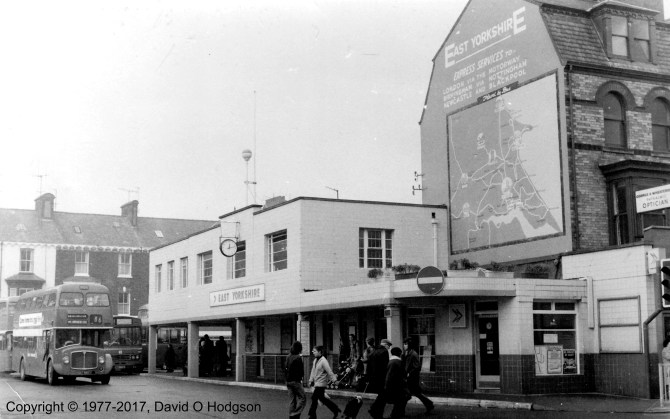
The photo below shows a general view of Bridlington bus station at around the same time as the color photo of the map above.

Bridlington Promenade Bus Station, 1977

Bridlington Promenade Bus Station, 1977

EYMS built the bus station during the 1930s, and the main building was finished in pleasant blue and cream tiles, reflecting the company’s bus liveries, which also used shades of blue and cream.

Unfortunately, the privatization of the British bus industry during the 1980s made such town-centre sites prime targets for sale and redevelopment, as the privatized companies saw opportunities to “externalize their costs” by selling off their own premises and stopping their vehicles on the streets instead, causing further traffic congestion.

Bridlington Bus Station suffered this fate, and closed down years ago, but I wondered what had become of the site. Looking on Google Streetview, I was initially unable to spot any evidence of the location. Eventually, however, I noticed that, even though the station is gone, the building on which the map was painted still exists, and is now a very tatty branch of Boots. Here is the latest Streetview image.

For convenience, here’s an excerpt from that view. You can see the gable end of the building on which the map was painted, and even the finial is still there!

Site of Bridlington Promenade Bus Station

Site of Bridlington Promenade Bus Station

As you can see, the “Promenades” shopping center has been built over the site of the Bus Station. I’m not sure it’s much of an improvement…

They Keep Losing Towns Too!

The East Riding of Yorkshire actually continues to suffer more significant losses of property than just Bridlington Bus Station and its map.

As a teenager, I was a fairly frequent visitor to Scarborough Library, which had some obscure old books about Yorkshire history.

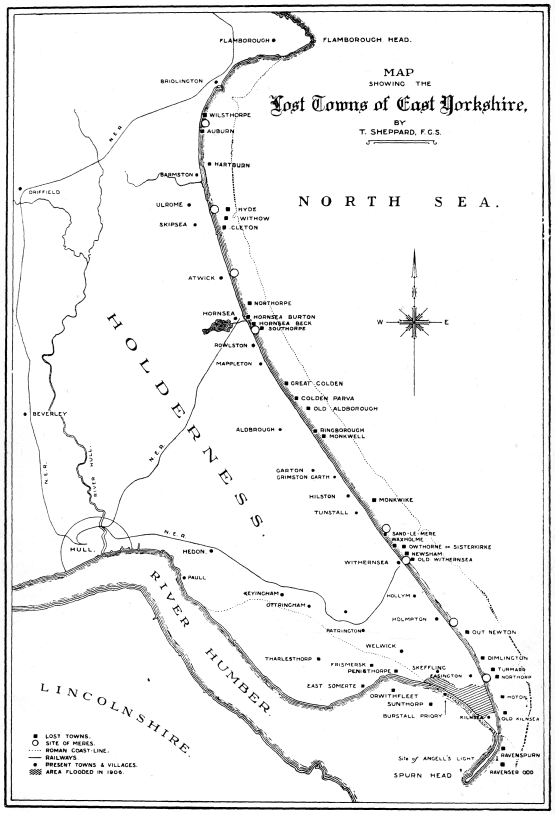
One of these books was “The Lost Towns of the Yorkshire Coast” by Thomas Sheppard, published in 1912. The book describes the severe coastal erosion in East Yorkshire, south of Bridlington. While Bridlington itself is built on the same chalk that forms the Flamborough promontory, the area southwards to Spurn Point (called Holderness) is a soft glacial moraine, which the sea is eroding away very quickly.

The map below is from the frontispiece of the 1912 book, and shows the medieval and modern coastlines of the county. The loss of entire towns due to erosion is quite obvious.

Lost Towns of East Yorkshire

Lost Towns of East Yorkshire

Short of building a sea wall all the way along the coastline, the erosion process is really unstoppable. In the future, there will presumably be some towns and villages sitting on peninsulas where defences have been built locally (such as at Withernsea), but the remainder of Holderness will eventually just be washed away.

The most recent losses of property have been around Aldbrough, as shown in these photos. See it while you can!

Incidentally, Beverley in Yorkshire has no connection to Beverly Hills in California, although the different spellings do sometimes trip people up!

Airspeed York

Former Airspeed Factory, York, in 1979

Former Airspeed Factory, York, in 1979

During an Easter 1979 visit to York, I sought out and photographed the rather tatty and unremarkable building shown above. On close examination, the exterior revealed some vaguely “Art Deco” embellishments, but in general it gave the impression of being just another old warehouse.

The building was located on Piccadilly, York, and was in use as Reynard’s Garage in 1979. It had originally been built as a trolleybus garage in the early 1920s. In 1931, after the trolleybuses had been relocated to larger premises, the building took on a new function as the home of Airspeed Ltd., an aircraft manufacturing company founded by, among others, Nevil Shute and Amy Johnson.

By 1933, Airspeed were ready to expand into larger premises, but York Corporation refused to provide any assistance. Other municipalities around the country took a more enlightened view, and so Airspeed were tempted away from York to Portsmouth, where they built large new premises, then went on to design and build many successful aircraft designs, such as the Oxford and Horsa.

Sadly, in 2015 the now-derelict building was finally demolished, despite public pressure to save it. Perhaps York Corporation wanted to rid themselves of this daily reminder of their own lack of foresight back in the 1930s?

This link displays the current Google Streetview of this location.

Covent Garden: Then & Now

Covent Garden after the Rain, 1982

Covent Garden after the Rain, 1982

I took the color transparency above in Covent Garden, London, one afternoon in 1982, just after a short rain shower. Even though the buildings were against the sun and mostly in darkness, the wet cobbles reflected the sunset and created a fantastic lighting effect. It really was a case of being in the right place at the right time, and with the right equipment.

I’d actually been inside the London Transport Museum, which was immediately behind me in the photograph. While in the museum, I heard the rain on the roof, but couldn’t see it because of the building’s high windows. Soon after the rain stopped, I noticed a brilliant orange glow reflecting onto the ceiling. Thinking that this might be a great opportunity, I rushed outside, and I wasn’t disappointed. Ever since then, I’ve been glad that I impetuously cut short my visit to the museum that afternoon!

Yesterday’s pointless atrocity in London brought to mind this photo, and the terrorist threats that always hung over us, even back when I lived there in the 1980s. In those days, most of the threats came from the IRA (or people claiming to represent them), but only a very small number were real.

As a student, I worked as a Sales Assistant at Selfridges store in Oxford Street during some of the university breaks, and sometimes on Saturdays. As part of our training, we received specific instructions as to what to do if we were notified of a bomb threat, because the store received such threats almost every day! Fortunately, while I lived in London, all the threats at Selfridges were hoaxes, but there was a car bomb at Harrods during Christmas 1983, and I had worked at Harrods only the previous Christmas.

Covent Garden in 2001

Covent Garden in 2001

In 2001, I returned to Covent Garden, and took the photo above from almost the same position as the 1982 photograph, but in obviously different weather conditions. (It’s true that a further 16 years have passed since I took the “Now” photograph!)

At first, everything seemed to be just the same as it had been in 1982, and it wasn’t until I compared the two photographs that I realized what had changed.

The building that was originally Covent Garden market hall is still visible on the right, and it’s as popular a destination now as it was then.

In the earlier photograph, there’s a multi-storey building on the left with many rooms obviously lit by fluorescent strip lights. By the time of the later photograph, this building had been completely replaced. Had that happened a couple of decades earlier, it’s likely that the entire street would have been razed and replaced with examples of “modern architecture”, but fortunately lessons have been learned since then. Many modern redevelopments at least attempt to blend with the surrounding architecture.

Indiana Jones & the Treasure Island

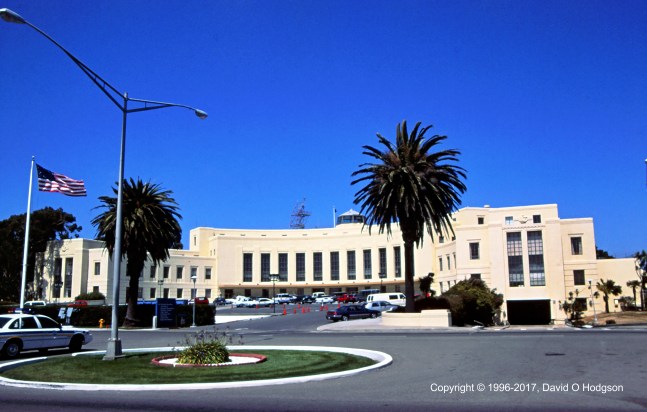
Administration Building, Treasure Island

Administration Building, Treasure Island

There are many islands in San Francisco Bay, and most of them are natural. There is however one artificial island that has a short but intriguing history. It’s called Treasure Island, and it was built during the 1930s as the intended location of San Francisco Airport.

The Administration Building on Treasure Island enjoyed its “fifteen minutes of fame” (or less) in the movie Indiana Jones and the Last Crusade, when the airport terminal building was dressed up to portray “Berlin Airport”. The remainder of its existence has mostly been quiet, but its fascinating Art Deco architecture remains on public view to this day.

The first use of the new island was not as an airport, but to host the 1939 Golden Gate International Exposition. The island’s airport facilities were used by PanAm’s Clipper flying boats, which moored at Clipper Cove (aka the Lagoon of the Trade Winds), between Treasure Island and Yerba Buena Island. This information is missing from the Wikipedia article, but I have a copy of a 1939 color movie titled Trans-Pacific, which shows PanAm passengers arriving at the terminal and boarding a Boeing 314 clipper, which then leaves from Clipper Cove.

After the start of World War II, the US Navy took over the island as a base, swapping the land for its existing base at Mills Field on the Peninsula. As a result, after the War the new San Francisco Airport was developed at Mills Field (which was just as well, because Treasure Island would have been impossibly small). The surviving Boeing 314s actually flew from the shoreline at Mills Field for a short time in 1945-46.

During the 1990s, I was a member of the Treasure Island Museum Association, and was involved with efforts to maintain the museum that was located in the Administration Building, so I visited the island quite frequently, and took the photographs shown in this post. Unfortunately, the museum closed in 1997, due to lack of financial support, but, now that the City of San Francisco owns the building, there are plans to reopen it.

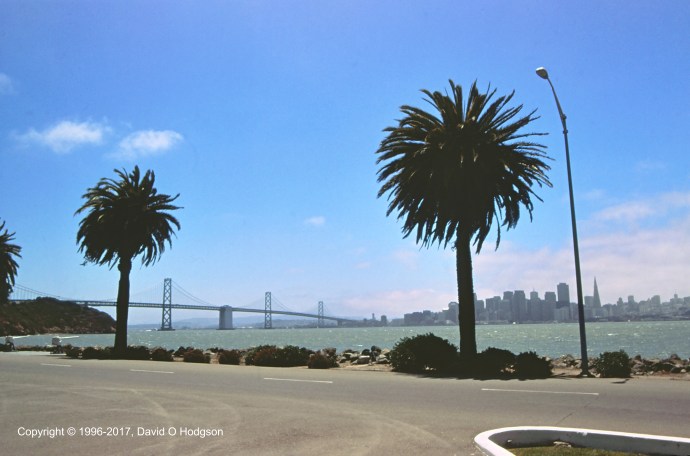
View of Bay Bridge and San Francisco from Treasure Island

View of Bay Bridge and San Francisco from Treasure Island

The spectacular view from the Administration Building towards San Francisco and the Bay Bridge.

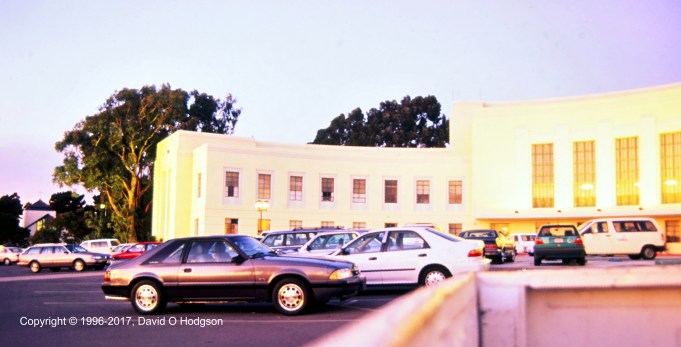
Treasure Island with Mustang

Treasure Island with Mustang

The Administration Building one summer evening, with my Mustang parked in front.

Sunset over the Golden Gate from Treasure Island

Sunset over the Golden Gate from Treasure Island

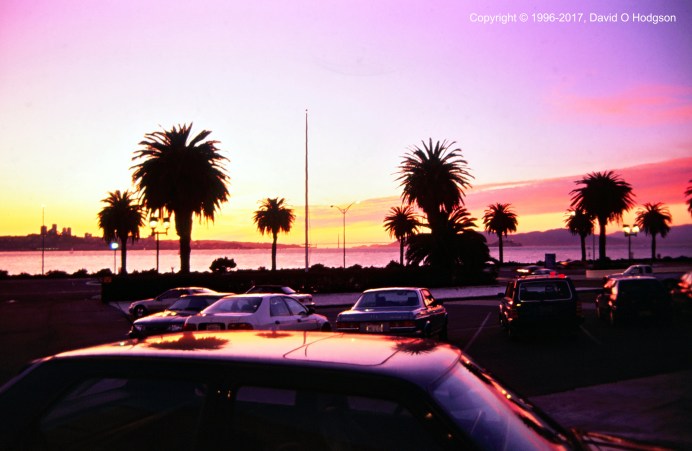
Goodnight from Treasure Island! Sunset over the Golden Gate, from the car park in front of the Administration Building.

Deconstructing the Future

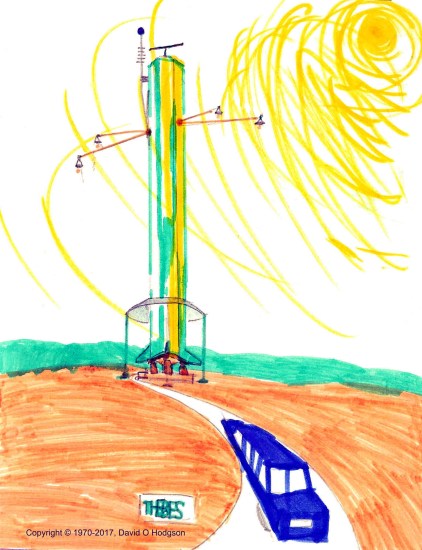
The City of the Future (When I was Ten)

The City of the Future (As I envisaged when I was Ten)

Here’s a “throwback” to a drawing that I produced at the age of ten, to illustrate a story set in “the future”.

Last week, Mary and I went to see the documentary movie Deconstructing Sergeant Pepper, in which Scott Freiman analyzes the musical innovations that went into the creation of the Beatles’ 1967 album*. We both enjoyed the movie, because it doesn’t get bogged down in technical detail, but at the same time doesn’t shy away from technical issues when they’re relevant. The presenter even discussed the Automatic Track Doubling circuit that was used to create echo effects, although he didn’t go so far as to display a circuit diagram!

(* We saw the movie at the Rialto in Sebastopol, but it will be screened again in other theaters around the US, along with other documentaries in the same series.)

Of course, I was just a young boy of six or seven when the Beatles were creating that innovative music, so I didn’t really grasp what was going on in the world around me. In retrospect, I do recall a general mood of optimism and change during those years, but I’m not sure to what extent that was shared by the adults around me, or was simply an aspect of my youth. I’m fairly certain that any such optimistic Zeitgeist was not shared by my parents!

Seeing the “Sergeant Pepper” movie did, however, bring to mind recollections of my own youthful expectations about the future and my role in the world. In 1970, I produced the drawing above to illustrate a story that I was writing at school. My story was ambitiously set in the year 2461, but was inevitably a “product of its time”. The tower I drew was supposed to be a city, but it also happened to be a rocket. The style was clearly inspired by the claims of 1960s-era architects about future buildings, but my innovative design also incorporated the boosters from the first stage of the Saturn V spaceship!

Goldfinger or Glassfinger?

London Wall in the Rain, 1981

London Wall in the Rain, 1981

Respected architects of the post-war period, such as Le Corbusier, Walter Gropius, and Ernö Goldfinger claimed that twenty-first century cities would be “managed environments,” probably consisting of huge glass-clad skyscrapers. Many of these architects clearly saw the creation of such cities as being socially beneficial.

Goldfinger himself wrote in 1941:

Cities can become centres of civilisation where men and women can live happy lives. The technical means exist to satisfy human needs. The will to plan must be aroused. There is no obstacle but ignorance and wickedness.

Creativity & the Tyranny of Good Intentions

The fact that I was encouraged to spend time writing such a fantastic story at school seems surprising in retrospect. I do recall that, during my primary schooling, there was significant emphasis on “creativity”, in that we were encouraged or even required to write and draw every day.

If that policy was intended to turn all of us into creative adults, it seems to have been an utter failure in most cases! For me, though, it was generally enjoyable and probably beneficial, and I’m only disappointed that the emphasis of our education changed later to uncreative, rote preparation for exams.

The heart of this disconnect was, and still is, that there is a huge gulf between the kind of people that educators want to produce, and the kind of people that employers actually want schools to produce.

I’ve seen evidence that the emphasis on creativity in schools in those days was actually quite new, and stemmed from the “progressive” educational ideas that had been laid out in the Plowden Report, but the schools I attended were not notably progressive. The Church of England school that I was being forced to attend when I produced the story containing this illustration prided itself on being anything but progressive!

The book “Progressively Worse” by Robert Peal contains an interesting discussion of the history and consequences of progressive education in Britain.

Back to the Bungalow: Swifts of Scarborough

In April 2007, I found myself revisiting my home town, Scarborough, and took the opportunity to return to the location of my first ever full-time “permanent” job, which was at a light engineering company called Swifts of Scarborough.

I didn’t actually work at Swifts for very long — only from September 1979 to June 1981 — but so much happened to me during that approximately eighteen-month period that, in retrospect, it seems as though I was there for much longer.

After having had to drop out of Warwick University in 1979, without a degree, I found myself back in Scarborough, where job prospects are not good at the best of times (unless perhaps you want to work in a hotel). My father had just died, and my mother was trying to support a family of three on her teacher’s widow’s pension, so there was much urgency for me to start earning a living as soon as possible.

After several dispiriting months of job-hunting, I obtained an interview at Swifts, for an Accounts Clerk position, and was hired. I had no professional accounting qualifications, but I’d always been good at math (and had 2 A-levels in it), which was presumably what impressed them.

As I was to learn, Swifts was already a long-established Scarborough business. The factory had originally been in a downtown location near William Street, but had moved out to a larger site on Cayton Low Road during the 1960s. Traditionally, the company’s main product had been aluminium milk churns, but, when demand for churns evaporated, the company switched to the manufacture of cable support systems (cable tray and cable ladder). Cable support systems are a simple and unglamorous product, but there is a steady industrial demand for those components, which the company’s successors still manufacture today.

[I haven’t been able to find any photographs of Swift’s original premises. However, the out-of-print book Scarborough in the 50s and 60s does include a couple of photographs of the William Street area. On page 69 the old Swift’s refreshment block is shown, and on page 26 you can see Swift’s sign on a wall near Hope Street.]

In 1979, the company’s accounting department was housed in a building separate from the main factory, called “The Bungalow”, which was literally that, being a former private home that sat on what was now Swift’s land. This building is shown derelict in my 2007 photo at the head of this article.

I Keep Getting the Same Advice

It soon became obvious that, although Swifts was a “solid” company, its products were “not rocket science”, and I felt that continuing there would not make good use of my abilities.

Realizing that there were few suitable jobs for me in Scarborough, I began applying for more challenging jobs in other parts of the country. I attended several promising interviews, in London, Aylesbury, and elsewhere, and a pattern soon became apparent. Every time I applied for a job, I was rejected on the grounds that I didn’t have some specialized knowledge, or was in some way overqualified, and I was told to go back to university and get a degree.

That was much easier said than done, but I did eventually reapply and was accepted by several universities. Thanks to the award of a Royal Scholarship, I ended up graduating in electronics from Imperial College, London. At that point, I recalled the advice I’d received from one potential employer who had declined to hire me pre-university—the BBC—so I reapplied and, this time, I got the job!

To Richmond At Last

Back when I worked at Swifts, the company had a satellite location at Richmond in Surrey. This had originally been the premises of a company called Walker Mainstay, which Swifts had taken over. The Richmond premises were not used for manufacturing, but only for warehousing the products that were made in Scarborough. Trucks loaded with Swift’s products left Scarborough for Richmond on an almost daily basis.

During my eighteen-month period of employment, I was never allowed to visit the Richmond premises. In 1981, finding myself now a student in London, curiosity compelled me to go to Richmond and seek out the location. The photograph below shows the Richmond premises one dull weekend afternoon. I realized that I hadn’t been missing much!

Swifts of Scarborough warehouse in Richmond, Surrey, 1981

Swifts of Scarborough warehouse in Richmond, Surrey, 1981

As I mentioned at the beginning of this article, I returned to “The Bungalow” during a visit to Scarborough in 2007, to find it still standing but derelict.

The remainder of Swifts premises on Cayton Low Road still exist. The company was taken over first by Wiremold, and then by Legrand, and continues in essentially the same business in the same location.

Leicester: Not Always the Same

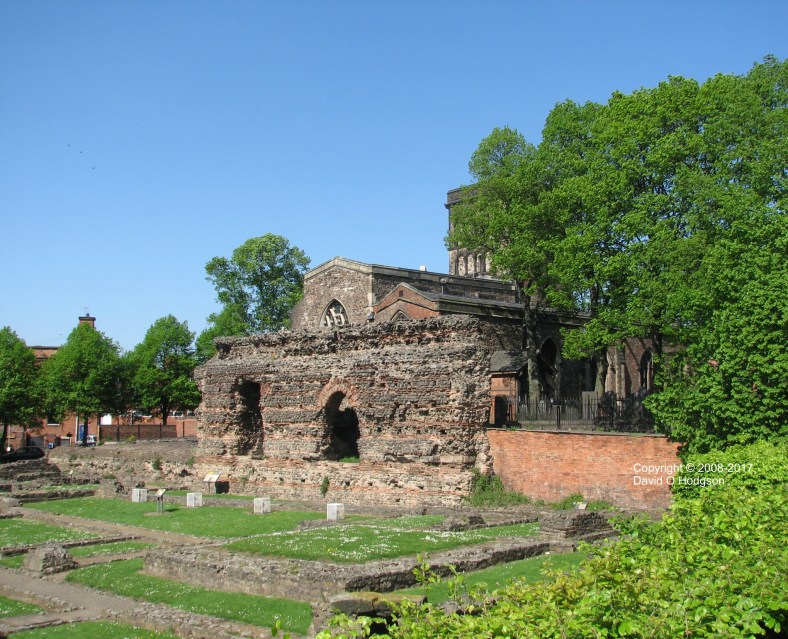
Jewry Wall & St. Nicholas' Church, Leicester, in 2008

Jewry Wall & St. Nicholas’ Church, Leicester, in 2008

I’ve never lived in Leicester, UK, but, about 30 years ago, I found myself visiting the city quite frequently. Leicester’s city motto is Semper Eadem, which means “Always the Same“, but, when I revisited the city almost thirty years later, I discovered that the motto is not accurate!

Although superficially just another of England’s many formerly-industrial Midlands cities (and now a very multicultural city), Leicester hides some historical gems and national treasures. One such treasure is the Jewry Wall site, shown above, which is a substantial remaining relic of the city’s Roman origins, and is in fact the second-largest remaining Roman structure in Britain. Next to the ruins of the Roman baths stands St. Nicholas’ Church. The idyllic scene in the photo belies the fact that this site is actually in the middle of the city, adjacent to the busy inner ring road.

Of course, in 2012, Leicester shot to worldwide fame due to another unique treasure, when it was confirmed that the long-lost body of King Richard III had been discovered under a car park in the city center. For centuries, the accepted view had been that Richard’s remains had been thrown into the River Soar some time after he lost the Battle of Bosworth in 1485, and thus were lost for ever.

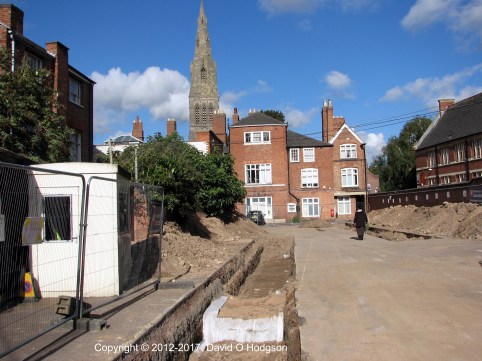
The photo below, taken during my October 2012 visit, shows the trench in the car park where Richard’s remains had been found a few months earlier. At the time that the bones were interred there (presumably in 1485), this site was part of the monastery of Greyfriars. The spire in the background is that of Leicester Cathedral.

Trench in which the remains of King Richard III were found, Leicester

Trench in which the remains of King Richard III were found, Leicester

Industrial Decay

I first visited Leicester between Autumn 1978 and Spring 1979. Thinking back to those early visits, my memories of the city conjure up a dark and grimy maze of damp streets, derelict railway lines and dilapidated businesses.

In those days, one of the most imposing industrial relics was the immense blue brick viaduct built in 1899 for the Great Central Railway, whose new main line had been pushed through the west side of the city center at huge expense. The viaduct was called the “West Bridge Viaduct”, which is not the strange name duplication that it seems, because the viaduct actually spanned not only the River Soar, but also the West Bridge itself. The West Bridge is a road bridge at the site of a river crossing, which has existed there since at least Roman times.

The Great Central line was built as part of a grand scheme to connect the manufacturing centers of Northern England with Europe via a Channel Tunnel, but of course the tunnel wasn’t built until much too late for the railway, and all those manufacturing industries. After much vacillation and ineptitude, British Rail finally closed the Great Central main line in the 1960s, making the viaduct redundant.

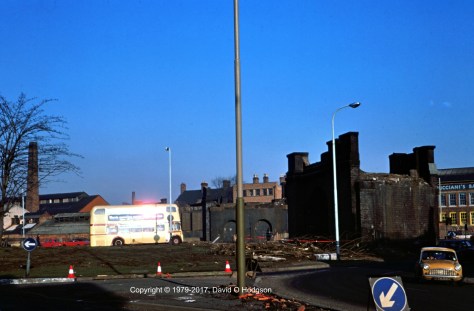
When I visited in January 1979, demolition work was underway on portions of the viaduct that had spanned the West Bridge and the River Soar.

The photo below, looking north towards the river, shows the remaining abutments, after the iron spans had been removed. A Leicester City Transport bus glints in the evening sun as it traverses the roundabout.

West Bridge Viaduct, Leicester, January 1979

West Bridge Viaduct, Leicester, January 1979

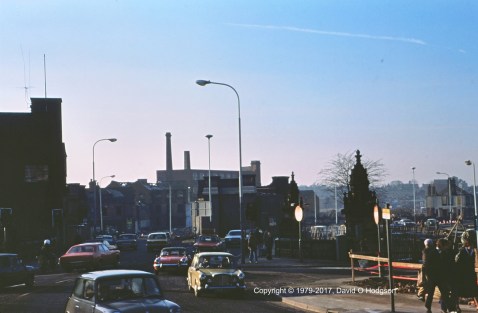
A second photo taken on the same date, from the other side of the river, shows the dome-like decorative abutment of the West Bridge, amid a clutter of half-demolished buildings and muddy roads. The isolated abutment of the former railway viaduct is in the center of the view.

West Bridge, Leicester, January 1979

West Bridge, Leicester, January 1979

And Nearly Thirty Years Later…

I didn’t return to the city until the Spring of 2007, and, when I did, I decided to try to revisit some of my “old haunts”. I headed to the West Bridge, which was easy to find, but when I tried to relocate the spots from which I’d taken the 1979 photos, I found myself completely disoriented.

I’d realized that the West Bridge Viaduct would by now have vanished completely, but in fact almost everything else seemed to have been remodeled too. There was no trace of the roundabout that had featured in my earlier photograph.

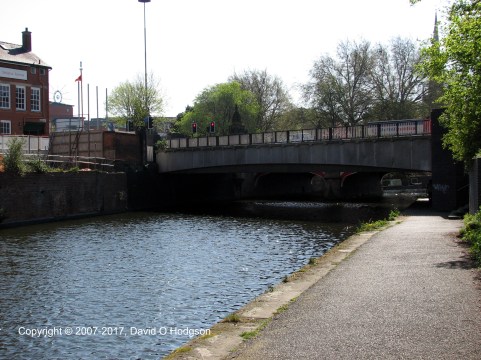
It turned out that the main source of my confusion was that a second road bridge had been built alongside the old West Bridge, so that it now forms part of a dual-carriageway system. The photo below shows the two parallel bridges from underneath, at the level of the River Soar towpath, with the old bridge beyond the new one. The weed-topped river wall on the far left formed part of the viaduct abutment.

Leicester, West Bridge from River Soar

Leicester, West Bridge from River Soar

The Grandeur That Was Ratae Corieltauvorum

The Roman name of the settlement that developed into modern Leicester was Ratae Corieltauvorum. Leicester was one of the first cities in Britain to take proactive steps to preserve its Roman heritage. The Jewry Wall ruin itself has always been obvious, but the foundations of the Roman bathhouse next to it were only discovered during the 1930s. Instead of building over them, Leicester Corporation cleared the site and opened it to the public.

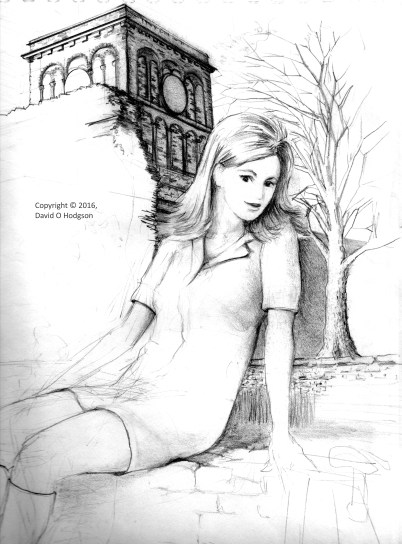
Recently, as part of the preparatory work for a fictional story about Leicester in the 1960s, I produced the pencil sketch below, showing the wife of the story’s protagonist sitting on one of the Roman walls near the Jewry Wall, with St. Nicholas’ Church in the background. The woman in the picture doesn’t exist, of course, but the structures in the background definitely do.

"Jeannie at the Jewry Wall"

“Jeannie at the Jewry Wall”

Scarborough Railway Station: A Historical Mystery Tour

Scarborough Central Railway Station in 1977

Scarborough Central Railway Station in 1977

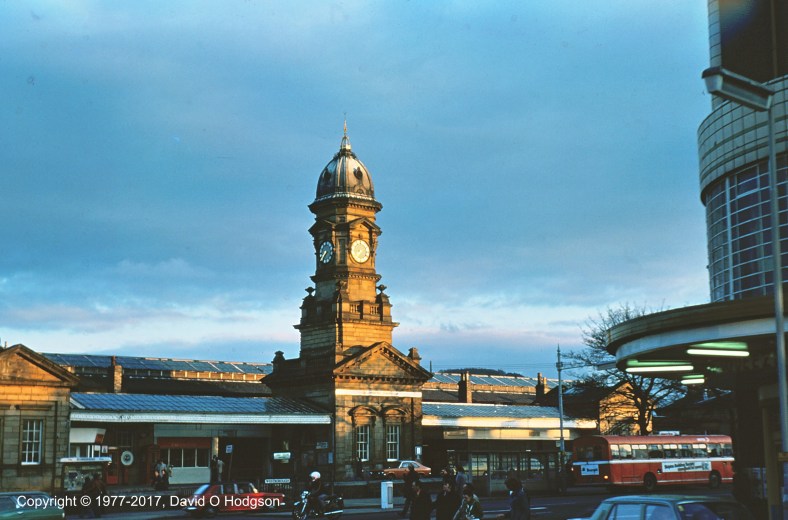
During my teenage years, for my A-level Art study of architecture, I did some original research on the history of Scarborough [Central] Railway Station (shown above), which led to a surprising conclusion about the building’s original appearance.

My conclusions were questioned at the time, but were verified decades later by someone else’s chance discovery.

It was always a well-known fact that Scarborough’s main railway station was built in 1845 (quite early in the history of railways), at a location that was then outside the town limits. It’s also well-known that, in 1882, a central tower was added to the frontage. Surprisingly, and despite the efforts of various developers over the decades, the station building has survived to this day in essentially its 1882 form, as shown in my 1977 photograph at the top of this article.

During my researches at Scarborough Reference Library, I discovered a copy of a catalog for an exhibition called “Marble Halls”, which had apparently taken place at the Victoria & Albert Museum in London in 1973.

Marble Halls

An 1844-dated illustration in the Marble Halls catalog showed a plan of “Scarborough Station” that, at first glance, looked nothing like the existing structure. The image below is the copy of the catalog illustration that I created for my study.

Copy of Plan of Scarborough Station, 1844

Copy of Plan of Scarborough Station, 1844

I hadn’t expected to see the central tower, of course, but where are the three small pavilions in the building’s frontage? The plan also shows a colonnaded central entrance, of which there’s no trace in the existing building.

My initial impression was that this plan did not represent the station as built, but I was puzzled that the accompanying commentary did not mention any discrepancy between the plan and the structure as-built.

I wrote to some local experts on the subject, who provided me with the limited historical references that were available. None of this provided any clear details regarding alterations to the building, except for the addition of the tower. The general opinion seemed to be that the entire frontage of Scarborough Station had probably been rebuilt in 1882 (rather than just the tower), but there was no evidence to prove that claim. One expert pointed out that the architect’s illustration in “Marble Halls” may have been nothing more than an “architect’s impression”, and that there was no guarantee that the station as-constructed had ever resembled that plan.

Some Detective Work

If in fact the building’s frontage had been substantially altered in 1882, it struck me that perhaps I could find some evidence of that (although it seemed odd that nobody would have previously noticed anything).

I walked around the outside of the building, examining its architectural details. I looked particularly at the locations that would be the junctions between the 1845 structure and what were potentially later alterations. Eventually, at the East end of the joint between the easternmost pavilion and the main trainshed (on the far left in the heading photo), I found a mismatch in the details of the pediment, as shown in my sketch below.

Scarborough Station. Detail of Trainshed Pediment stonecarving

Scarborough Station. Detail of Trainshed Pediment stonework

The mismatched joint shown above would have occurred where the new pavilion was added to the main wall of the original building, if my suspicions about the station’s original appearance were correct.

Given the immense precision of the building’s stone carving, it seemed impossible that such a noticeable mismatch would have occurred (or be allowed to remain) during the original construction. It seemed much more likely that this mismatch occurred because of some miscalculation when new stone was carved later, the intention having been to match the details of the original building.

Conclusion & Confirmation

In my study, I presented my conclusion that the 1844 architectural plan did indeed show the original appearance of Scarborough station, but that the building had been subject to greater subsequent alteration in the 1880s than most people had suspected. Not only was the central tower added, but most of the original frontage had been removed, and replaced with the three small pavilions that still exist.

At the time, I had no evidence to support my assertion, except for the architectural plan and my own illustrations of the architectural details of the actual building. Thus, my conclusion remained unproven, and nothing more than an “interesting speculation”.

In 1995, long after the completion of my Art A-level, and by which time I’d moved away from Scarborough, first to London and then to California, one of my expert correspondents from 1977, J R Lidster, published his own book on Scarborough Railway Station. In that book, he included a drawing of the station frontage from a letterhead that had recently been discovered in the attic of a property in Scarborough.

Sure enough, the letterhead showed a building that closely matched that depicted in the 1844 plan in the book “Marble Halls”, thus finally verifying the conclusion of my investigation.

[Added 12/14/24] Here is the letterhead described above, from J R Lidster’s book:
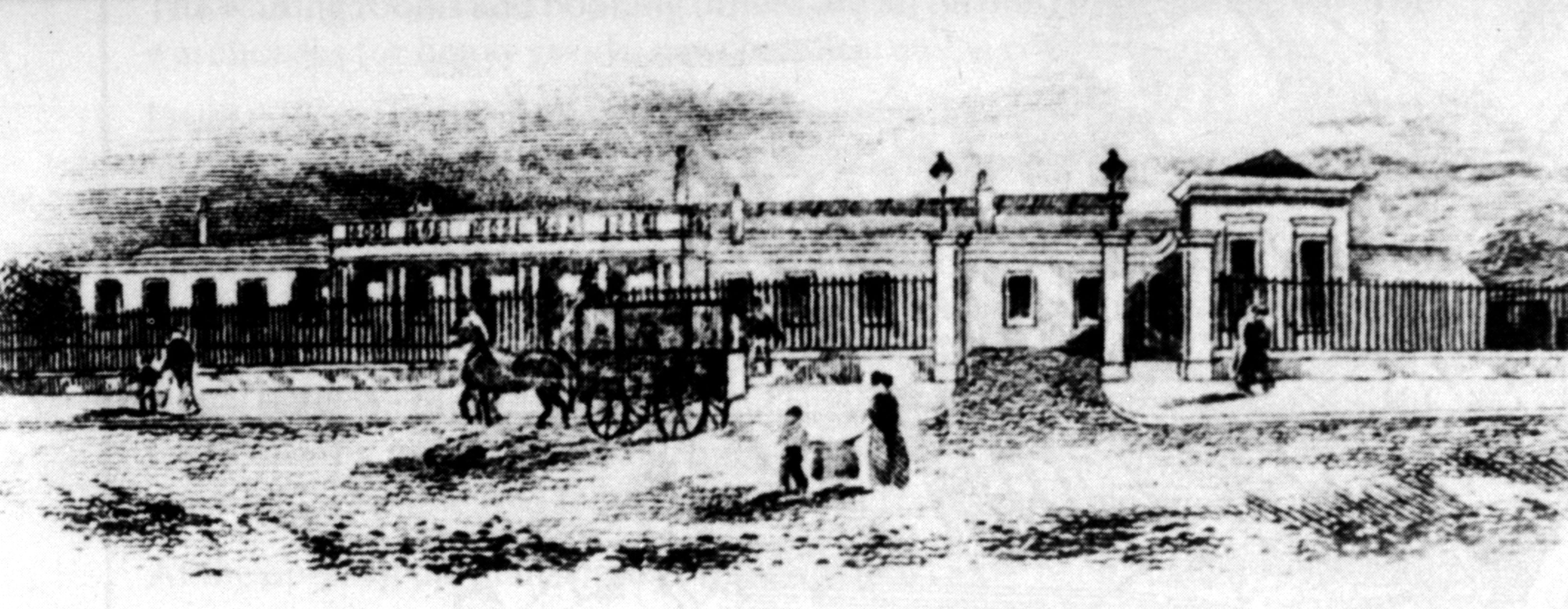
Early View of Scarborough Railway Station. Copyright J R Lidster

A Sense of History

At the age of thirteen, I was forced to select a restricted range of subjects at school for continued study, as preparation for taking “O-level” examinations. One of the subjects that I dropped was history, because my naïve belief at that time was that history was “already written down”, and thus there was nothing new to add. Even at that age, I knew that, whatever I was going to devote my life to, I wanted it to be something innovative.

The experience that I described above, where I was able to provide original insight into a historical problem, showed me that my earlier view of history had been wrong. The events under consideration were, after all, relatively recent history, dating back only about one century, and yet many details were unrecorded, and there were new contributions to be made. I was able to offer new information without even “getting my hands dirty”!

Postscript: More Marble Halls

This incident was my first encounter with the contents of the “Marble Halls” catalog. The book also contains illustrations of other Victorian buildings that featured in my later life. For example, there’s an illustration of the Imperial Institute in London, the buildings of which were subsequently incorporated into Imperial College, from where I would graduate.

The book also includes an image of Highclere Castle, in Hampshire, which was close to my home in Andover in later years. Highclere Castle is now world-famous as the fictitious Downton Abbey.