The Value of University


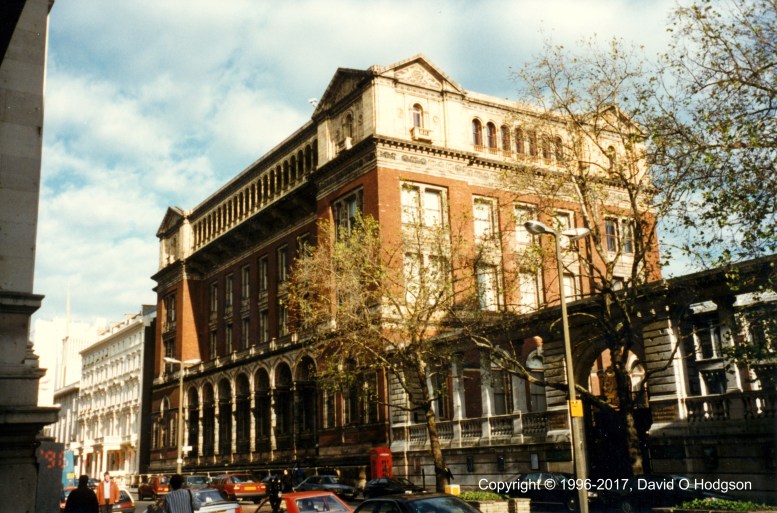
The original Imperial College: now the Henry Cole Wing of the Victoria & Albert Museum

The original Imperial College: now the Henry Cole Wing of the Victoria & Albert Museum

What is the “value of a degree”? We frequently see articles in the media engaging in hand-wringing about the “value of a degree” or the “value of university”. Many such articles make questionable assumptions about the meaning of the word “value”. The real value of a degree, and of the university experience, to any individual, depends on many factors, including the skills, goals and personality of the individual.

There’s the frequently-unspoken question of whether the “value” of the qualification is purely financial, or else has less tangible value to the person possessing it. Do you just treat your entire future life as some kind of balance sheet, where you offset the cost of obtaining the degree against the extra earnings that you think it may bring you? What, also, of the value of the experience of obtaining the degree, and the skills learned during that process?

Finally, there’s the issue of the quality of the institution granting the so-called degree. These range from world-leading universities with established track records, to “Mickey Mouse” colleges that seem to be operating mostly for easy money rather than through any commitment to the furtherance of knowledge.

Each individual must evaluate his or her personal situation, but, as the first member of my family ever to have gone to university, I offer here my own experiences and reflections.

My Own Experience

Thunder over South Kensingtion, 1981. View over Imperial College and Knightsbridge Barracks

Thunder over South Kensington, 1981. View over Imperial College and Knightsbridge Barracks

In my case, I enjoyed learning for its own sake, and discovering more about how the universe works. (I realize that most of the population do not seem to share this view.)

Despite subsequent disappointments and unanticipated setbacks, I’m glad that I went to university and got the degree that I did. I would not have regretted it even if my degree had not led to better jobs.

Non-Academic Benefits

There are also many benefits to the university experience that are not directly related to courses of study, and those who haven’t had the experience often seem completely unaware of these aspects.

I had many non-academic experiences as a student that would simply never have been available to me had I not gone to university. For example, I became involved in the Student Television Club at Imperial College, which led to my meeting and interviewing many celebrities, such as Michael Palin, Sir Cliff Richard, Paul Eddington, Gordon Jackson, Sir David Attenborough, and so on. What chance would I ever have had to do any of that otherwise?

Now, in response to my comments, some people would point out that “It’s easy for you to say that”, because my degree was free to me, and I even got a grant for my living expenses. Although that was generally true for undergraduate students in Britain at that time, it wasn’t necessarily true for me when I decided to return to university after taking two years “out” in industry. There was no guarantee that I could obtain a grant for the year that the authorities considered “wasted”, although in the end I was persuasive. I do concede, though, that the threat of a long-term financial burden might have made me think again.

I realize that I was incredibly lucky to have obtained my degree free of any financial burden. Whenever I’m feeling how unfair life can be, I always try to remind myself of my good fortune in that regard!

I was also lucky to obtain a place in one of the world’s top ten universities. I must admit that the value of qualifications from low-caliber universities is more questionable.

Learning to Discover

The university academic experience also has benefits beyond what you actually learn while there. My university studies taught me how to do research and how to develop original ideas, which has led to my making many innovations and inventions. Some of the inventions have been patented, and I continue to strive to innovate today in the fields that interest me.

Summary & Recommendations
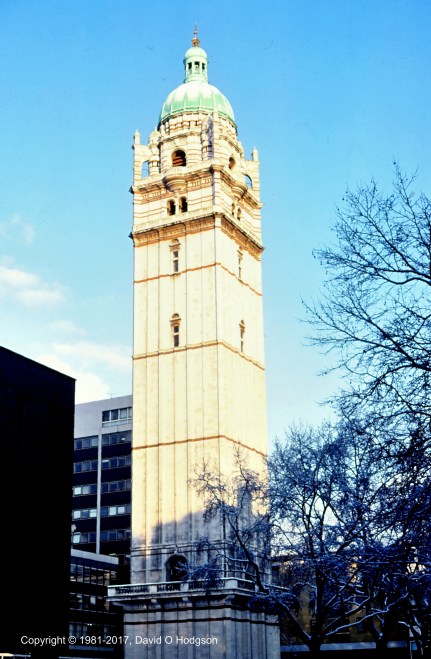
Queens Tower, Imperial College, in snow, 1981

Queens Tower, Imperial College, after a snow shower, 1981

Despite the financial concerns, my recommendation would be to try not to view obtaining a degree in purely mercenary terms. If you view the value of a degree and of university experience as being purely financial, then you’ll be missing out on many other tangible benefits.

In my case, one reason that I chose to go back to university after working in industry for a few years was because I realized that, the longer I waited, the more difficult it would become to return and obtain a degree. I decided that, if I went back and graduated, then, even if my qualification turned out to be less useful than I’d anticipated, the worst that would happen would be that I’d wasted a couple of years of my life. On the other hand, if I didn’t go back, I’d continue to be shut out of many jobs that I was quite capable of doing, and I’d never be able to get those years back.

After all, life is not a mechanical process where you press “Start” and then go through a mindless sequence of predictable operations, which inevitably will only culminate in your death. Surely, it’s just as important to enjoy each stage as much as you can, and it’s about appreciating the journey at least as much as the final destination.
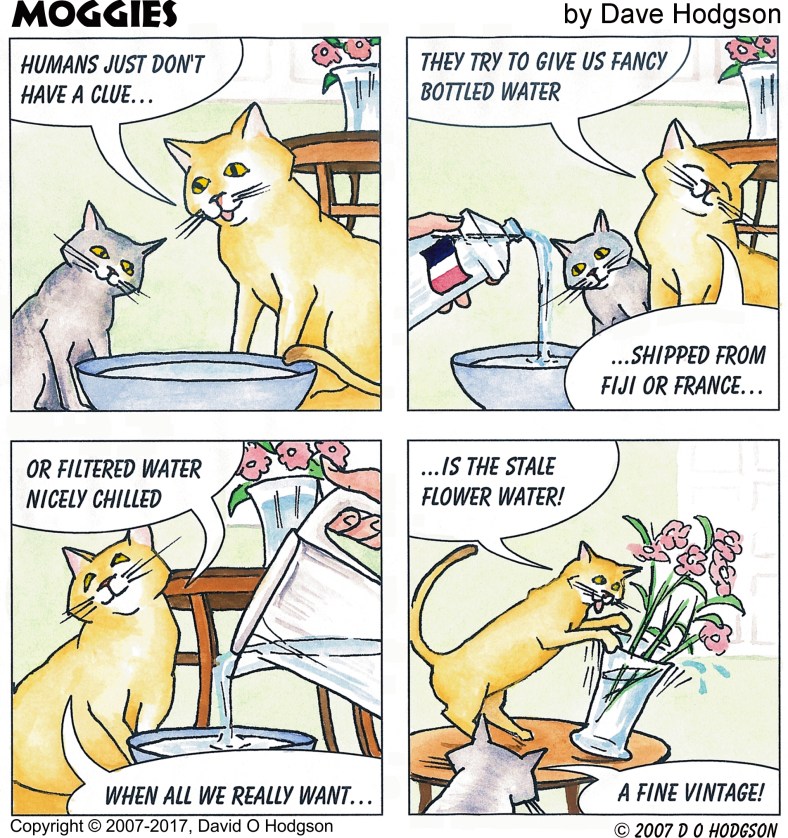
Moggies Cartoon: Pure Water

Moggies: Pure Water

Moggies: Pure Water

Here is the second Moggies cartoon, which I originally produced for display at Sonoma County Fair.

The theme of this strip seemed to ring a bell with many cat owners!

I already posted one of the three Moggies cartoons that I’ve produced to date. The third has an Independence Day theme, so I’ll post that closer to the actual day!

My First Cat

Dusky with My Mother, 1969

Dusky with My Mother, 1969

Here’s a photo that my father took in 1969, showing my mother sitting near the pond in our back garden, with my first cat.

Strictly speaking, the cat wasn’t mine, and wasn’t really anybody’s, because she was what would now be called a “feral” who simply showed up in our garden one day, along with several other ferals who were even wilder than she was. This particular cat liked being fed and petted to some extent, and didn’t mind coming into our house occasionally. She always went out at night, but I’m not sure whether that was because she wanted to do so, or because my parents simply had the attitude that “at night you put the cat out”.

I wanted our cat to have a name, of course, but nobody seemed willing to agree on anything. I had an old book that I’d inherited from a neighbor called Calling All Kittens, which featured large paintings of various cute kittens. The kitten in the book who most resembled our feral was named “Dusky”, so that was the name I gave her. However, nobody else in the family seemed willing to use that name, always referring to her by the unimaginative title of “Puss”!

How Not to Transport a Feral

We moved in 1970 to a house on the other side of Scarborough, and my mother attempted to move Dusky along with us. It didn’t go well.

Firstly, Dusky had never before ridden in a car, and didn’t like it at all. She jumped around in a panic for the entire journey.

When we arrived at the new house, my mother decided to keep her indoors for the day. However, when night came, she just did the same as always and “put the cat out”.

We never saw Dusky again.

Of course, now I know that that’s absolutely not the way to move your cat from one house to another! At that time, I was only ten years old, so, even if I’d known what to do, I doubt that my parents would have listened to my advice.

I’ve also learned since then that “putting the cat out at night” is neither necessary nor desirable. In California, it’s almost a death sentence, since cats can encounter common animals such as raccoons that can inflict major injury or death.

The Balloons Come Down

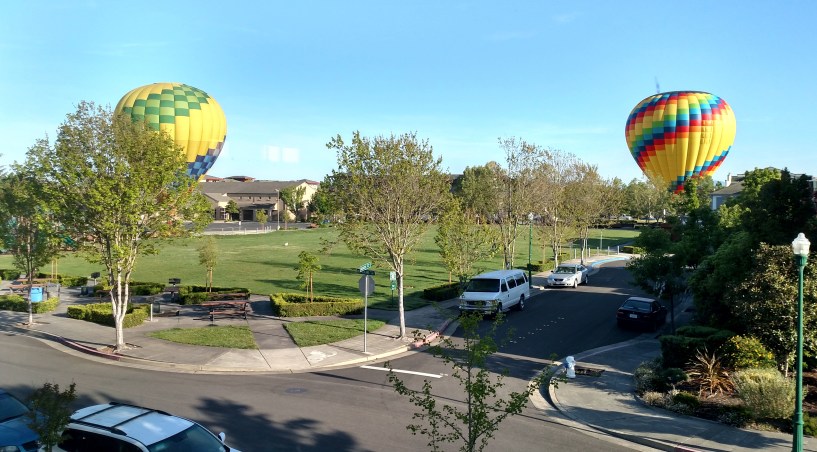
Balloons in the Park

Balloons in the Park

We’re accustomed to seeing hot-air balloons passing over our house, but they usually don’t land next to it! This morning, just as I was getting dressed, two balloons came down, presumably due to an emergency. These photos were taken from our bedroom window.

The first balloon to land was the one on the right, which touched down on the empty lot on the other side of Sebastopol Road. The second one then followed it and landed in the church parking lot.

The operators then deflated both balloons and brought up their trucks to cart away the hardware. Unfortunately, the deflated balloon is obscured by the tree below.

Deflated balloon in the Park

Deflated balloon in the Park

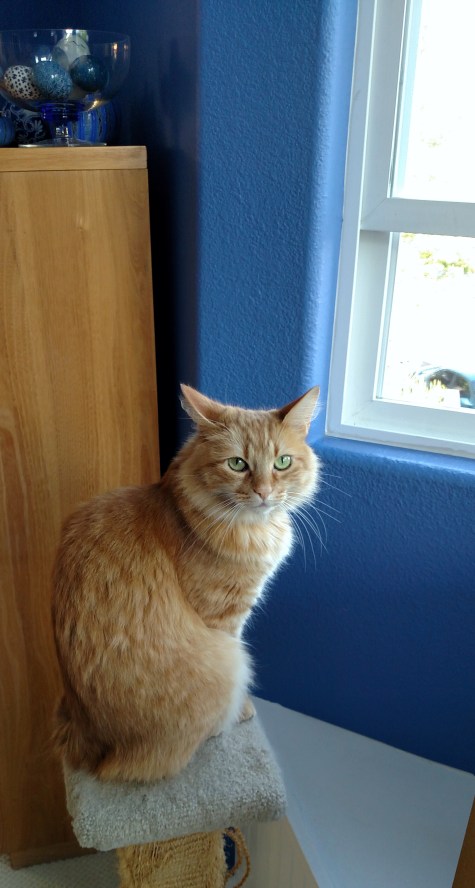
Needless to say, our cats were intrigued by the unusual sounds. As shown below, Ginger was “on patrol” by the bedroom window, in case his help was needed.

Ginger on Balloon Patrol

Ginger on Balloon Patrol

Of Lost Maps & Lost Towns

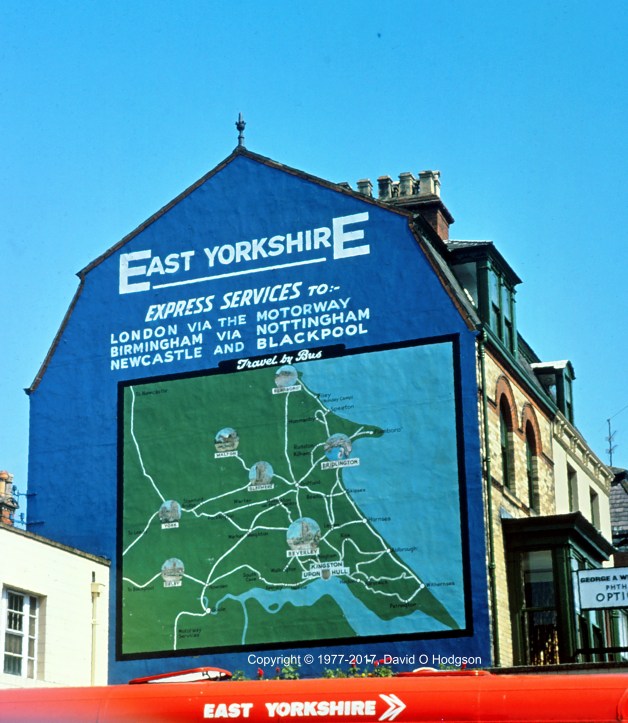
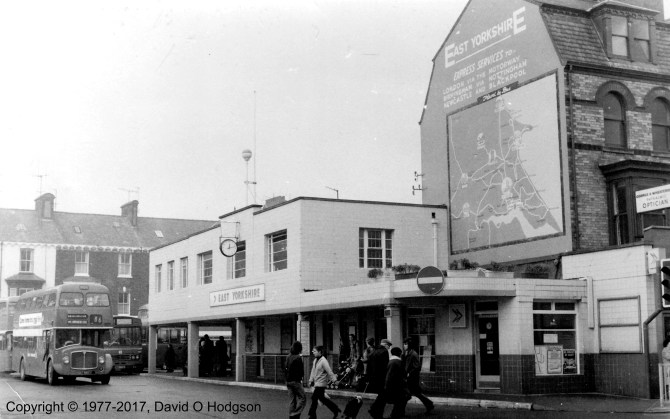
East Yorkshire Wall Map, Bridlington, 1977

East Yorkshire Wall Map, Bridlington, 1977

The Map shown above in my 1977 photograph was for many years displayed on a wall that overlooked the Promenade Bus Station in Bridlington. I was recently scanning some old photographs, and that led me to wonder what had become of the map, and indeed the bus station below it.

At the time of my birth, Bridlington was in the county of the East Riding of Yorkshire, then, in 1974, that became part of the unloved county of Humberside. In 1996, Humberside was abolished, and Bridlington found itself once again in the East Riding of Yorkshire.

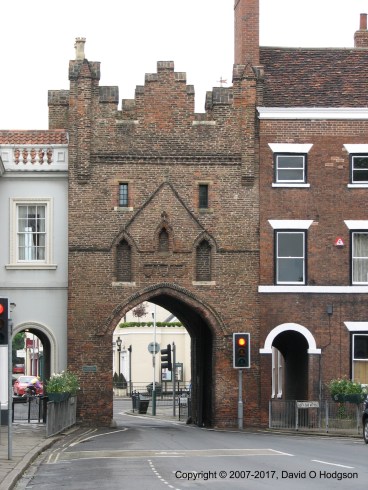
The local bus company in Bridlington was, and still is, East Yorkshire Motor Services (EYMS), which created and maintained the map. EYMS is perhaps most famous for the unique “Gothic” roofs of its double-deck buses, which were specially shaped to fit through the North Bar in the East Riding county town of Beverley. (See this article for a photo of one of the gothic buses squeezing through the bar.) Built in the 15th century, Beverley Bar still exists today, as shown in my 2007 photo below, and is the only remaining brick-built town gate in Britain.

Beverley Bar, 2007

Beverley Bar, 2007

The photo below shows a general view of Bridlington bus station at around the same time as the color photo of the map above.

Bridlington Promenade Bus Station, 1977

Bridlington Promenade Bus Station, 1977

EYMS built the bus station during the 1930s, and the main building was finished in pleasant blue and cream tiles, reflecting the company’s bus liveries, which also used shades of blue and cream.

Unfortunately, the privatization of the British bus industry during the 1980s made such town-centre sites prime targets for sale and redevelopment, as the privatized companies saw opportunities to “externalize their costs” by selling off their own premises and stopping their vehicles on the streets instead, causing further traffic congestion.

Bridlington Bus Station suffered this fate, and closed down years ago, but I wondered what had become of the site. Looking on Google Streetview, I was initially unable to spot any evidence of the location. Eventually, however, I noticed that, even though the station is gone, the building on which the map was painted still exists, and is now a very tatty branch of Boots. Here is the latest Streetview image.

For convenience, here’s an excerpt from that view. You can see the gable end of the building on which the map was painted, and even the finial is still there!

Site of Bridlington Promenade Bus Station

Site of Bridlington Promenade Bus Station

As you can see, the “Promenades” shopping center has been built over the site of the Bus Station. I’m not sure it’s much of an improvement…

They Keep Losing Towns Too!

The East Riding of Yorkshire actually continues to suffer more significant losses of property than just Bridlington Bus Station and its map.

As a teenager, I was a fairly frequent visitor to Scarborough Library, which had some obscure old books about Yorkshire history.

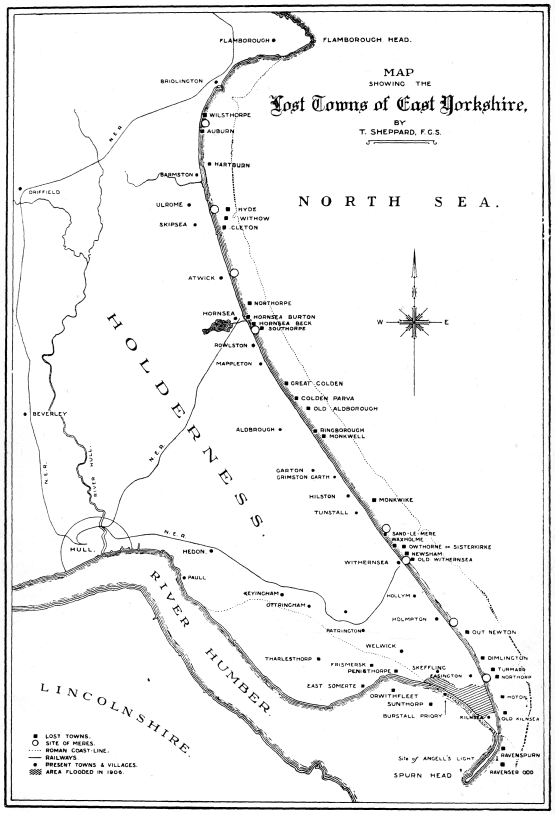
One of these books was “The Lost Towns of the Yorkshire Coast” by Thomas Sheppard, published in 1912. The book describes the severe coastal erosion in East Yorkshire, south of Bridlington. While Bridlington itself is built on the same chalk that forms the Flamborough promontory, the area southwards to Spurn Point (called Holderness) is a soft glacial moraine, which the sea is eroding away very quickly.

The map below is from the frontispiece of the 1912 book, and shows the medieval and modern coastlines of the county. The loss of entire towns due to erosion is quite obvious.

Lost Towns of East Yorkshire

Lost Towns of East Yorkshire

Short of building a sea wall all the way along the coastline, the erosion process is really unstoppable. In the future, there will presumably be some towns and villages sitting on peninsulas where defences have been built locally (such as at Withernsea), but the remainder of Holderness will eventually just be washed away.

The most recent losses of property have been around Aldbrough, as shown in these photos. See it while you can!

Incidentally, Beverley in Yorkshire has no connection to Beverly Hills in California, although the different spellings do sometimes trip people up!

The Ambivalence of Easter


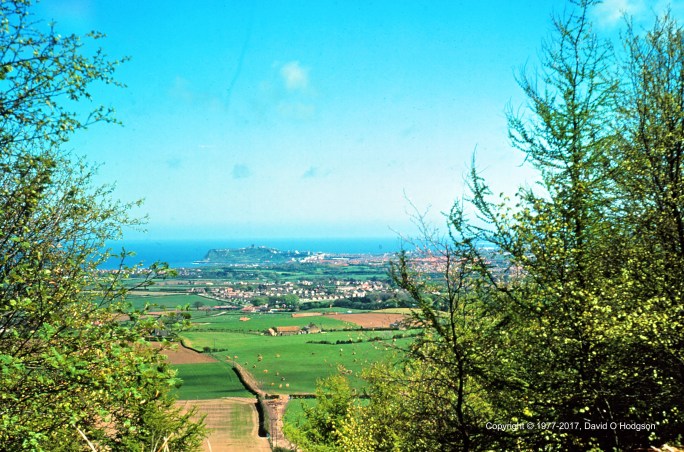
Scarborough from Cumboots Brow, Easter 1977

Scarborough from Cumboots Brow, Easter 1977

Easter occurs this weekend, although the event has almost zero importance for me now that I live in California. On reflection, the decline in its significance seems remarkable, given that Easter was, and still is, a national holiday in Britain, and holds many ambivalent memories for me from the days when I lived there.

The photograph above shows my birth town, Scarborough, on a beautiful day during Easter, 1977. My color slide was taken from the curiously-named Cumboots Brow, and displays a vista over lush farmland to the suburban village of Scalby, then Scarborough Castle headland beyond that, and finally the North Sea on the horizon.

In terms of positive memories of Easter, as a kid, I naturally looked forward to the break from school offered by the Easter vacation, and also to the abundance of Easter eggs, hot cross buns, and similar treats.

On the negative side, the Christian Easter festival, which was supposedly what was being commemorated, brings back memories of its absurd and macabre claims, which teachers at our schools drilled into us. In my case, I had the misfortune to have to attend a Church of England School for a couple of years, where such superstitious nonsense was particularly rife, but in Britain even state schools promoted the religious agenda to a lesser extent.

Is Easter Christian or Pagan?

Is Easter a religious festival, or merely a celebration of Spring? Should it or shouldn’t it be an official holiday for everyone?

Most people in Britain seem to take it for granted (as I did before emigrating) that Easter should be a recognized holiday.

Conversely, when I talk to people in California about it, they often seem puzzled that it should be recognized as a secular holiday at all.

People sometimes seem surprised when I remind them that, unlike the USA, Britain has no “separation of church and state”. Indeed, England has an official state religion (Church of England Christianity), the bishops of which still sit unelected in the House of Lords. Few people in Britain seem to see any problem in having a Christian festival as a national holiday, even though the vast majority now practice no religion at all and are de facto atheists, whatever they choose to call themselves.

But what actually is being celebrated? After all, the term “Easter” has a pagan origin, in that it is derived from the name of a goddess named Ēostre. Is it not really just a celebration of the Springtime renewal of life? As I recall, that inconvenient reality seemed to reemerge frequently. For example, at the state school, we were instructed to create Easter cards, but thankfully it was specified that these should feature eggs and chicks, instead of a man nailed to a wooden cross.

At the church school, the priests insisted that, despite its morbid associations, their Easter festival was supposed to be a “victory” over death rather than a wallowing in the gory details. Even as a child, it struck me that their resurrection story made no sense. Those adults insisted that their leader had physically risen from the dead. When we questioned the current whereabouts of this Jesus who had supposedly “conquered death” and thus must obviously still be living somewhere, we were told that we couldn’t meet this immortal individual in the flesh because he had somehow “gone up to heaven”. But we already knew that “going up to heaven” was just a euphemism for dying, so is he supposed to be dead or alive?

Easter in Scarborough: the “Season” Begins

Easter had a more practical significance for me during my schooldays because, in Scarborough, in the 1970s (and perhaps even now), the weekend marked the start of “the Season”, when tourists began arriving for vacations in the town following the winter shutdown. Typically, the major influx of tourists occurred from Easter to September each year.

For a few years during the 1970s, my parents owned the “West Lodge Guest House”, which they opened to guests each Easter. That building is still open as a hotel today. I took the photo below during a visit to Scarborough in 2006.

West Lodge Guest House in 2006

West Lodge Guest House in 2006

Easter: Goodbye to All That

Until I wrote this article, it hadn’t occurred to me that emigrating to California freed me to enjoy the positive aspects of Easter, revolving around the Springtime rebirth of life, without all the baggage of the macabre and primitive religious connotations.

It’s just one more good thing to celebrate…

Location of the Heading Photograph

Due to tree growth since 1977, it seems that it may be difficult to reproduce the view at the head of this article now. Here is the latest Google Streetview image.

Postscript

The Daily Mash has just weighed in with a report about Easter!

Which David Hodgson is Which?


Mystery Escapologist

When it came time for me to select a URL for my personal blog, I had to select the name I would use from whatever was available. There are, of course, many people in the world named “David Hodgson”, so it would be naïve to assume that I’d be the only David Hodgson with an internet presence.

I searched through web sites mentioning “David Hodgson”, and I was enlightened, amused and even appalled by what I found. I found several artists, a vicar, and even a murderer. Some of these sites are blogs, but some are not. I’m listing these URLs here in the hope that it will help you to avoid confusing me with all these other David Hodgsons!

All the URLs listed here are real web sites, and I am not in any way responsible for their content. So, if you want to complain, then please don’t “shoot the messenger”!

The following David Hodgsons are definitely not me

The fact that it’s now quite easy to set up a blog, and that it can be done free of charge, means that inevitably you will encounter some bad blogs. A similar situation occurred back in the 1980s when “desktop publishing” was the new fad; at that time I saw flyers that used twenty or more different typefaces on the same page! Nonetheless, the bad examples eventually fell by the wayside, and desktop publishing is now well-established. In the end, desktop publishing didn’t fail just because some of its early adoptees didn’t know what they were doing. I suspect that the same will be true for blogging, and indeed for ePublishing in general.

One of the features of blogs that you notice when you start examining them is that some people seem to start a blog with unbounded enthusiasm, then realize only later that they don’t really have much to say. My advice is to be realistic; if you’re not already someone who posts regularly on social media and elsewhere, then you almost certainly don’t need a blog, because you’ll never actually post to it.

Then there are those sites that seem to be “their own worst enemy”. I received a communication from one blogger whose site is titled “Five Experts”, and which seems to offer advice to fellow bloggers as to how to attract more followers. Unfortunately, though, I was not inspired by the content. For example, here’s a description of the site:

“We are five profitionels, we creat a small business. a parte of owr work is to help you creat your’s”

Erm… no thanks. Anyway, I already creat mine’s…

David Hodgson: the Previous Incarnation

https://artuk.org/discover/artists/hodgson-david-17981864

You really do learn something new every day! I had never previously realized that there was a British artist named David Hodgson, who lived in East Anglia from 1798-1864. He seems to be best known for his paintings of the Norwich area.

David Hodgson: the Vicar of Wokingham

www.davidhodgson.com (aliases to: https://dphodgson.wordpress.com/)

This is the blog of a vicar in Wokingham, UK. Coincidentally, Wokingham is where I worked for about a year before emigrating to California, but I assure you that there’s no other connection between us.

Most of the posts seem to be just links to other church business postings. However, towards the end of last year, the Reverend apparently received inspiration to start posting for Advent. He explained, “My blog for each day in Advent will celebrate examples of action in the world inspired by hope and the desire to bring closer God’s kingdom of love, peace and justice.”

Unfortunately, he stopped posting after 7 days (on 3rd December), without offering any reason. It seems that the Holy Spirit gave up the ghost at that point.

David Hodgson: the Invisible Insolvency Expert

http://www.davidhodgson.net/

This site does not seem to be stable, and is currently not accessible. When it was accessible, it claimed to be the web site of “David G Hodgson, Insolvency and credit management consultant, Leeds, UK”.

Perhaps insolvency expert David G Hodgson didn’t pay his web hosting bill?

David Hodgson: the Word-Salad Maestro

https://www.linkedin.com/in/davidhodgson/

I must admit that this David Hodgson is the one that perhaps could be most easily confused with me, given that we apparently both graduated from the same university, and both worked for Sony at some time.

I was trying to find a word or phrase to summarize what David does. Based on his own descriptions, I can’t, although I must admit that I’m impressed with his “word salad”. If he wants to add more of the same, then perhaps the Deepak Chopra Quote Generator would be helpful?

David is the CEO of Hummingbird Labs, but the web site of that business consists of nothing but a nice picture of a tree in a field: http://www.hummingbirdlabs.co/. The page used to include a logo of a hummingbird with its beak missing, but that’s gone now.

David Hodgson: the Model

http://www.modelmayhem.com/DavidHodgson

I’ve drawn many models over the years, but I was never a model myself.

David Hodgson: the US Graphic Designer

https://www.behance.net/davidhodgson

No problems here; it’s simply a competently-presented gallery of his graphics work.

David Hodgson: the Blogger Who’s Cutting through the Crap

http://dhodgson.com/

In October 2013, this David Hodgson felt called upon to start a blog to tell the world his opinions of “Magnetic Water Softeners”.

He ended his first post by describing an experiment he was conducting, stating, “I will post with the results in about 30 days and let you know what I have found out.”

But he never did post those results, and apparently that first post was all he had to say. About anything. Ever.

The subtitle of his blog is “Cutting Through the Crap”. Apparently, that David Hodgson cut through so much crap that he left himself with nothing more to say.

David Hodgson: the Other Artist from Leeds

http://artofdavidhodgson.blogspot.com/

David Hodgson: the Video Game Commentator

http://www.penguinrandomhouse.com/authors/34539/david-hodgson

David Hodgson: the Murderer

I repeat that this is definitely not me!

http://www.mirror.co.uk/news/uk-news/police-ask-murderer-david-hodgson-433240

David Hodgson: the New One-Shot Blogger

http://www.davidkhodgson.com/new-blog/

Apparently this blog is so new that most of its pages have been removed… This David Hodgson also states that he’s a graphic artist, but the web site displays only one example of his work (or at least I assume that it’s his, because it’s not signed).

Hopefully the information above, covering many of the David Hodgsons who are not me, will help you identify the real me in future.

Tomorrow Never Knows

Stories of Mr Wolf, 1966

Stories of Mr Wolf, 1966

Last week, Mary and I went to see the movie of Scott Freiman’s lecture Tomorrow Never Knows: Deconstructing the Beatles (Revolver).

The Beatles created their famous album “Revolver” during the summer of 1966. I’m afraid that my artistic creations during that summer were less sophisticated, probably because I’d just turned six at the time. Above is an illustration from my 1966 book “Stories of Mr Wolf”. According to a date on the page, the drawing was created on Sunday, July 3rd of that year.

The stories turned out to be rather short, and much less psychedelic than the Beatles’ music! Mind you, they did involve talking wolves who visited Scarborough, so they could have been described as being “far out”…

I scanned the surviving contents of my 1966 book recently. As you can see, the paper is becoming extremely yellow, and it’s very fragile. Fifty more years from now, the whole thing will probably have turned to dust, but then so will I!

When I penned that drawing, back in July 1966, my father was the same age that I am now. Did I imagine then that, fifty years later, I’d be scanning my drawing into a digital image, then posting it on a publicly-networked page for all the world to see? Of course not! I wouldn’t even have known what those concepts were. That wasn’t just because I was only six years old at the time, since I’m sure that my parents would not have understood those concepts either. There were contemporary TV shows that attempted to predict what life would be like in the twenty-first century, such as Thunderbirds, but all of those shows completely missed the emergence of the internet. It really was a case of “Tomorrow Never Knows”…

Stopping by at Melitta Station


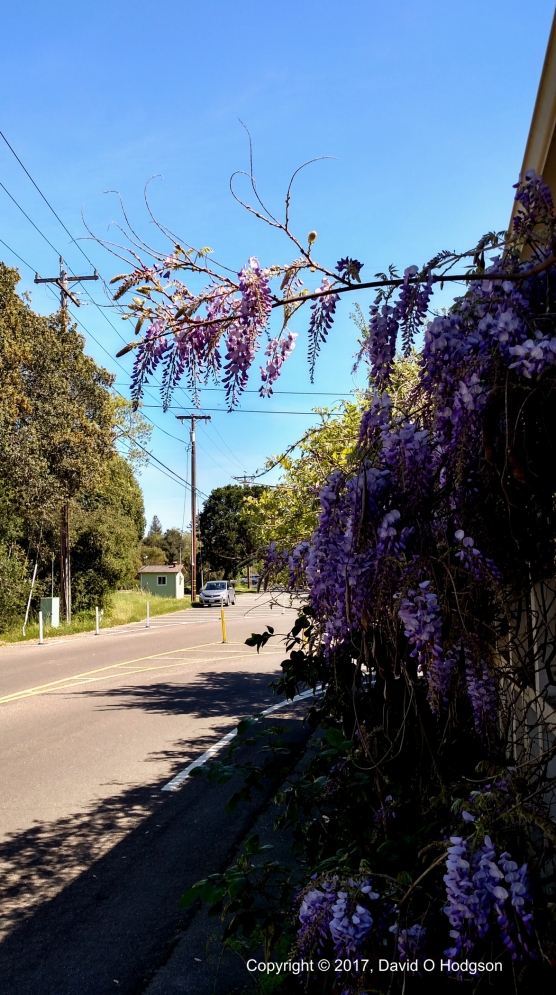
Wisterias blooming at Melitta Station

Wisterias blooming at Melitta Station

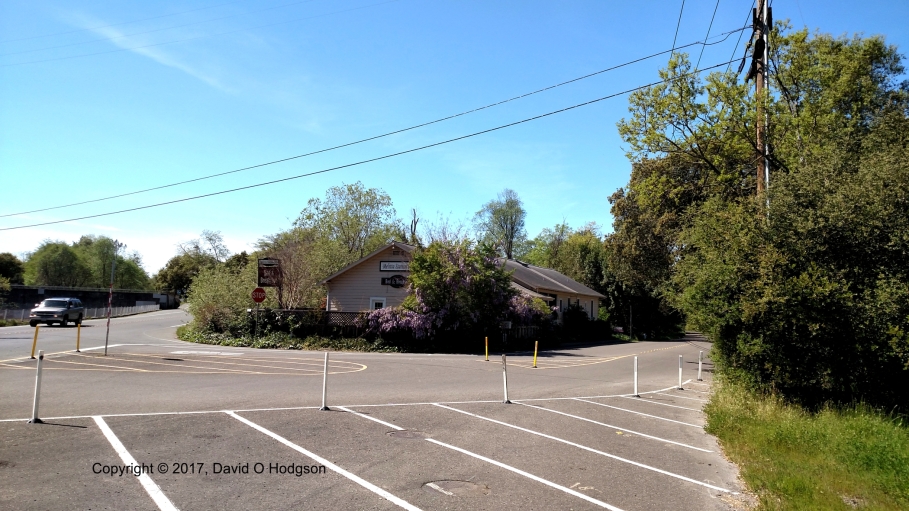
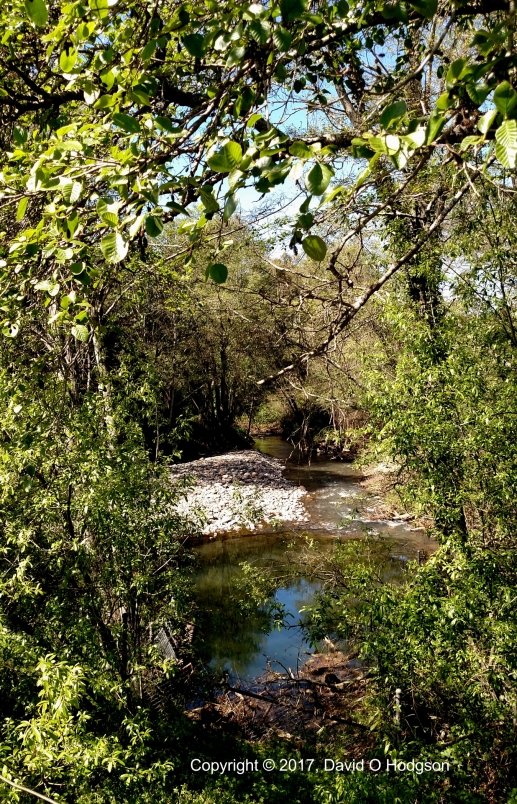
This weekend, I stopped by briefly at Melitta Station, which is a quiet and pretty location by the side of Santa Rosa Creek, to the east of Santa Rosa. If I’d been hoping to catch a train from the station, I’d have had a long wait, because there haven’t been any trains through here since the 1930s. Over a hundred years ago, this was a busy railroad depot, with sufficient population to warrant its own Post Office.

Even among those who live in California, there is a tendency to assume that any non-English “European-sounding” name must be of Spanish origin. However, in the Santa Rosa area there was a significant settlement of Italian migrants, and Melitta is a name of Italian origin.

The Southern Pacific Railroad built a branch from Napa Junction to Santa Rosa through here in 1888. There were significant stone quarries on the South side of Santa Rosa Creek, so a railroad depot was established to transport stone from these quarries. A tramway ran from the quarries down to the railroad depot. Basalt paving stones were sent from here all over California, covering many streets in San Francisco.

Eventually, the quarries were worked out, and in 1934 the Southern Pacific abandoned the railroad. The rails were lifted in 1942 and taken to Oakland for reuse in the docks. Melitta declined to the point that the Post Office and store closed, and all that’s really left of the settlement now is the Melitta Station Inn, which now offers Bed & Breakfast. The owners are apparently British, so they presumably know something about converted railway stations and English breakfasts!

Melitta Station Inn

Melitta Station Inn

In the photo above, looking West, the railroad trackbed was to the left (now Montgomery Drive), and Melita Road is on the right. (The name of the road has a different spelling.) Melitta Station Inn sits in the fork of the junction. However, the railroad always stayed on the opposite side of the creek, so it did not cross the creek or Melita Road, as the modern alignment suggests.

Santa Rosa Creek at Melitta Station

Santa Rosa Creek at Melitta Station

Had the Sonoma Freeway ever been built, this junction would have changed beyond recognition, because the freeway was planned to rejoin the existing Highway 12 near this point. It seems now that all plans to construct that freeway have been abandoned, so Melitta Station looks set to continue its tranquil existence.

Airspeed York

Former Airspeed Factory, York, in 1979

Former Airspeed Factory, York, in 1979

During an Easter 1979 visit to York, I sought out and photographed the rather tatty and unremarkable building shown above. On close examination, the exterior revealed some vaguely “Art Deco” embellishments, but in general it gave the impression of being just another old warehouse.

The building was located on Piccadilly, York, and was in use as Reynard’s Garage in 1979. It had originally been built as a trolleybus garage in the early 1920s. In 1931, after the trolleybuses had been relocated to larger premises, the building took on a new function as the home of Airspeed Ltd., an aircraft manufacturing company founded by, among others, Nevil Shute and Amy Johnson.

By 1933, Airspeed were ready to expand into larger premises, but York Corporation refused to provide any assistance. Other municipalities around the country took a more enlightened view, and so Airspeed were tempted away from York to Portsmouth, where they built large new premises, then went on to design and build many successful aircraft designs, such as the Oxford and Horsa.

Sadly, in 2015 the now-derelict building was finally demolished, despite public pressure to save it. Perhaps York Corporation wanted to rid themselves of this daily reminder of their own lack of foresight back in the 1930s?

This link displays the current Google Streetview of this location.